Understanding K3L for Radio Communication Equipment
Radio communication equipment plays an important role in modern business and industrial operations. Professional radios, wireless communication devices, radio transmitters, receivers, and other communication systems are used in environments ranging from factories and warehouses to transportation and infrastructure projects.
However, compliance for radio communication equipment is not limited to its ability to transmit or receive signals.
Depending on the product and its intended use, businesses may also need to consider K3L requirements, which relate to Keamanan, Keselamatan, Kesehatan, dan Lingkungan.
For manufacturers, importers, and distributors, evaluating K3L considerations early can help identify product-related risks and determine what documentation or supporting requirements may apply before the equipment enters the Indonesian market.
What Does K3L Mean?
K3L stands for:
- Keamanan — Security
- Keselamatan — Safety
- Kesehatan — Health
- Lingkungan — Environment
The concept provides a broader perspective for evaluating products beyond their basic technical functions.
For radio communication equipment, K3L considerations may involve the product’s physical construction, electrical characteristics, materials, battery systems, labeling, instructions, and environmental aspects.
The exact requirements can vary depending on the type and characteristics of the product.
Why Does K3L Matter for Radio Equipment?
1. Radio Equipment Is More Than a Wireless Device
A radio communication product may contain several components that require consideration from a product safety perspective.
For example, equipment may include:
- Power supplies
- Rechargeable batteries
- Charging systems
- Electronic circuits
- Antennas
- Cables and connectors
- Plastic housings
- Displays or control panels
- Internal electronic components
Therefore, compliance assessment should consider the complete product, rather than focusing only on its wireless communication function.
2. Electrical Safety Can Be an Important Consideration
Many radio communication products operate using electrical power.
Depending on the product design, businesses may need to evaluate factors such as:
- Operating voltage
- Power supply configuration
- Battery characteristics
- Charging requirements
- Electrical protection
- Product construction
- Applicable safety standards
These factors can become particularly important for equipment that is continuously operated in workplaces or industrial environments.
A proper assessment can help identify whether additional testing, documentation, or product requirements need to be addressed.
3. Battery Safety Should Not Be Overlooked
Portable radio equipment frequently uses batteries.
Handheld radios, mobile communication devices, wireless transmitters, and other portable systems may use rechargeable battery packs or other battery technologies.
From a K3L perspective, businesses may need to consider:
- Battery type
- Charging method
- Battery protection
- Operating conditions
- Replacement requirements
- Product instructions
- Packaging and labeling considerations
Battery-related requirements can vary depending on the type of product and applicable regulations, so they should be evaluated as part of the overall compliance assessment.
4. Product Materials Can Also Matter
The physical materials used in a radio communication product may be relevant to product safety and environmental considerations.
Examples include:
- Plastic housing
- Metal components
- Cables
- Connectors
- Battery materials
- Internal electronic components
- Packaging materials
Manufacturers and importers should maintain accurate information about the materials and construction of their products.
This information can help support a more complete assessment of applicable product requirements.
5. Environmental Considerations
The environmental aspect of K3L encourages businesses to consider how products interact with the environment throughout their lifecycle.
For radio communication equipment, relevant considerations may include:
- Product durability
- Battery replacement
- Electronic waste
- Packaging
- Material selection
- Product disposal
- Energy consumption
These considerations are increasingly relevant as businesses seek to manage electronic products responsibly from manufacturing through end-of-life.
6. Labeling and User Information
Product compliance is not only about the physical design of equipment.
Labels, warnings, instructions, and user information can also play an important role in communicating proper product use.
Depending on the applicable requirements, businesses may need to review:
- Product identification
- Electrical information
- Safety warnings
- Operating instructions
- Battery information
- Manufacturer or importer information
- Other required product markings
Clear and accurate information can help users understand how equipment should be operated and maintained.
K3L and Radio Frequency Compliance Are Different
It is important to distinguish K3L considerations from radio frequency requirements.
Radio communication equipment may have wireless or frequency-related requirements concerning its use of the radio spectrum.
K3L, meanwhile, focuses on broader product-related aspects involving security, safety, health, and environmental considerations.
Therefore, one assessment does not necessarily replace the other.
A business may need to evaluate several compliance areas for the same product, such as:
Product → K3L → Radio/Telecommunications Requirements → Other Applicable Regulations
The exact combination depends on the product’s technical characteristics, category, intended use, and applicable Indonesian regulations.
K3L and Postel/DJID Certification
For radio communication equipment intended for the Indonesian market, telecommunications certification may also be relevant depending on the product and its wireless functions.
This means businesses should avoid treating K3L and telecommunications certification as identical requirements.
For example:
K3L assessment
Focuses on product-related security, safety, health, and environmental considerations.
Postel/DJID-related requirements
May address telecommunications or radio equipment and applicable technical requirements.
ISR
Can relate to authorization for the use of radio frequency spectrum for applicable radio stations or systems.
These areas can be connected within an overall compliance strategy, but they address different aspects of product and system operation.
What Should Importers Check Before Bringing Radio Equipment to Indonesia?
Importers should ideally collect relevant product information before shipment.
Useful information may include:
Product Specifications
Review the product’s model, function, electrical characteristics, wireless technologies, and intended application.
Battery Information
For battery-powered equipment, obtain information about battery type, capacity, charging method, and battery configuration.
Technical Documents
Technical datasheets, manuals, existing test reports, and other product documentation can support the compliance assessment.
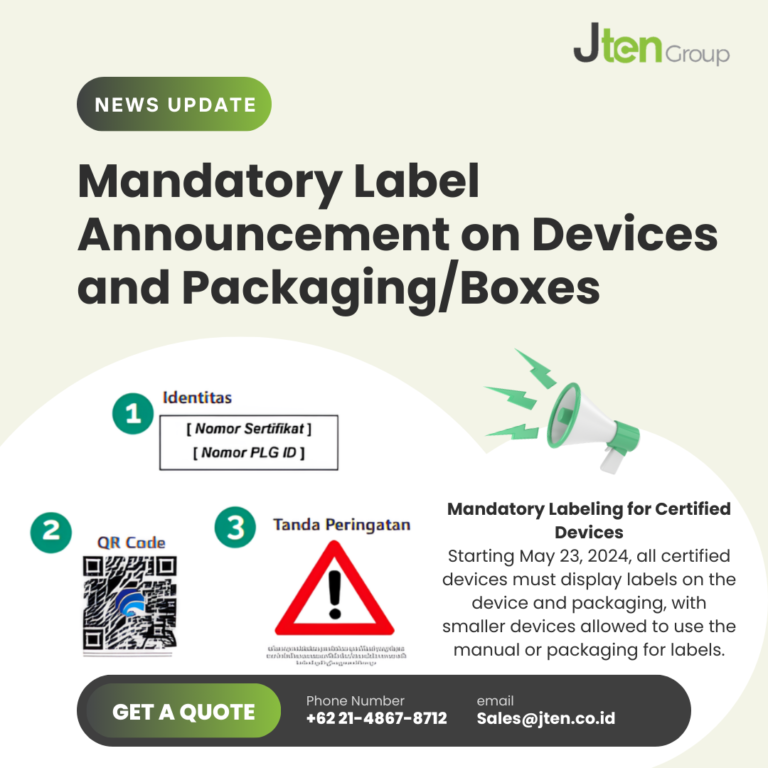
Product Labeling
Check whether the product already contains required identification, safety information, and other relevant markings.
Packaging
Review packaging materials and product packaging information where applicable.
Existing Certifications
If the product has already been tested or certified in another country, those documents may provide useful technical information for the Indonesian compliance assessment.
Why Early K3L Assessment Matters
One of the most effective ways to manage compliance risk is to evaluate requirements before importing or launching the product.
Early assessment can help businesses:
- Identify potential compliance gaps
- Review product specifications
- Check documentation requirements
- Determine whether additional testing may be necessary
- Review labeling and packaging
- Coordinate K3L with other certification requirements
- Reduce the possibility of unexpected issues during market entry
This is especially useful when manufacturers are developing products specifically for multiple international markets.
A Practical Compliance Approach
Businesses can use the following process when evaluating radio communication equipment:
1. Identify the Product
Determine the product type, function, power source, and intended application.
2. Review Technical Specifications
Check electrical characteristics, wireless technologies, battery information, and construction.
3. Evaluate K3L Considerations
Review safety, health, security, environmental, labeling, and material-related aspects.
4. Review Telecommunications Requirements
Determine whether the radio or wireless functions create additional telecommunications compliance requirements.
5. Check Frequency Requirements
Where applicable, evaluate frequency use and whether separate authorization such as ISR needs to be considered.
6. Review Supporting Documents
Prepare datasheets, manuals, test reports, certificates, and other relevant documents.
7. Address Compliance Gaps Before Importation
Resolve identified issues before the product is shipped or introduced to the Indonesian market.
Building a Broader Compliance Strategy
For radio communication equipment, compliance should not be viewed as a single certificate or document.
A more effective approach is to consider the product from several perspectives:
Product Safety
↓
K3L Considerations
↓
Telecommunications Requirements
↓
Frequency Compliance
↓
Import and Market Entry Requirements
This approach can help manufacturers and importers understand how different regulatory areas may interact.
Conclusion
K3L considerations are an important part of evaluating radio communication equipment because these products involve more than wireless communication technology.
Electrical systems, batteries, materials, labeling, user information, and environmental factors may all need to be considered depending on the product and applicable requirements.
At the same time, K3L should be evaluated alongside other relevant areas such as telecommunications certification, frequency requirements, and import regulations.
For manufacturers, importers, and distributors, early compliance assessment can help identify potential issues before products reach the Indonesian market.
JTen can assist businesses in assessing K3L, telecommunications, and other product compliance requirements for radio communication equipment intended for the Indonesian market.