Mandatory K3L and Postel Requirements for Imported Electronics in Indonesia
Indonesia continues to offer significant opportunities for manufacturers, importers, and international brands. In particular, demand for household appliances, smart devices, and wireless accessories continues to expand rapidly.
However, importing an electronic product involves more than arranging transportation and customs clearance. Consequently, understanding mandatory K3L and Postel requirements before shipment is essential to prevent costly customs delays and product detentions.
What Are K3L and Postel Requirements?
Although they address different aspects of product compliance, both framework systems become relevant when assessing electronic products before distribution.
1. What Is K3L Compliance?
K3L refers to Keamanan, Keselamatan, Kesehatan, dan Lingkungan Hidup. Specifically, the Ministry of Trade regulates specific goods under this scope. The current framework covers 42 product categories, including 22 electrical and electronic household devices. Therefore, K3L registration ensures product traceability and consumer protection against electrical hazards.
2. What Is Postel/DJID Compliance?
Postel refers to Indonesia’s telecommunications equipment certification framework managed by the Directorate General of Digital Infrastructure (DJID) under Komdigi. Consequently, any electronic product containing radio-frequency (RF) technologies must undergo evaluation. Key technologies include:
-
Bluetooth modules (Keyboards, speakers, smartwatches)
-
Wi-Fi connectivity (Smart home devices, TV, routers)
-
Cellular connectivity (Smartphones, 4G/5G trackers)
-
NFC and Short Range Devices (SRD)
Step-by-Step Guide to Evaluate K3L and Postel Requirements
Evaluating product compliance as a complete profile avoids surprises at customs entry points. This means importers should follow this structured review process:
-
Classify Product Specifications:
First, gather technical data including model types, HS codes, power sources, and wireless modules.
-
Determine K3L Registration Scope:
Next, verify if your product falls under the annex of Permendag No. 33 of 2025. As a result, you avoid assuming every electronic item needs K3L filing.
-
Review Wireless Module RF Parameters:
Afterward, obtain technical specifications regarding operating frequency bands, output power, and antenna types from the manufacturer.
-
Prepare Laboratory Test Reports:
Furthermore, compile available RF, EMC, and electrical safety reports. For K3L registration, test reports must be issued within six months of the application date.
-
Compile Legal and Technical Dossiers:
Finally, assemble product datasheets, user manuals in Bahasa Indonesia, labeling artwork, and company legal permits (NIB, NPWP).
Key Technical Documents Needed for Approval
To prevent unnecessary delays during the evaluation phase, importers should organize required paperwork in advance. In addition, you must prepare:
-
Valid ISO 9001 quality management certificates or factory inspection reports.
-
Complete circuit schematics and RF block diagrams.
-
Self-declaration of conformity (SDoC) forms.
-
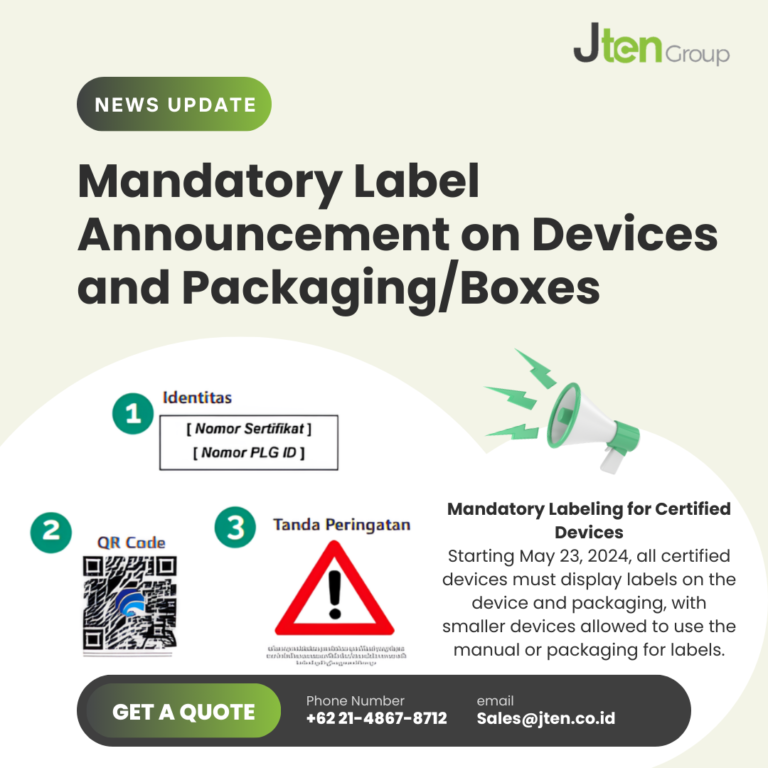
High-resolution product photos showing the physical device and packaging labels.
Streamline Your Electronics Compliance with Cerapproval
Navigating complex multi-agency regulations requires specialized regulatory expertise. However, Cerapproval provides complete, end-to-end certification management to help you satisfy all legal obligations efficiently.
in advance.