Indonesia TKDN Requirements and Postel Certification Before Importing Products are important for international manufacturers, suppliers, and importers entering the Indonesian market. Understanding these regulations helps businesses identify product requirements before shipping goods to Indonesia.
TKDN stands for Tingkat Komponen Dalam Negeri, which refers to domestic content. Meanwhile, Postel certification applies to telecommunications equipment covered by Indonesian regulations. Although both relate to product compliance, they serve different purposes.
This guide explains TKDN requirements, Postel certification procedures, required documents, and important steps to consider before importing products into Indonesia.
What Are Indonesia TKDN Requirements?
TKDN stands for Tingkat Komponen Dalam Negeri. In English, it means Domestic Component Level. It measures the domestic content of goods or services under the applicable Indonesian regulations.
Local content may include materials, labor, and other eligible production components. However, the calculation method depends on the product category and relevant rules.
The Indonesian government promotes TKDN to support local industries and encourage domestic production. These requirements can also influence certain government procurement activities.
However, not every imported product must meet the same TKDN requirements. Importers should check the applicable regulations before deciding how to source or manufacture their products.
For additional support, visit the JTen services page to explore available product compliance services.
How to Check Indonesia TKDN Requirements Before Importing Products
Businesses should check the applicable TKDN requirements before importing goods. The following steps can help simplify the process.
1. Identify the Product
First, identify the product’s name, brand, model, function, and country of manufacture. These details help determine which regulations may apply.
2. Check the Product Category
Next, identify the relevant product category and customs classification. The Harmonized System (HS) code can help importers review applicable import rules.
You can start by visiting the Ministry of Industry of Indonesia for information about domestic industry policies and TKDN.
3. Review the Applicable TKDN Rules
Check whether the product requires a TKDN value, certification, or verification. Also, determine whether specific domestic content requirements apply to its intended use.
For example, certain government procurement activities may involve TKDN requirements. However, these rules do not automatically apply to every imported product.
4. Prepare the Required Documents
Prepare the relevant company information, product specifications, and supporting records. Depending on the applicable procedure, additional production or cost information may also be required.
Complete documents can help reduce delays during the assessment process.
5. Verify the Latest Requirements
Finally, confirm the current requirements with the relevant authority before shipping the goods. This step helps businesses identify potential compliance issues early.
Indonesia TKDN Requirements and Postel Certification Process
Indonesia TKDN requirements and Postel certification serve different purposes. TKDN focuses on domestic content, while Postel certification concerns the technical compliance of covered telecommunications equipment.
Some electronic products use Wi-Fi, Bluetooth, cellular networks, or other radio communication functions. These features may affect whether certification is required.
Therefore, importers should review the technical specifications of each product before arranging shipment.
1. Check the Product’s Wireless Features
First, determine how the product operates and whether it uses wireless communication.
For example, a Bluetooth speaker may have different certification requirements from a wired speaker. The applicable rules depend on the product’s technical characteristics and regulatory classification.
Check the supported frequency bands, communication functions, and model details before proceeding.
2. Prepare the Required Documents
Next, collect the documents needed for the certification assessment.
These may include:
-
Product name and model number.
-
Manufacturer and brand information.
-
Technical specifications.
-
Product photographs and user manuals.
-
Technical test reports, where required.
-
Company and application documents.
The exact requirements depend on the product and applicable certification procedures. Make sure the information matches the actual device.
3. Confirm the Testing Requirements
Some telecommunications devices require testing at an accepted laboratory. The applicable tests depend on the product category and relevant technical standards.
Before starting the process, confirm whether testing is necessary and whether existing test reports can be accepted.
This helps businesses estimate the time and cost involved.
4. Submit the Certification Application
Once the documents are ready, follow the applicable application procedure.
Ensure that all information is complete and consistent. Missing documents or incorrect model details may cause additional requests and processing delays.
For current information, visit the https://sertifikasi.postel.go.id/sertifikasi/informasi-sertifikasi/persyaratan-dan-kewajiban.
5. Check the Final Certification Requirements
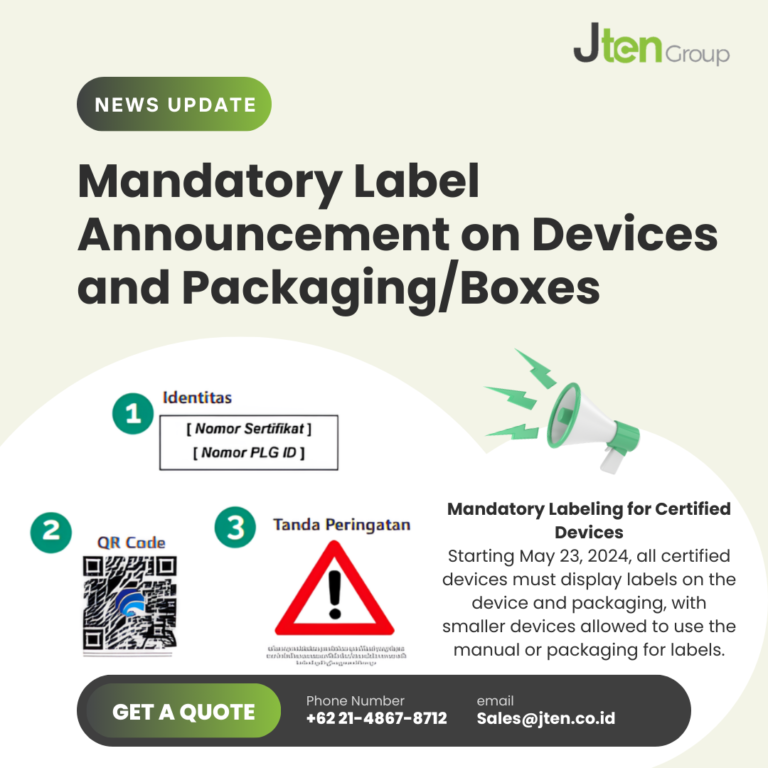
After approval, review any applicable labeling, registration, or reporting obligations.
Also, confirm which product model is covered by the certificate. Do not assume that approval for one model automatically applies to every product in the same range.
By checking these details, importers can better prepare their products for the Indonesian market.
How JTen Can Support Your Compliance Process
Product rules can be difficult to understand, especially when a device has several technical features. JTen helps businesses review their product compliance needs and understand the steps involved in certification.
For example, businesses can seek support to identify relevant services, review documents, and understand the next steps. In addition, early review can help reveal missing information before the application begins.
However, each product needs its own assessment. The required process depends on its features and the rules in force.
Visit the https://jten.co.id/ to learn more about available services.