
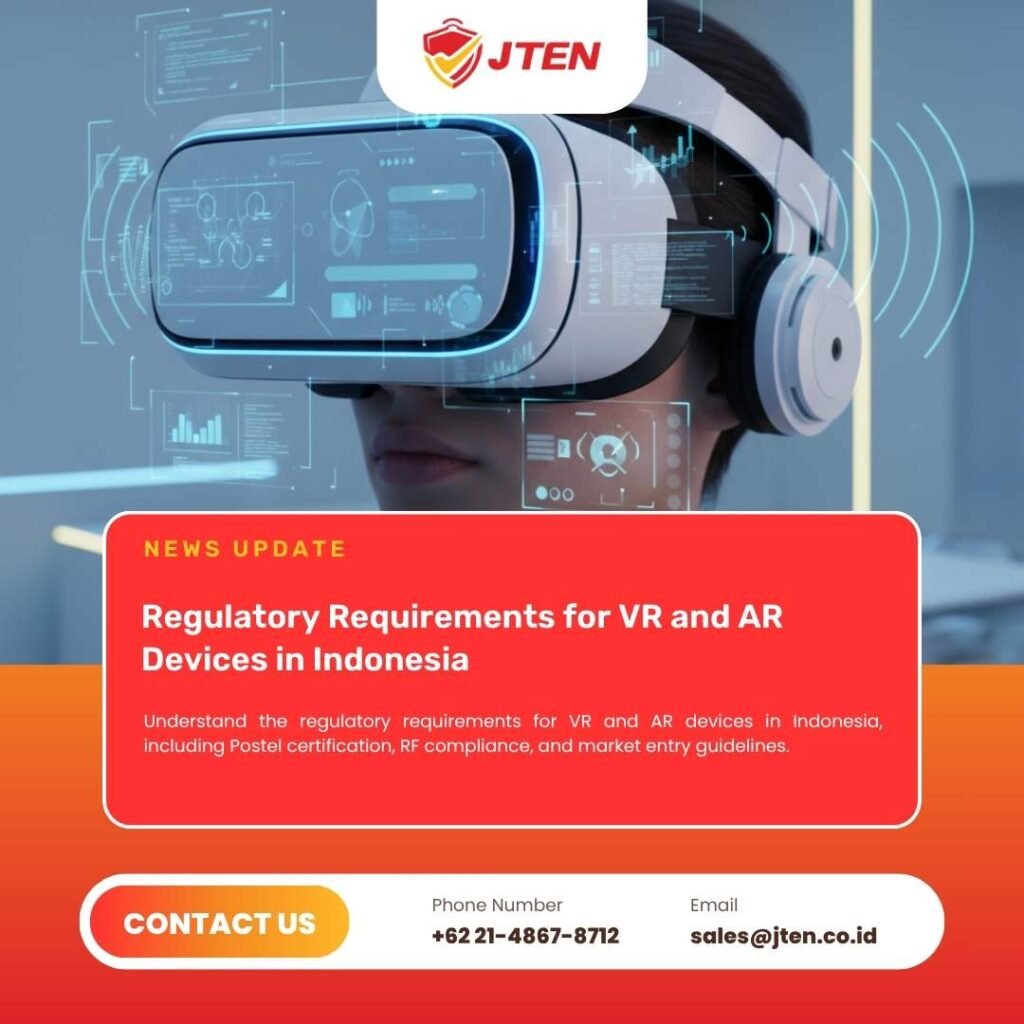
Regulatory Requirements for VR and AR Devices in Indonesia
Virtual Reality (VR) and Augmented Reality (AR) technologies are rapidly transforming industries such as gaming, education, healthcare, and industrial training. As these devices become more advanced and widely adopted, Indonesia has emerged as a promising market for VR and AR products. However, before entering the Indonesian market, manufacturers and importers must understand the regulatory requirements that apply to these devices particularly those related to telecommunication compliance. Why VR and AR Devices Are Regulated Most VR and AR devices are equipped with wireless connectivity such as: These features enable seamless interaction with other devices but also classify VR and AR products as telecommunication equipment. As a result, they must comply with regulations set by the Direktorat Jenderal Infrastruktur Digital before they can be legally sold in Indonesia. Key Regulatory Requirements To ensure compliance, VR and AR devices must meet several important requirements: 1. Postel Certification Devices with wireless functionality must obtain Postel certification to verify compliance with Indonesian telecommunication standards. 2. RF (Radio Frequency) Compliance Devices must operate within approved frequency bands and transmission limits to avoid interference with other systems. 3. EMC (Electromagnetic Compatibility) Testing VR and AR devices must demonstrate that they do not cause or are not affected by electromagnetic interference. 4. Technical Documentation Manufacturers must provide complete and consistent documentation, including: Types of VR and AR Devices Covered The following devices typically fall under these regulations: If the device uses wireless communication, certification is generally required. Common Challenges in Certification Companies often encounter difficulties such as: These issues can delay approval and increase costs. Risks of Non-Compliance Failing to meet regulatory requirements can lead to: Certification Process Overview The certification process generally includes: Proper planning is essential, especially for complex devices like VR and AR systems. How JTen Can Help JTen provides professional support for companies navigating regulatory requirements in Indonesia. Our services include: With JTen, businesses can ensure efficient and successful certification. Conclusion As VR and AR technologies continue to grow, regulatory compliance becomes a critical factor for market entry in Indonesia. Understanding and fulfilling these requirements will help businesses avoid delays, reduce risks, and successfully launch their products. Partner with JTen to ensure your VR and AR devices meet all regulatory standards and are ready for the Indonesian market.