Smartwatches have become one of the fastest growing wearable devices in Indonesia. With features such as Bluetooth connectivity, WiFi, GPS, and even cellular support, these devices are no longer just accessories they are part of the telecommunication ecosystem.
For manufacturers and importers, entering the Indonesian market requires more than just product readiness. It requires full compliance with local regulations, including Postel certification.
Why Smartwatches Require Certification
Smartwatches are classified as telecommunication devices because they use wireless communication technologies such as:
- Bluetooth
- WiFi
- LTE or cellular connectivity
- GPS modules
Because of these features, smartwatches must comply with regulations set by the Direktorat Jenderal Infrastruktur Digital before they can be legally sold in Indonesia.
Key Requirements for Smartwatch Certification
To obtain certification, smartwatches must meet several technical and regulatory requirements:
1. RF (Radio Frequency) Compliance
Devices must operate within approved frequency bands and transmission limits.
2. EMC (Electromagnetic Compatibility)
Smartwatches must not interfere with other electronic devices.
3. Technical Documentation
Manufacturers must prepare documents such as:
- Product specifications
- User manuals
- Test reports
- Declaration of conformity
4. Labeling and Identification
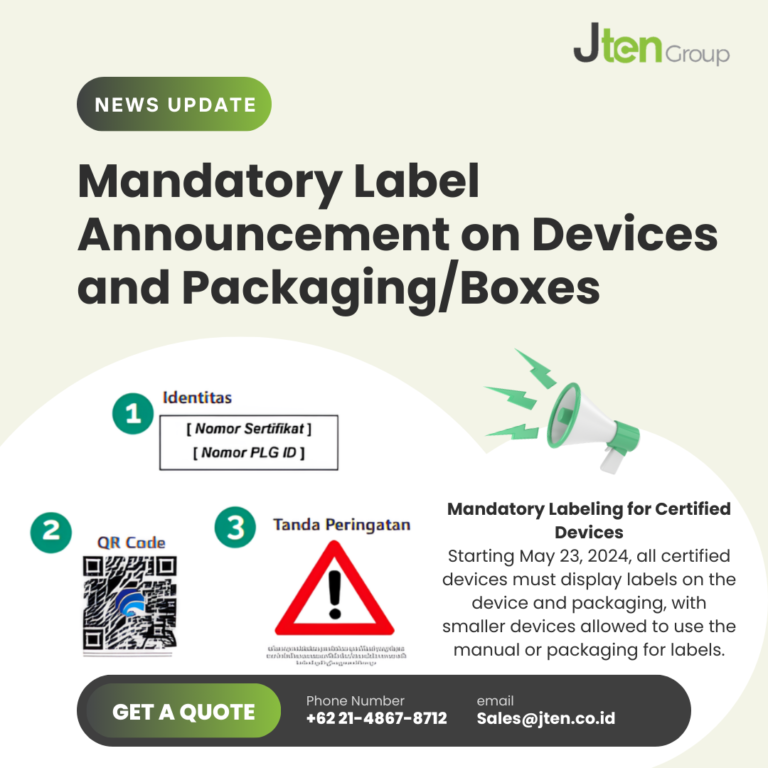
Certified devices must include proper labeling as required by Indonesian regulations.
Step by Step Certification Process
Here is a simplified process to certify smartwatches in Indonesia:
Step 1 Product Identification
Determine the wireless features and applicable regulations.
Step 2 Testing Phase
Conduct RF and EMC testing through accredited laboratories.
Step 3 Document Preparation
Compile all required technical documents and reports.
Step 4 Submission
Submit the application for evaluation and approval.
Step 5 Certification Issuance
Once approved, the device is legally allowed to be marketed in Indonesia.
Common Challenges Faced by Companies
Many companies encounter issues such as:
- Misalignment between global specs and Indonesian standards
- Overlooking certain wireless modules
- Incomplete documentation
- Failed RF testing
These challenges can lead to delays and increased costs.
Risks of Non Compliance
Selling uncertified smartwatches can result in:
- Products being held at customs
- Market access restrictions
- Regulatory penalties
- Damage to brand reputation
How JTen Can Help
JTen provides comprehensive support for smartwatch certification in Indonesia.
Our services include:
- Regulatory consultation
- Product compliance assessment
- RF and EMC testing coordination
- End to end certification handling
With JTen, businesses can ensure faster and smoother certification processes.
Conclusion
Certifying smartwatches for the Indonesian market requires careful planning, technical compliance, and a clear understanding of local regulations.
By following the correct process and working with experienced partners, businesses can avoid delays and successfully launch their products.
Partner with JTen to ensure your smartwatches meet all certification requirements and are ready for the Indonesian market.