Telecom Equipment Import Indonesia is an important process for businesses that want to enter the Indonesian market. Today, many people use smartphones, Wi-Fi routers, Bluetooth devices, and other wireless products.
As a result, the demand for telecom equipment continues to grow. However, businesses must follow local rules before they import and sell these products.
Importers need to prepare the right documents and check product specifications. They may also need SDPPI Certification before selling their products.
This guide explains the main Telecom Equipment Import Indonesia requirements. It covers import documents, product testing, certification, and customs rules.
1. Telecom Equipment Import Indonesia Regulations
Before importing telecom equipment, businesses should learn about Indonesian regulations.
Some telecom products use radio frequencies or connect to communication networks. Therefore, these products may need certification before they enter the market.
For example, the following products may require certification:
-
Smartphones and mobile phones.
-
Wi-Fi routers and modems.
-
Bluetooth speakers and headphones.
-
Smartwatches with wireless features.
-
Wireless cameras.
-
Wireless communication devices.
However, the requirements are not the same for every product. They depend on the product type, technical features, and applicable rules.
For this reason, importers should check the requirements before placing an order with a manufacturer.
2. Import Documents for Telecom Equipment in Indonesia
Complete documents can help importers avoid delays. Therefore, businesses should prepare them before shipping their products.
Common import documents include:
-
Business Identification Number (NIB).
-
Applicable importer identification and business licenses.
-
Commercial Invoice.
-
Packing List.
-
Bill of Lading (B/L) or Air Waybill (AWB).
-
Import Declaration (PIB).
-
Certificate of Origin (COO), when required.
In addition, importers must check the product’s HS Code. This code helps determine the import duties, taxes, and other requirements.
Each document has a different purpose. For example, the Commercial Invoice shows the value of the goods, while the Packing List provides details about the shipment.
As a result, complete and accurate documents can make customs clearance easier.
3. SDPPI Certification for Telecom Equipment Import Indonesia
SDPPI Certification is an important requirement for telecom equipment that falls under Indonesia’s mandatory certification rules.
This certification confirms that a product meets the applicable Indonesian technical standards.
The process generally includes these steps:
-
Identify the product category.
-
Prepare the required technical documents.
-
Check the applicable technical standards.
-
Complete the required product testing.
-
Submit the certification application.
-
Pay the applicable certification fees.
-
Receive the certificate after approval.
However, the process may differ depending on the product and its technical features.
Therefore, importers should check the latest procedures before applying. SDPPI certification services are now handled by the Directorate General of Digital Infrastructure (DJID) under Komdigi.
4. Product Testing Requirements in Indonesia
Product testing helps confirm that telecom equipment meets Indonesian technical standards.
Before applying for certification, importers should request technical documents from their manufacturers. These documents may include:
-
Product specifications.
-
Technical datasheets.
-
User manuals.
-
Product photographs.
-
Product labels.
-
Existing test reports.
-
Brand and model information.
Depending on the product, testing may cover several areas.
Radio Frequency (RF)
RF testing checks the radio frequency features of wireless equipment. It helps confirm that the device follows the required frequency standards.
Electromagnetic Compatibility (EMC)
EMC testing checks how a device handles electromagnetic interference. In other words, it helps ensure that the device can work properly without causing or receiving unacceptable interference.
Other Technical Requirements
Some products may need additional tests. These tests depend on the product’s function and the standards that apply to it.
Therefore, importers should discuss testing needs with the certification team before starting the process.
5. Certification Label Requirements in Indonesia
After receiving SDPPI Certification, businesses must follow the applicable labeling rules.
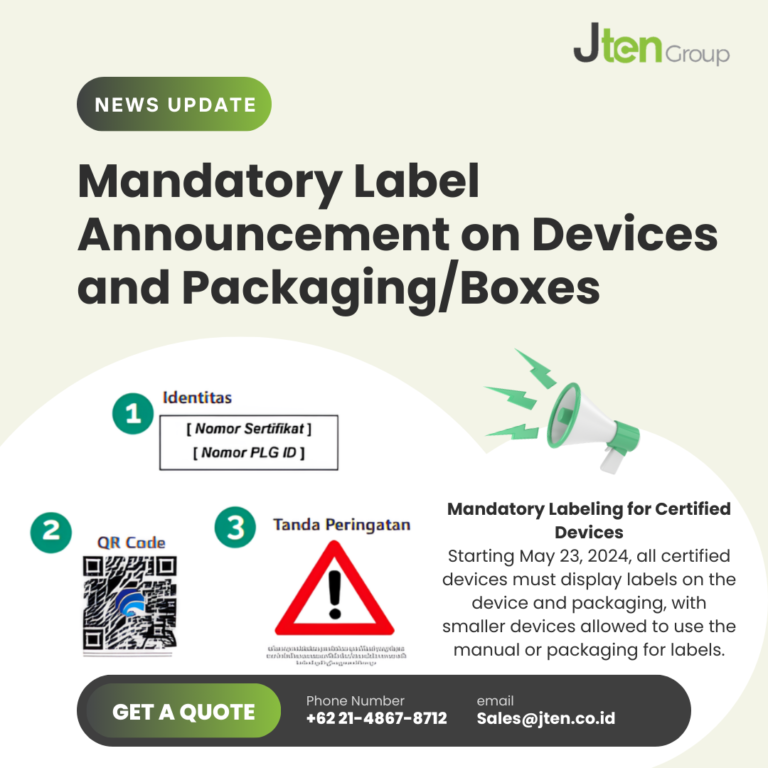
The certification label generally includes:
-
Certificate number.
-
PLG ID.
-
QR Code.
-
Required warning sign.
Importers must place the label on the device and its packaging as required by the regulations.
In addition, all label details should match the issued certificate. This helps prevent errors during product checks.
Before distributing their products, businesses should also review the latest labeling rules.
6. Import Duties and Taxes in Indonesia
Importers should calculate their costs before shipping products to Indonesia.
Several costs may apply, including:
-
Import duties.
-
Import Value Added Tax (VAT).
-
Import Income Tax (PPh 22), where applicable.
-
Customs clearance fees.
-
Shipping and logistics costs.
However, the amount is not always the same. It depends on the product’s HS Code, customs value, country of origin, and current regulations.
For this reason, businesses should check the estimated costs in advance. This step helps them prepare a better import budget.
7. Choosing a Reliable Telecom Equipment Manufacturer
Choosing a reliable manufacturer is another important part of Telecom Equipment Import Indonesia.
A good supplier should provide clear product information and complete technical documents.
Before placing an order, importers should request:
-
Company profile.
-
Product specifications.
-
Brand and model details.
-
Wireless frequency information.
-
Existing test reports.
-
Product photographs.
-
User manuals.
In addition, importers should compare the product details with the documents used for certification.
For example, a change to the wireless module or antenna may affect certification requirements. The same can happen when a manufacturer changes the product model.
Therefore, businesses should confirm product details before production and shipment. This can help reduce problems during testing and certification.
8. Risks of Selling Uncertified Telecom Equipment
Selling telecom equipment without the required certification can cause problems for businesses.
For example, products that do not meet Indonesian rules may face:
-
Administrative sanctions.
-
Distribution restrictions.
-
Product inspection issues.
-
Delays in business operations.
-
Additional compliance costs.
These problems can affect sales and increase business expenses.
Therefore, importers should check the certification requirements before bringing products into Indonesia. They should also make sure that the products meet all applicable rules before selling them.
9. Final Checklist for Telecom Equipment Import Indonesia
Before selling telecom equipment in Indonesia, businesses should review this checklist:
| Requirements | What to Check |
|---|---|
| Business license | Valid NIB and required licenses |
| Import documents | Complete customs documents |
| HS Code | Correct product classification |
| Product specifications | Complete technical information |
| SDPPI Certification | Obtained when required |
| Product testing | Applicable standards fulfilled |
| Product labeling | Follows certification rules |
| Customs duties | Taxes and duties calculated |
By following this checklist, importers can review their preparation step by step. As a result, they can reduce the risk of delays and missing documents.
10. How JTen Helps with Telecom Equipment Import Indonesia
Importing telecom equipment can be challenging, especially for businesses that are new to the Indonesian market.
Importers need to understand local rules, prepare technical documents, and arrange product testing. However, the right support can make this process easier to manage.
JTen provides product certification and compliance support for businesses that want to enter the Indonesian market.
For example, JTen can help vendors understand SDPPI requirements and prepare technical documents. The team can also guide businesses through the necessary certification steps.
With proper support, businesses can manage the process in a more organized way.
For more information, visit the JTen website or contact the team directly.
Contact JTen:
-
Website: https://jten.co.id/
-
Email: sales@jten.co.id
-
WhatsApp: +62 21-4867-8712