Connected devices have become an integral part of modern life. From wireless keyboards and Bluetooth speakers to smart home appliances and wearable technology, products are increasingly equipped with wireless communication features that allow them to connect with smartphones, cloud platforms, and the internet.
While these technologies provide greater convenience and functionality, they also introduce regulatory obligations that manufacturers and importers cannot overlook. In Indonesia, products equipped with radio frequency (RF) communication technologies are generally required to comply with telecommunications regulations before they can be legally marketed.
Understanding Indonesia’s telecom certification requirements is essential for businesses looking to introduce connected devices into one of Southeast Asia’s fastest-growing technology markets.
What Is Telecom Certification?
Telecom certification is a regulatory process that verifies whether a device using radio frequency or telecommunications technology complies with Indonesia’s technical requirements.
The objective of certification is to ensure that connected devices:
- Operate safely within approved radio frequency bands
- Do not interfere with other communication systems
- Meet applicable technical standards
- Can be legally imported, distributed, and sold in Indonesia
Without the required certification, products may face delays during importation or be prohibited from entering the Indonesian market.
Which Products Typically Require Telecom Certification?
Many businesses assume that telecom certification only applies to smartphones or mobile phones. In reality, a wide range of connected devices may require approval if they contain wireless communication features.
Examples include:
- Smartphones and tablets
- Wireless keyboards and mice
- Bluetooth speakers and headphones
- Smartwatches and fitness trackers
- Smart TVs
- Wi-Fi routers and access points
- Smart home devices
- IP cameras with wireless connectivity
- Wireless presentation devices
- Smart lighting systems
- IoT sensors and gateways
- Industrial wireless equipment
The determining factor is not the product category itself, but whether the product incorporates telecommunications or radio frequency technology.
Wireless Technologies That May Trigger Certification
A product may require telecom certification if it includes one or more wireless communication technologies such as:
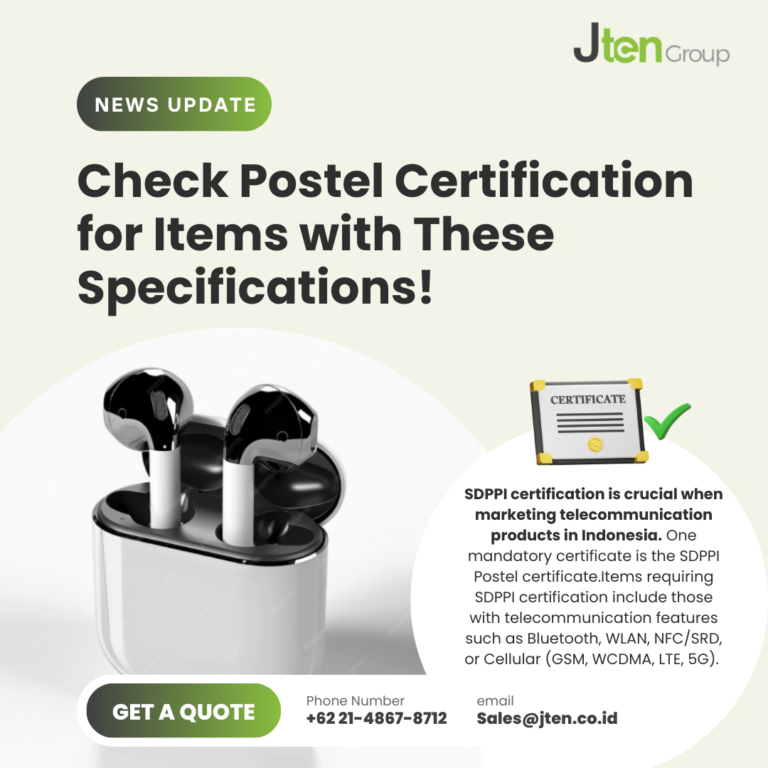
Bluetooth
Used for short-range communication between devices including audio products, computer accessories, and wearable technology.
Wi-Fi
Enables internet connectivity and communication within local networks.
NFC (Near Field Communication)
Commonly used for quick pairing, authentication, and contactless data exchange.
Cellular Connectivity
Products supporting 4G, LTE, or 5G communication typically require telecommunications approval before being marketed.
Other RF Technologies
Depending on the product, technologies such as Zigbee, Thread, LoRa, or other radio modules may also be subject to regulatory evaluation.
Why Certification Is Important
Telecommunications certification is not simply an administrative requirement—it plays an important role in protecting both consumers and the national communications infrastructure.
Certification helps ensure that connected devices:
- Operate within approved frequency allocations
- Deliver reliable wireless performance
- Minimise harmful radio interference
- Meet technical performance requirements
- Support a stable telecommunications ecosystem
As more wireless devices enter the market, maintaining compliance becomes increasingly important.
Telecom Certification Is Part of a Broader Compliance Strategy
For many products, telecom certification represents only one part of the overall regulatory process.
Depending on the product, businesses may also need to consider:
SNI Certification
Certain electrical and consumer products are subject to mandatory Indonesian National Standards (SNI).
TKDN Requirements
Some products, particularly those participating in government procurement or regulated industries, may also require compliance with Indonesia’s Domestic Component Level (TKDN) policy.
K3L Compliance
Products may also need to satisfy requirements related to safety, health, environmental protection, and product labelling.
Laboratory Testing
Technical evaluations such as RF testing, Electromagnetic Compatibility (EMC) testing, or other laboratory assessments may be required depending on the product’s features.
Understanding these overlapping requirements early helps businesses avoid delays during market entry.
Common Challenges Faced by Manufacturers and Importers
Many businesses encounter difficulties because they underestimate the regulatory impact of adding wireless functionality to their products.
Common challenges include:
- Determining whether certification is required
- Identifying applicable technical standards
- Preparing complete technical documentation
- Coordinating laboratory testing
- Managing multiple certification requirements
- Adapting to evolving regulations
Early compliance planning helps minimise these risks.
Why Early Planning Matters
Telecom certification should be considered during product development rather than after production has been completed.
Planning early allows businesses to:
- Assess certification requirements before manufacturing
- Prepare technical documentation efficiently
- Schedule laboratory testing in advance
- Avoid product redesigns
- Reduce project costs
- Improve product launch timelines
This proactive approach enables compliance activities to progress alongside product development.
How JTen Can Help
JTen (Jelajah Teknologi Nusa) assists manufacturers, importers, and brand owners in navigating Indonesia’s telecommunications certification process.
Our services include:
- Telecom compliance assessments
- Postel (DJID) certification assistance
- Product classification support
- Laboratory testing coordination
- RF and EMC testing guidance
- Technical documentation review
- SNI certification assistance
- TKDN consultation
- K3L compliance guidance
- End to end certification management
With extensive experience in connected consumer electronics and wireless devices, JTen helps businesses simplify complex regulatory requirements and accelerate market readiness.
Conclusion
As wireless connectivity becomes a standard feature in modern electronics, understanding Indonesia’s telecom certification requirements has never been more important.
Whether a product uses Bluetooth, Wi-Fi, NFC, or cellular communication, manufacturers and importers should evaluate regulatory obligations early to avoid delays, reduce compliance risks, and ensure successful market entry.
Telecom certification is more than a legal requirement, it is an essential part of bringing safe, reliable, and compliant connected devices to Indonesian consumers.
Partner with JTen to navigate Indonesia’s telecommunications certification process with confidence and bring your connected products to market efficiently.