Indonesia is one of Southeast Asia’s largest consumer markets, offering significant opportunities for manufacturers, importers, and global brands. As demand for electronics, household appliances, telecommunications equipment, industrial products, and smart technologies continues to grow, businesses are increasingly looking to introduce their products into the Indonesian market.
However, entering the market requires more than competitive pricing and innovative product design. Companies must also understand Indonesia’s evolving product standards and regulatory requirements to ensure their products can be legally imported, distributed, and sold.
Indonesia’s product standards landscape is built around consumer protection, product safety, telecommunications integrity, environmental responsibility, and the development of domestic industries. Understanding how these requirements work together is essential for achieving efficient market entry and avoiding costly delays.
Why Product Standards Matter
Product standards establish minimum requirements that help ensure products placed on the market are safe, reliable, and suitable for their intended use.
For businesses, complying with these standards provides several important benefits:
- Legal market access
- Enhanced consumer confidence
- Reduced regulatory risk
- Improved product quality
- Stronger brand reputation
- More efficient product launches
Rather than viewing compliance as an administrative burden, successful companies increasingly recognise product standards as part of their overall business strategy.
Indonesia’s Multi Layered Regulatory Framework
Unlike some countries where a single approval is sufficient, Indonesia often requires businesses to evaluate multiple regulatory requirements depending on the characteristics of their products.
Factors that influence applicable requirements include:
- Product category
- Electrical characteristics
- Wireless communication features
- Intended use
- Industry sector
- Applicable government regulations
As products become more advanced, particularly those incorporating wireless technologies or smart functions, regulatory requirements may become increasingly interconnected.
SNI: Indonesia’s National Standard
The Standar Nasional Indonesia (SNI) is one of the most recognised components of Indonesia’s regulatory framework.
SNI establishes technical requirements intended to ensure product quality, safety, and performance.
For certain product categories, SNI certification is mandatory before products can be distributed in Indonesia.
Examples of products that may fall under mandatory SNI requirements include:
- Household electrical appliances
- Audio equipment
- Construction materials
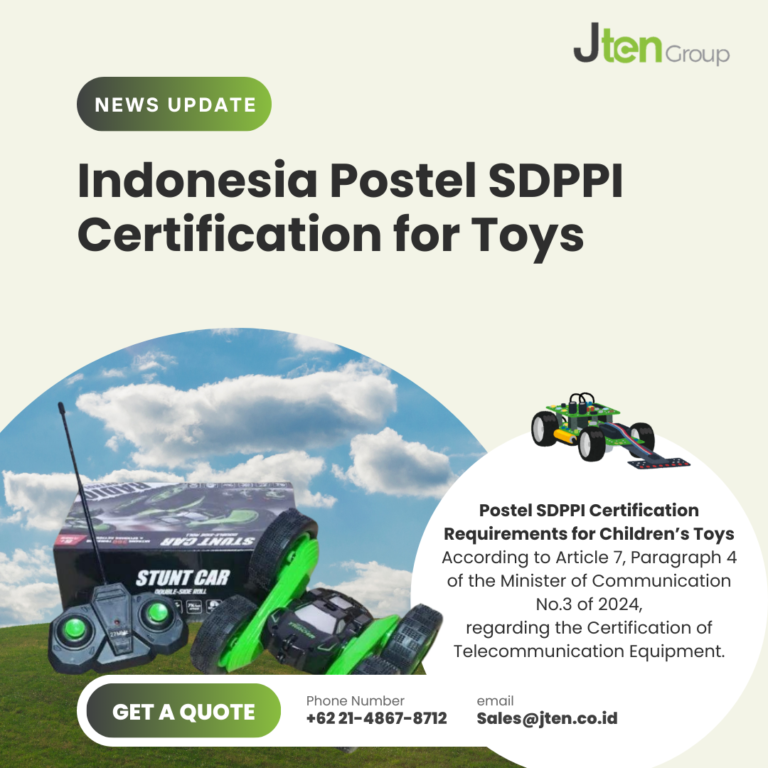
- Children’s products
- Consumer goods
- Industrial equipment
Determining whether SNI is mandatory depends on the specific product category and applicable regulations.
Postel (DJID) Certification for Connected Products
As wireless technologies become standard across consumer electronics, telecommunications compliance has become increasingly important.
Products equipped with:
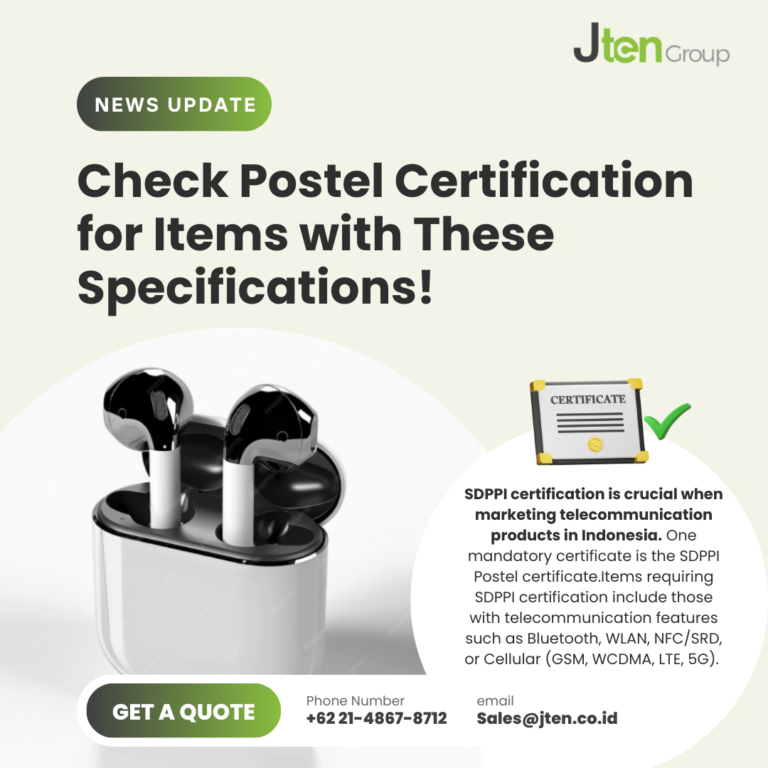
- Bluetooth
- Wi-Fi
- NFC
- Cellular connectivity
- Radio Frequency (RF) transmitters
may require Postel (DJID) certification before entering the Indonesian market.
Common examples include:
- Smartphones
- Tablets
- Smartwatches
- Wireless speakers
- Wireless keyboards
- Smart home devices
- IoT products
- Routers
Adding wireless functionality can significantly change a product’s regulatory obligations.
TKDN and Local Industry Development
Indonesia also promotes domestic manufacturing through the Tingkat Komponen Dalam Negeri (TKDN) programme.
TKDN measures the proportion of local content used in products and services.
For certain industries and procurement activities, demonstrating compliance with TKDN requirements may be necessary.
Businesses that understand TKDN obligations early can better prepare for projects involving government procurement or sectors that prioritise domestic industrial participation.
K3L and Consumer Protection
Another important component of Indonesia’s product standards framework is K3L (Keamanan, Keselamatan, Kesehatan, dan Lingkungan).
K3L focuses on ensuring that products meet requirements related to:
- Consumer safety
- Public health
- Environmental protection
- Product information and labelling
Depending on the product category, K3L may represent an additional compliance requirement before products can be legally marketed.
Laboratory Testing: A Critical Step
Many certification processes require laboratory testing to verify compliance with applicable technical standards.
Depending on the product, testing may include:
- Electrical safety testing
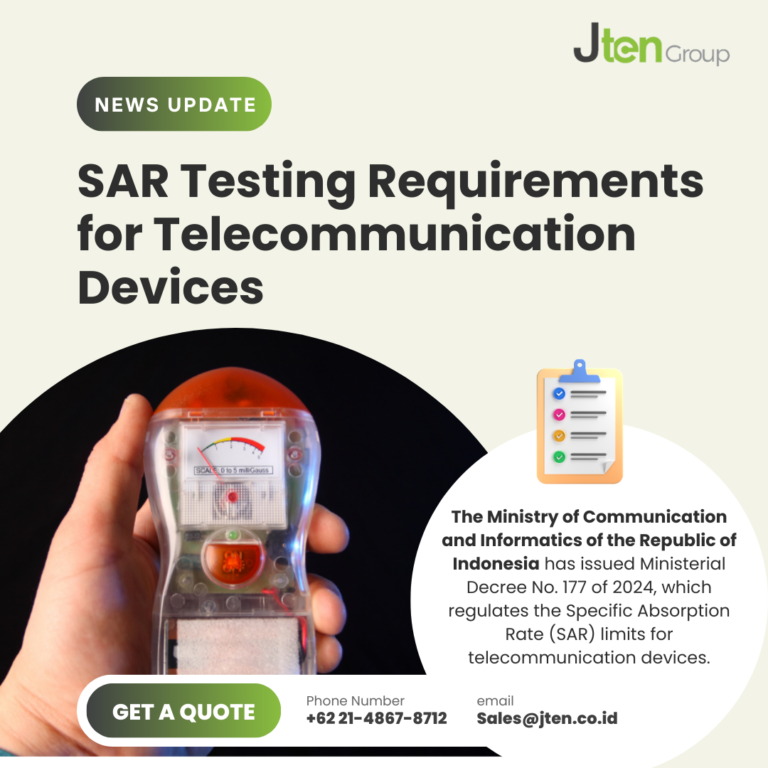
- Electromagnetic Compatibility (EMC) testing
- Radio Frequency (RF) testing
- Performance evaluation
- Product safety assessments
- Specific technical measurements required by regulators
Selecting the appropriate testing pathway early can help avoid repeated evaluations and project delays.
Common Compliance Challenges
Manufacturers and importers frequently encounter several challenges when entering the Indonesian market.
Understanding Applicable Regulations
A single product may be subject to multiple regulatory requirements based on its features and intended use.
Product Classification
Accurate classification is essential because certification requirements often depend on how a product is categorised.
Changing Regulatory Requirements
As technology evolves, regulations continue to develop, particularly for connected products and emerging technologies.
Documentation Preparation
Incomplete technical documentation is one of the most common reasons for delays during certification.
Coordinating Multiple Certifications
Some products may require several approvals before they can be marketed, requiring careful planning and coordination.
Why Early Compliance Planning Matters
Waiting until production has finished to begin compliance activities can create unnecessary risks.
Early planning enables businesses to:
- Identify required certifications
- Prepare documentation efficiently
- Schedule laboratory testing
- Reduce redesign costs
- Improve project timelines
- Minimise regulatory delays
By integrating compliance into product development, companies can streamline market entry and improve overall project efficiency.
Building a Smarter Compliance Strategy
Businesses entering Indonesia should view compliance as a strategic investment rather than a final administrative task.
An effective compliance strategy typically includes:
- Early regulatory assessment
- Product feature evaluation
- Certification planning
- Technical documentation management
- Laboratory testing coordination
- Ongoing monitoring of regulatory updates
This proactive approach supports smoother product launches and reduces uncertainty throughout the approval process.
How JTen Can Help
JTen (Jelajah Teknologi Nusa) provides comprehensive regulatory consulting and certification services to help manufacturers, importers, and brand owners navigate Indonesia’s product standards landscape.
Our services include:
- Product compliance assessments
- SNI certification assistance
- Postel (DJID) certification support
- TKDN consultation
- K3L compliance guidance
- Laboratory testing coordination
- Technical documentation review
- End-to-end certification management
Whether your product is a household appliance, wireless device, industrial product, or consumer electronic, JTen helps simplify complex regulatory requirements and supports a more efficient route to market.
Conclusion
Indonesia’s product standards landscape is designed to ensure that products entering the market meet requirements for safety, quality, performance, telecommunications, and environmental responsibility.
As products become increasingly connected and regulations continue to evolve, manufacturers and importers must adopt a proactive approach to compliance. Understanding how SNI, Postel (DJID), TKDN, K3L, and laboratory testing work together can significantly reduce project risks and improve market readiness.
By planning early and working with experienced compliance specialists such as JTen, businesses can navigate Indonesia’s regulatory framework more efficiently and bring compliant products to market with confidence.