Indonesia offers tremendous opportunities for importers looking to introduce consumer electronics, household appliances, industrial equipment, telecommunications devices, and many other products. With a large consumer base and a growing economy, the country remains one of Southeast Asia’s most attractive markets.
However, successfully importing products into Indonesia requires more than arranging logistics and customs clearance. Before a product can be legally marketed, importers must evaluate various regulatory and compliance requirements that may apply based on the product’s characteristics.
Failing to address these requirements early can lead to shipment delays, additional testing, certification issues, and increased project costs. By understanding the compliance factors before product launch, importers can streamline the approval process and reduce unnecessary business risks.
Why Compliance Planning Matters for Importers
Many importers focus primarily on sourcing products, negotiating with manufacturers, and planning distribution. Compliance is often considered only after the products are ready for shipment.
This approach can create significant challenges because regulatory approvals often require time for documentation review, laboratory testing, and certification.
Early compliance planning helps businesses:
- Reduce certification delays
- Avoid unexpected regulatory requirements
- Improve product launch schedules
- Minimise additional project costs
- Ensure smoother customs and distribution processes
Compliance should be viewed as an integral part of the import strategy rather than a final administrative step.
1. Determine Whether Your Product Requires Certification
The first step is identifying whether the product falls under mandatory certification requirements.
Depending on its category and technical characteristics, a product may require one or more regulatory approvals before it can enter the Indonesian market.
Common certifications include:
- SNI (Indonesian National Standard)
- Postel (DJID) Certification
- TKDN compliance
- K3L compliance
- Other sector-specific approvals
Each certification serves a different purpose and may apply to different types of products.
2. Evaluate Wireless Connectivity Features
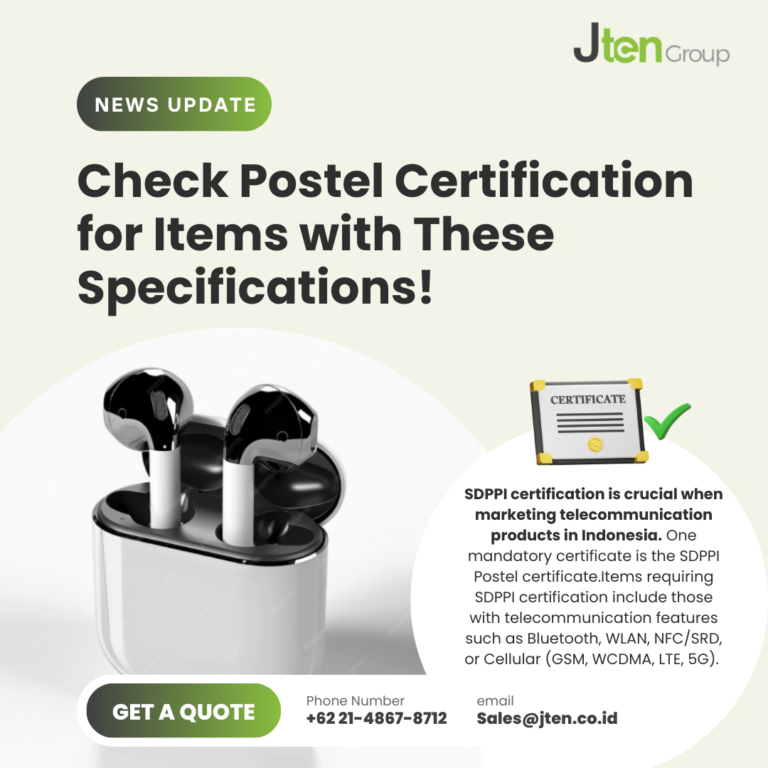
Modern products increasingly include wireless technologies, even when connectivity is not their primary function.
Examples include:
- Bluetooth
- Wi-Fi
- NFC
- Cellular communication
- Zigbee
- Thread
Products equipped with these technologies may require Postel (DJID) certification and related laboratory testing before being marketed in Indonesia.
Importers should review technical specifications carefully to identify embedded wireless modules that could affect compliance requirements.
3. Check Whether SNI Applies
Some products are subject to mandatory Standar Nasional Indonesia (SNI) regulations.
Depending on the product category, SNI certification may be required to demonstrate compliance with safety, quality, and performance standards.
Examples of products that may require SNI include:
- Household electrical appliances
- Audio equipment
- Construction materials
- Children’s products
- Certain consumer goods
Determining whether SNI is mandatory should be one of the earliest steps in the compliance process.
4. Review K3L Requirements
Certain products are also subject to K3L (Keamanan, Keselamatan, Kesehatan, dan Lingkungan) requirements.
K3L focuses on ensuring products meet standards related to:
- Consumer safety
- Public health
- Environmental protection
- Product labeling
- Safe product information
Understanding whether K3L applies can help businesses prepare the required documentation before shipment.
5. Assess TKDN Obligations
Some industries require compliance with Tingkat Komponen Dalam Negeri (TKDN) regulations.
Although not all imported products are subject to TKDN, businesses involved in government procurement, telecommunications, energy, or other regulated sectors should determine whether local content requirements apply.
Early evaluation helps businesses avoid delays later in the project.
6. Prepare Complete Technical Documentation
Incomplete documentation is one of the most common reasons certification applications are delayed.
Importers should work with manufacturers to obtain documents such as:
- Product specifications
- User manuals
- Circuit diagrams (if applicable)
- Bill of materials
- Test reports
- Product photographs
- Label artwork
Preparing these documents in advance significantly improves the efficiency of the certification process.
7. Plan Laboratory Testing Early
Many certifications require testing by accredited laboratories.
Depending on the product, testing may include:
- Radio Frequency (RF) testing
- Electromagnetic Compatibility (EMC) testing
- Electrical safety testing
- Performance evaluation
- Specific technical measurements required by regulators
Scheduling laboratory testing early helps prevent bottlenecks that could delay product launches.
8. Monitor Regulatory Updates
Indonesia’s regulatory landscape continues to evolve, particularly for connected products, telecommunications equipment, and consumer electronics.
Importers should stay informed about:
- Updated technical standards
- New certification procedures
- Revised government regulations
- Changes to testing requirements
Regular monitoring helps businesses remain compliant as regulations develop.
Common Mistakes Importers Should Avoid
Many compliance challenges arise from avoidable mistakes, including:
- Assuming products approved in other countries automatically meet Indonesian requirements
- Overlooking wireless features that trigger additional certifications
- Beginning certification only after products have shipped
- Submitting incomplete technical documentation
- Failing to confirm whether multiple certifications are required
Avoiding these mistakes can save both time and cost.
The Value of Working with Compliance Experts
Indonesia’s regulatory framework can be complex, particularly for imported products with multiple technologies or certifications.
Experienced compliance consultants can help businesses:
- Identify applicable regulations
- Review product specifications
- Prepare documentation
- Coordinate laboratory testing
- Manage certification timelines
- Communicate with relevant authorities
Professional guidance helps reduce uncertainty while improving project efficiency.
How JTen Can Help
JTen (Jelajah Teknologi Nusa) provides comprehensive compliance solutions for importers bringing products into Indonesia.
Our services include:
- Product compliance assessments
- SNI certification assistance
- Postel (DJID) certification support
- TKDN consultation
- K3L compliance guidance
- Laboratory testing coordination
- Technical documentation review
- Customs clearance support
- End-to-end certification management
Whether you are importing consumer electronics, household appliances, industrial equipment, or connected devices, JTen helps simplify the regulatory process and supports faster market entry.
Conclusion
Launching imported products successfully in Indonesia requires careful planning beyond manufacturing and logistics. Evaluating compliance requirements before shipment allows businesses to identify applicable certifications, prepare technical documentation, coordinate testing, and avoid costly delays.
By understanding factors such as SNI, Postel (DJID), TKDN, K3L, and laboratory testing requirements, importers can develop a more efficient market entry strategy while reducing regulatory risks.
Partner with JTen to evaluate your product’s compliance requirements before launch and ensure a smoother, faster, and more confident entry into the Indonesian market.
Hashtags
#ProductCompliance
#ImporterGuide
#IndonesiaRegulation
#SNI
#Postel
#DJID
#TKDN
#K3L
#MarketAccess
#JTen