Uncategorized

Uncategorized

The Future of Connected Electronics in Indonesia

Indonesia is entering a new era of digital transformation, driven by rapid advancements in wireless communication, the Internet of Things (IoT), artificial intelligence (AI), and cloud computing. As consumers increasingly embrace smart technologies, connected electronics are becoming an essential part of everyday life. From smart home appliances and wearable devices to connected vehicles and industrial automation systems, products are becoming more intelligent, more connected, and more integrated than ever before. While this technological evolution creates enormous opportunities for manufacturers and importers, it also brings new regulatory challenges. Businesses must not only focus on innovation but also ensure that their products comply with Indonesia’s evolving certification and telecommunications requirements. Connected Electronics Are Becoming the New Standard Only a decade ago, internet connectivity was largely limited to smartphones and computers. Today, almost every electronic product has the potential to communicate with other devices. Examples include: Consumers now expect products to be controlled through mobile applications, integrate with virtual assistants, and exchange data in real time. Connectivity has become a key selling point rather than an optional feature. The Growth of the Internet of Things (IoT) Indonesia is expected to see continued growth in IoT adoption across both consumer and industrial sectors. Smart technologies are increasingly used in: Smart Homes Connected lighting, smart appliances, home security systems, and energy management devices improve convenience and efficiency. Healthcare Wearable devices and remote patient monitoring systems enable real-time health tracking and data sharing. Manufacturing Industrial IoT solutions help businesses improve productivity through predictive maintenance, automation, and equipment monitoring. Transportation Connected vehicles, fleet management systems, GPS tracking, and intelligent transportation infrastructure continue to expand. Agriculture Smart irrigation, environmental sensors, and connected farming equipment support more efficient agricultural practices. As IoT adoption grows, so does the number of products requiring regulatory assessment before entering the Indonesian market. Wireless Technologies Will Continue to Evolve Future connected electronics will rely on increasingly advanced communication technologies. These include: These technologies will enable faster communication, lower power consumption, improved security, and better interoperability between devices. At the same time, they introduce new technical and regulatory considerations for manufacturers. Artificial Intelligence Is Driving Smarter Devices Artificial Intelligence is becoming an integral part of connected electronics. Modern devices can now: Examples include AI-powered security cameras, intelligent household appliances, smart speakers, and health monitoring wearables. As AI capabilities continue to expand, connected products will become even more sophisticated. Compliance Will Become More Important Than Ever As products become smarter and more connected, regulatory compliance will play an increasingly significant role. Manufacturers and importers must consider whether products require approvals related to: Postel (DJID) Certification Products using Bluetooth, Wi-Fi, NFC, cellular communication, or other radio frequency technologies generally require telecommunications certification before entering the Indonesian market. SNI Certification Many consumer and electrical products are subject to Indonesia’s National Standard (SNI) requirements to ensure product safety and quality. K3L Compliance Some products must also comply with regulations concerning safety, health, environmental protection, and labeling. TKDN Requirements Certain industries and procurement activities require products to satisfy Domestic Component Level (TKDN) regulations. As technologies evolve, these regulatory frameworks are expected to continue adapting. Consumer Expectations Are Also Changing Today’s consumers no longer purchase products based solely on price or appearance. They increasingly expect products to be: Meeting these expectations requires manufacturers to combine innovation with regulatory compliance. Opportunities for Manufacturers and Importers Indonesia’s growing digital economy presents significant opportunities for businesses introducing connected electronics. Companies that invest in compliance from the beginning can benefit from: Rather than treating certification as an obstacle, businesses should view it as an investment in sustainable growth. Preparing for the Future The future of connected electronics will continue to be shaped by innovation, but successful products will also depend on regulatory readiness. Businesses should: Early planning helps reduce risk while improving time-to-market. How JTen Can Help JTen (Jelajah Teknologi Nusa) supports manufacturers, importers, and technology companies in bringing connected products to the Indonesian market. Our services include: Whether you are launching a smart home product, wearable device, IoT solution, or next-generation wireless technology, JTen helps ensure your products are prepared for Indonesia’s regulatory landscape. Conclusion The future of connected electronics in Indonesia is filled with opportunity. As IoT, artificial intelligence, and advanced wireless technologies become increasingly integrated into everyday products, businesses have unprecedented opportunities to innovate and grow. However, innovation alone is not enough. Manufacturers and importers must also understand the evolving regulatory requirements that accompany connected technologies. By integrating compliance into product development and preparing early for certifications such as Postel (DJID), SNI, TKDN, and K3L, businesses can accelerate market entry while building trust with consumers and business partners. With the right compliance strategy and support from JTen, your connected products can be ready not only for the future of technology but also for the future of Indonesia’s regulatory landscape. Hashtag #ConnectedElectronics#SmartDevices#IoT#Postel#DJID#WirelessTechnology#SNI#TKDN#ProductCompliance#JTen
Uncategorized

Wireless Innovation and the Expanding Need for Postel Certification

Wireless technology has become one of the biggest driving forces behind innovation in consumer electronics. Products that once relied on cables now communicate effortlessly through Bluetooth, Wi-Fi, Near Field Communication (NFC), and cellular networks. From smart home appliances and wearable devices to wireless gaming accessories and industrial IoT equipment, connectivity has become an expected feature rather than a luxury. While these innovations improve convenience and create new business opportunities, they also introduce important regulatory responsibilities. In Indonesia, many products equipped with wireless communication technologies are required to obtain Postel Certification (DJID Certification) before they can be legally imported, distributed, or sold. As more manufacturers integrate wireless features into their products, the demand for Postel certification continues to grow. Understanding these requirements early is essential for businesses seeking a smooth and efficient product launch. The Rapid Growth of Wireless Technology Wireless connectivity is no longer limited to smartphones and laptops. Today, it can be found in almost every category of electronic products. Common examples include: Consumers increasingly expect products to connect seamlessly with smartphones, cloud platforms, and smart home ecosystems. As a result, manufacturers are embedding wireless modules into products that previously had no communication capabilities. Why Wireless Features Affect Regulatory Compliance Adding Bluetooth or Wi-Fi may seem like a simple product enhancement, but from a regulatory perspective, it significantly changes how a product is evaluated. Wireless communication uses radio frequency (RF) spectrum, which is regulated to ensure devices operate safely and do not interfere with other communication systems. Because of this, products with wireless transmitters are generally subject to telecommunications regulations before they can be marketed in Indonesia. Even products whose primary purpose is unrelated to communication—such as kitchen appliances or computer accessories—may require Postel certification if they include wireless functionality. What Is Postel Certification? Postel Certification, now administered under the Directorate General of Digital Infrastructure (DJID) within Indonesia’s Ministry of Communication and Digital Affairs (Komdigi), is a regulatory approval process for telecommunications equipment and devices using radio frequency technology. The certification process verifies that products: Without the required approval, products may encounter import restrictions or be prohibited from entering the Indonesian market. Wireless Technologies That Commonly Require Certification Manufacturers should pay close attention to products equipped with technologies such as: Bluetooth Used in wireless audio devices, gaming accessories, computer peripherals, and wearable electronics. Wi-Fi Found in smart home products, networking equipment, printers, televisions, and household appliances. NFC (Near Field Communication) Used for device pairing, access control, contactless payment, and authentication. Cellular Connectivity Products supporting 4G LTE or 5G communication generally require telecommunications approval before being sold. Other RF Technologies Technologies such as Zigbee, Thread, LoRa, proprietary RF modules, and other short-range communication systems may also be subject to certification depending on their operating frequencies. Products That Frequently Require Postel Certification Many businesses are surprised to learn that Postel certification applies to far more than smartphones. Products commonly requiring evaluation include: As connected devices continue to expand across industries, the number of products requiring telecommunications certification continues to increase. Why Early Compliance Planning Is Essential One of the most common mistakes manufacturers and importers make is waiting until production has been completed before considering certification. This approach often results in: By evaluating regulatory requirements during product development, businesses can avoid unnecessary delays and better align certification activities with manufacturing schedules. Postel Certification Is Often Only One Part of Compliance For many products, telecommunications approval is only one component of the overall compliance process. Depending on the product category, businesses may also need to consider: SNI Certification Certain electrical and consumer products are subject to mandatory Indonesian National Standards (SNI). TKDN Requirements Some products must comply with Domestic Component Level (TKDN) regulations, particularly in government procurement and strategic industries. K3L Compliance Products may also need to satisfy requirements related to consumer safety, health, environmental protection, and labeling. Laboratory Testing Additional evaluations such as RF testing, Electromagnetic Compatibility (EMC) testing, and electrical safety testing may also be necessary. Understanding the complete compliance landscape helps businesses avoid overlooking important regulatory obligations. The Business Benefits of Early Certification Planning Integrating compliance into product development provides several advantages. Businesses can: Rather than treating certification as a final administrative task, successful companies incorporate compliance into their overall product strategy. How JTen Can Help JTen (Jelajah Teknologi Nusa) provides comprehensive regulatory consulting and certification support for manufacturers, importers, and brand owners introducing wireless products into Indonesia. Our services include: Whether your product is a smart home appliance, wearable device, wireless accessory, or industrial IoT solution, JTen helps simplify the certification process and supports faster market entry. Conclusion Wireless innovation is transforming nearly every category of electronic products. As Bluetooth, Wi-Fi, NFC, and other wireless technologies become standard features, regulatory compliance becomes increasingly important. Manufacturers and importers should recognise that adding wireless functionality often introduces additional certification requirements, particularly Postel (DJID) Certification. By understanding these obligations early and integrating compliance into product development, businesses can reduce delays, lower costs, and bring innovative products to the Indonesian market with greater confidence. Partner with JTen to navigate Indonesia’s Postel certification process and ensure your wireless products are fully prepared for a successful market launch. Hashtags #Postel#DJID#WirelessTechnology#WirelessInnovation#Bluetooth#WiFi#IoT#ProductCompliance#IndonesiaRegulation#JTen

Uncategorized

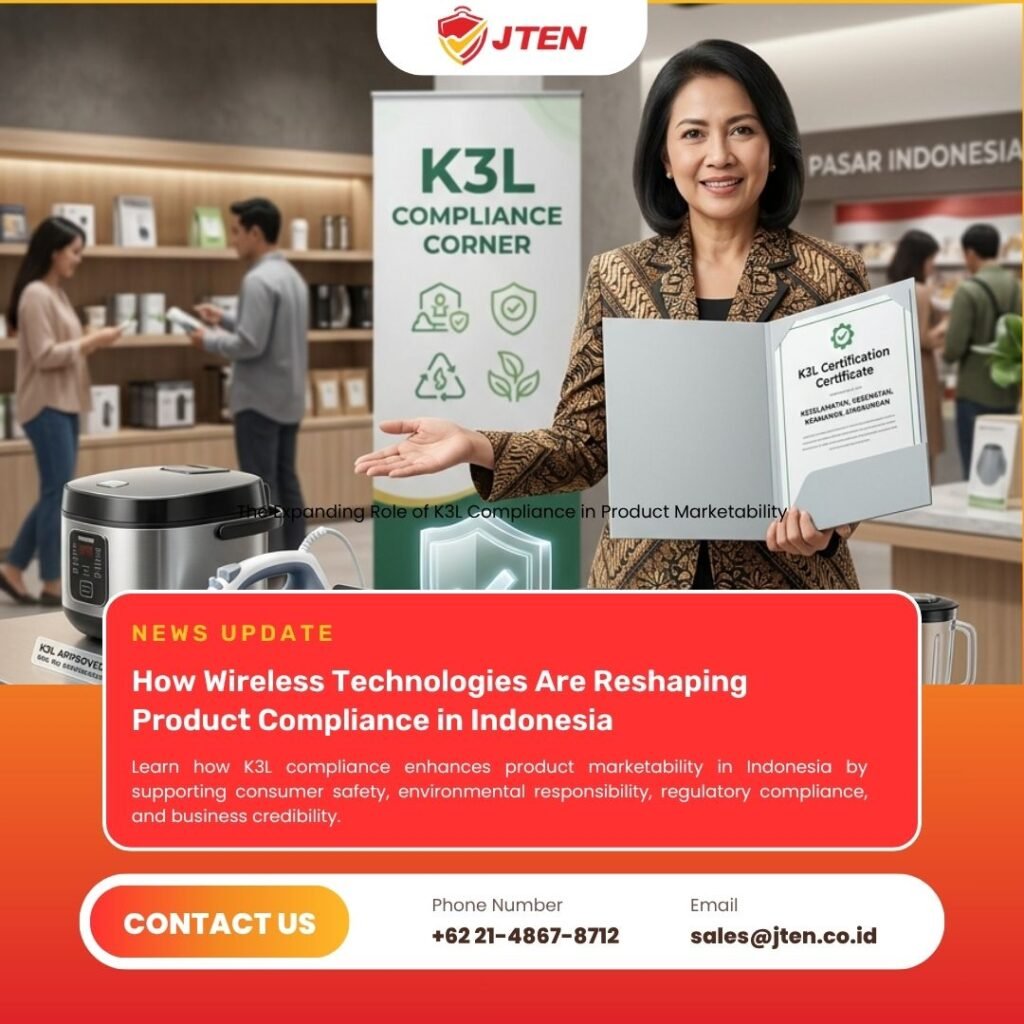
The Expanding Role of K3L Compliance in Product Marketability

Indonesia’s consumer market continues to grow rapidly, creating significant opportunities for manufacturers, importers, and international brands. However, introducing a product into the Indonesian market requires more than competitive pricing and attractive features. Businesses must also ensure their products comply with regulations that protect consumers and the environment. One of the most important compliance frameworks is K3L (Keamanan, Keselamatan, Kesehatan, dan Lingkungan). Traditionally viewed as a regulatory obligation, K3L is now playing a much broader role in determining a product’s commercial success. Companies that understand and implement K3L requirements early can improve market readiness, strengthen customer confidence, and reduce regulatory risks. Rather than seeing K3L as another administrative process, forward-thinking businesses increasingly recognise it as a strategic advantage that enhances product marketability. What Is K3L? K3L stands for Keamanan, Keselamatan, Kesehatan, dan Lingkungan, which translates to Security, Safety, Health, and Environment. Its primary objective is to ensure that products circulating in Indonesia meet standards that protect consumers while minimising negative impacts on public health and the environment. Depending on the product category, K3L requirements may cover areas such as: For certain products, compliance with K3L regulations is mandatory before they can be legally distributed in Indonesia. Why K3L Is Becoming More Important Several factors have increased the significance of K3L compliance over the past few years. Growing Consumer Expectations Consumers today are more informed than ever. They not only compare prices and features but also expect products to be safe, reliable, and environmentally responsible. Products that comply with recognised regulatory standards are often perceived as more trustworthy, giving businesses an advantage in competitive markets. Stronger Regulatory Oversight Indonesia continues to strengthen its regulatory framework to improve consumer protection and environmental sustainability. Government agencies are placing greater emphasis on ensuring products entering the market meet applicable safety and environmental requirements before they reach consumers. As a result, compliance has become an essential part of doing business rather than an optional consideration. Sustainability Is Influencing Purchasing Decisions Environmental awareness continues to grow among both consumers and businesses. Customers increasingly appreciate products that demonstrate: Although K3L focuses on regulatory compliance, its objectives align closely with broader sustainability initiatives that enhance brand reputation. K3L Supports Product Marketability Compliance is often associated with legal approval, but its commercial benefits are equally important. Building Consumer Trust Consumers naturally feel more confident purchasing products that comply with recognised safety and environmental requirements. This confidence helps businesses strengthen customer loyalty and reduce concerns about product quality. Improving Business Reputation Companies known for prioritising compliance often develop stronger relationships with: A reputation for responsible business practices can become a valuable competitive advantage. Supporting Market Access Products that satisfy applicable K3L requirements are better positioned for legal distribution within Indonesia. Early compliance planning helps businesses avoid unnecessary delays that could affect product launches or commercial agreements. K3L Is Part of a Broader Compliance Framework Modern products often require businesses to comply with multiple regulatory requirements. Depending on the product, companies may also need to consider: SNI Certification Many products are required to comply with Indonesia’s National Standard (SNI), which establishes requirements for safety, quality, and performance. Postel (DJID) Certification Products equipped with wireless technologies such as Bluetooth, Wi-Fi, or cellular communication may require telecommunications certification before being marketed. TKDN Requirements Certain industries and procurement projects require products to comply with Indonesia’s Domestic Component Level (TKDN) policy. Rather than treating these certifications separately, businesses benefit from developing an integrated compliance strategy that addresses all applicable requirements simultaneously. Products Commonly Associated with K3L K3L compliance may apply to a wide variety of products, including: The applicable requirements vary depending on the specific product category and prevailing regulations. Common Challenges Faced by Businesses Manufacturers and importers frequently encounter several compliance challenges. Determining Whether K3L Applies Many businesses are unsure whether their products fall within the scope of K3L regulations. Understanding Documentation Requirements Preparing complete technical documentation and product information can be complex, particularly for imported products. Managing Multiple Certifications A product may require K3L alongside SNI, Postel (DJID), or TKDN compliance, making regulatory planning more complicated. Keeping Pace with Regulatory Updates Indonesia’s regulatory framework continues to evolve alongside technological developments and changing market needs. Working with compliance specialists can help businesses stay informed and prepared. Why Early Compliance Planning Matters The most successful companies incorporate compliance into product development rather than waiting until manufacturing has finished. Early planning enables businesses to: By integrating compliance into the product development process, companies can improve operational efficiency and reduce regulatory uncertainty. How JTen Can Help JTen (Jelajah Teknologi Nusa) provides comprehensive compliance consulting and certification services for businesses entering the Indonesian market. Our services include: Whether you are introducing household appliances, consumer electronics, industrial equipment, or imported products, JTen helps simplify Indonesia’s regulatory requirements and supports a smoother path to market. Conclusion K3L compliance has evolved beyond a regulatory requirement into an important factor influencing product marketability in Indonesia. As consumer expectations, environmental awareness, and regulatory oversight continue to increase, businesses must consider compliance as part of their overall product strategy. Companies that prioritise K3L compliance gain more than legal approval—they strengthen consumer confidence, improve business credibility, reduce regulatory risks, and enhance their competitiveness in the marketplace. By partnering with experienced compliance professionals such as JTen, manufacturers and importers can navigate Indonesia’s regulatory landscape more efficiently while preparing products for long-term commercial success.

Uncategorized

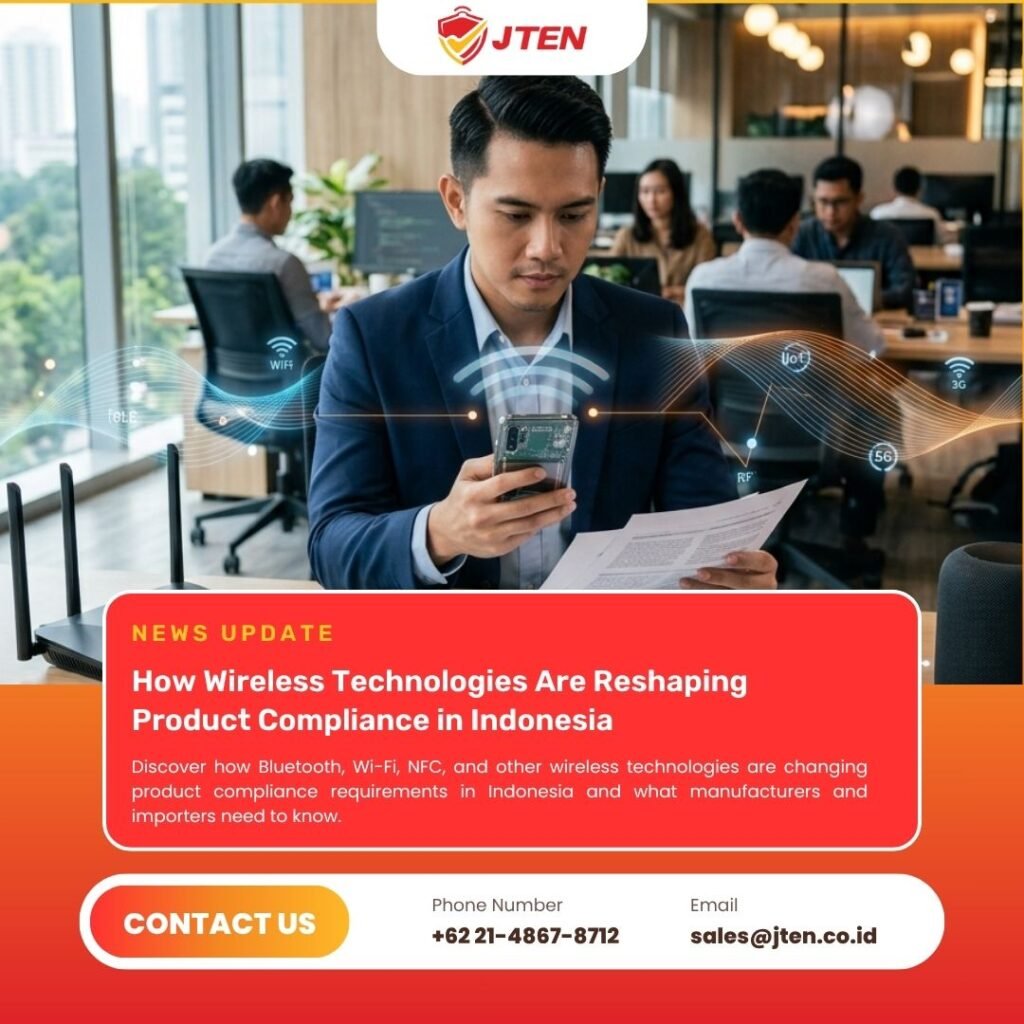
How Wireless Technologies Are Reshaping Product Compliance in Indonesia

Wireless technology has become an essential feature in today’s consumer electronics. Products that once operated independently are now designed to connect seamlessly with smartphones, cloud services, and smart home ecosystems. Whether it’s a Bluetooth speaker, a Wi-Fi-enabled air conditioner, a wireless keyboard, or a smartwatch, connectivity is now a standard expectation rather than a premium feature. While these advancements improve convenience and functionality, they also reshape the regulatory landscape. In Indonesia, adding wireless capabilities to a product can significantly affect the certifications, testing, and approvals required before it can be legally imported and sold. For manufacturers, importers, and brand owners, understanding how wireless technologies influence product compliance is essential to achieving a smooth and timely market entry. The Rise of Connected Devices The rapid growth of the Internet of Things (IoT) has transformed the consumer electronics industry. More devices are now capable of communicating with each other, exchanging data, and being controlled remotely. Examples of connected products include: As these products become more common, regulatory authorities have expanded their focus to ensure wireless communications remain safe, reliable, and compatible with national telecommunications infrastructure. Connectivity Changes Regulatory Requirements Many businesses classify products based solely on their primary function. For example: However, regulators also assess how a product communicates. If a product incorporates technologies such as: it may become subject to additional regulatory requirements beyond traditional product safety standards. In many cases, wireless connectivity transforms a conventional electronic product into a telecommunications device from a regulatory perspective. Indonesia’s Telecom Certification Framework Connected products that utilise radio frequency technology generally need to comply with Indonesia’s telecommunications regulations before entering the market. Telecommunications certification helps ensure that wireless devices: Manufacturers should determine early whether their products require Postel (DJID) certification, particularly if wireless communication is one of the product’s features. Compliance Often Extends Beyond Telecom Certification Wireless technology is only one part of a product’s compliance journey. Depending on the product category, manufacturers and importers may also need to consider: SNI Certification Certain electrical and consumer products are subject to mandatory Indonesian National Standards (SNI), ensuring safety, quality, and performance. K3L Compliance Some products must comply with K3L (Keamanan, Keselamatan, Kesehatan, dan Lingkungan) requirements relating to safety, health, environmental protection, and product labelling. TKDN Requirements Products participating in government procurement projects or specific regulated sectors may also need to meet Indonesia’s Domestic Component Level (TKDN) requirements. Laboratory Testing Many connected products require laboratory evaluations such as: Understanding these overlapping requirements is essential for avoiding delays during certification. Products Most Affected by Wireless Technologies Wireless communication is now found in a wide variety of product categories. Consumer Electronics Bluetooth speakers, smart televisions, wireless audio systems, and home entertainment devices. Computer Accessories Wireless keyboards, gaming mice, presentation remotes, and docking stations. Smart Home Products Smart lighting, connected door locks, Wi-Fi cameras, and home automation hubs. Wearable Devices Smartwatches, fitness trackers, smart glasses, and health monitoring devices. Household Appliances Smart refrigerators, air conditioners, washing machines, and robotic cleaners equipped with remote-control functions. Each category may require different compliance pathways depending on its communication features and intended use. The Risks of Delayed Compliance Planning Many businesses focus on manufacturing and product development first, only considering certification once products are ready for shipment. This approach can create several challenges: Planning compliance from the beginning of product development helps businesses avoid these issues. Why Early Compliance Assessment Matters A proactive compliance strategy enables businesses to identify regulatory requirements before they become costly obstacles. Early assessment helps companies: This integrated approach improves efficiency and supports faster market entry. Future Trends in Wireless Product Regulation The regulatory landscape will continue evolving as new technologies emerge. Future developments likely to influence compliance include: Manufacturers that monitor regulatory changes and incorporate compliance into product development will be better prepared to adapt to future market requirements. How JTen Can Help JTen (Jelajah Teknologi Nusa) provides comprehensive regulatory consulting and certification support for businesses introducing connected products into the Indonesian market. Our services include: Whether your product is a wireless keyboard, smart appliance, wearable device, or IoT solution, JTen helps simplify the certification process and ensures your product is prepared for market entry. Conclusion Wireless technologies have fundamentally changed the way products are designed, used, and regulated. Connectivity is no longer simply a technical feature—it has become a key factor influencing product compliance in Indonesia. As more products integrate Bluetooth, Wi-Fi, NFC, and other wireless technologies, manufacturers and importers must understand the regulatory implications early in the development process. A proactive compliance strategy not only reduces certification risks but also helps businesses launch products more efficiently and confidently. By partnering with experienced regulatory consultants like JTen, businesses can navigate Indonesia’s evolving compliance landscape and ensure their connected products meet all applicable requirements before entering the market

Uncategorized

Understanding Indonesia’s Telecom Certification Requireme

Connected devices have become an integral part of modern life. From wireless keyboards and Bluetooth speakers to smart home appliances and wearable technology, products are increasingly equipped with wireless communication features that allow them to connect with smartphones, cloud platforms, and the internet. While these technologies provide greater convenience and functionality, they also introduce regulatory obligations that manufacturers and importers cannot overlook. In Indonesia, products equipped with radio frequency (RF) communication technologies are generally required to comply with telecommunications regulations before they can be legally marketed. Understanding Indonesia’s telecom certification requirements is essential for businesses looking to introduce connected devices into one of Southeast Asia’s fastest-growing technology markets. What Is Telecom Certification? Telecom certification is a regulatory process that verifies whether a device using radio frequency or telecommunications technology complies with Indonesia’s technical requirements. The objective of certification is to ensure that connected devices: Without the required certification, products may face delays during importation or be prohibited from entering the Indonesian market. Which Products Typically Require Telecom Certification? Many businesses assume that telecom certification only applies to smartphones or mobile phones. In reality, a wide range of connected devices may require approval if they contain wireless communication features. Examples include: The determining factor is not the product category itself, but whether the product incorporates telecommunications or radio frequency technology. Wireless Technologies That May Trigger Certification A product may require telecom certification if it includes one or more wireless communication technologies such as: Bluetooth Used for short-range communication between devices including audio products, computer accessories, and wearable technology. Wi-Fi Enables internet connectivity and communication within local networks. NFC (Near Field Communication) Commonly used for quick pairing, authentication, and contactless data exchange. Cellular Connectivity Products supporting 4G, LTE, or 5G communication typically require telecommunications approval before being marketed. Other RF Technologies Depending on the product, technologies such as Zigbee, Thread, LoRa, or other radio modules may also be subject to regulatory evaluation. Why Certification Is Important Telecommunications certification is not simply an administrative requirement—it plays an important role in protecting both consumers and the national communications infrastructure. Certification helps ensure that connected devices: As more wireless devices enter the market, maintaining compliance becomes increasingly important. Telecom Certification Is Part of a Broader Compliance Strategy For many products, telecom certification represents only one part of the overall regulatory process. Depending on the product, businesses may also need to consider: SNI Certification Certain electrical and consumer products are subject to mandatory Indonesian National Standards (SNI). TKDN Requirements Some products, particularly those participating in government procurement or regulated industries, may also require compliance with Indonesia’s Domestic Component Level (TKDN) policy. K3L Compliance Products may also need to satisfy requirements related to safety, health, environmental protection, and product labelling. Laboratory Testing Technical evaluations such as RF testing, Electromagnetic Compatibility (EMC) testing, or other laboratory assessments may be required depending on the product’s features. Understanding these overlapping requirements early helps businesses avoid delays during market entry. Common Challenges Faced by Manufacturers and Importers Many businesses encounter difficulties because they underestimate the regulatory impact of adding wireless functionality to their products. Common challenges include: Early compliance planning helps minimise these risks. Why Early Planning Matters Telecom certification should be considered during product development rather than after production has been completed. Planning early allows businesses to: This proactive approach enables compliance activities to progress alongside product development. How JTen Can Help JTen (Jelajah Teknologi Nusa) assists manufacturers, importers, and brand owners in navigating Indonesia’s telecommunications certification process. Our services include: With extensive experience in connected consumer electronics and wireless devices, JTen helps businesses simplify complex regulatory requirements and accelerate market readiness. Conclusion As wireless connectivity becomes a standard feature in modern electronics, understanding Indonesia’s telecom certification requirements has never been more important. Whether a product uses Bluetooth, Wi-Fi, NFC, or cellular communication, manufacturers and importers should evaluate regulatory obligations early to avoid delays, reduce compliance risks, and ensure successful market entry. Telecom certification is more than a legal requirement, it is an essential part of bringing safe, reliable, and compliant connected devices to Indonesian consumers. Partner with JTen to navigate Indonesia’s telecommunications certification process with confidence and bring your connected products to market efficiently.

Uncategorized

The Connection Between Product Safety, Sustainability, and Compliance

Indonesia is one of Southeast Asia’s largest consumer markets, offering significant opportunities for manufacturers, importers, and global brands. As demand for electronics, household appliances, telecommunications equipment, industrial products, and smart technologies continues to grow, businesses are increasingly looking to introduce their products into the Indonesian market. However, entering the market requires more than competitive pricing and innovative product design. Companies must also understand Indonesia’s evolving product standards and regulatory requirements to ensure their products can be legally imported, distributed, and sold. Indonesia’s product standards landscape is built around consumer protection, product safety, telecommunications integrity, environmental responsibility, and the development of domestic industries. Understanding how these requirements work together is essential for achieving efficient market entry and avoiding costly delays. Why Product Standards Matter Product standards establish minimum requirements that help ensure products placed on the market are safe, reliable, and suitable for their intended use. For businesses, complying with these standards provides several important benefits: Rather than viewing compliance as an administrative burden, successful companies increasingly recognise product standards as part of their overall business strategy. Indonesia’s Multi Layered Regulatory Framework Unlike some countries where a single approval is sufficient, Indonesia often requires businesses to evaluate multiple regulatory requirements depending on the characteristics of their products. Factors that influence applicable requirements include: As products become more advanced, particularly those incorporating wireless technologies or smart functions, regulatory requirements may become increasingly interconnected. SNI: Indonesia’s National Standard The Standar Nasional Indonesia (SNI) is one of the most recognised components of Indonesia’s regulatory framework. SNI establishes technical requirements intended to ensure product quality, safety, and performance. For certain product categories, SNI certification is mandatory before products can be distributed in Indonesia. Examples of products that may fall under mandatory SNI requirements include: Determining whether SNI is mandatory depends on the specific product category and applicable regulations. Postel (DJID) Certification for Connected Products As wireless technologies become standard across consumer electronics, telecommunications compliance has become increasingly important. Products equipped with: may require Postel (DJID) certification before entering the Indonesian market. Common examples include: Adding wireless functionality can significantly change a product’s regulatory obligations. TKDN and Local Industry Development Indonesia also promotes domestic manufacturing through the Tingkat Komponen Dalam Negeri (TKDN) programme. TKDN measures the proportion of local content used in products and services. For certain industries and procurement activities, demonstrating compliance with TKDN requirements may be necessary. Businesses that understand TKDN obligations early can better prepare for projects involving government procurement or sectors that prioritise domestic industrial participation. K3L and Consumer Protection Another important component of Indonesia’s product standards framework is K3L (Keamanan, Keselamatan, Kesehatan, dan Lingkungan). K3L focuses on ensuring that products meet requirements related to: Depending on the product category, K3L may represent an additional compliance requirement before products can be legally marketed. Laboratory Testing: A Critical Step Many certification processes require laboratory testing to verify compliance with applicable technical standards. Depending on the product, testing may include: Selecting the appropriate testing pathway early can help avoid repeated evaluations and project delays. Common Compliance Challenges Manufacturers and importers frequently encounter several challenges when entering the Indonesian market. Understanding Applicable Regulations A single product may be subject to multiple regulatory requirements based on its features and intended use. Product Classification Accurate classification is essential because certification requirements often depend on how a product is categorised. Changing Regulatory Requirements As technology evolves, regulations continue to develop, particularly for connected products and emerging technologies. Documentation Preparation Incomplete technical documentation is one of the most common reasons for delays during certification. Coordinating Multiple Certifications Some products may require several approvals before they can be marketed, requiring careful planning and coordination. Why Early Compliance Planning Matters Waiting until production has finished to begin compliance activities can create unnecessary risks. Early planning enables businesses to: By integrating compliance into product development, companies can streamline market entry and improve overall project efficiency. Building a Smarter Compliance Strategy Businesses entering Indonesia should view compliance as a strategic investment rather than a final administrative task. An effective compliance strategy typically includes: This proactive approach supports smoother product launches and reduces uncertainty throughout the approval process. How JTen Can Help JTen (Jelajah Teknologi Nusa) provides comprehensive regulatory consulting and certification services to help manufacturers, importers, and brand owners navigate Indonesia’s product standards landscape. Our services include: Whether your product is a household appliance, wireless device, industrial product, or consumer electronic, JTen helps simplify complex regulatory requirements and supports a more efficient route to market. Conclusion Indonesia’s product standards landscape is designed to ensure that products entering the market meet requirements for safety, quality, performance, telecommunications, and environmental responsibility. As products become increasingly connected and regulations continue to evolve, manufacturers and importers must adopt a proactive approach to compliance. Understanding how SNI, Postel (DJID), TKDN, K3L, and laboratory testing work together can significantly reduce project risks and improve market readiness. By planning early and working with experienced compliance specialists such as JTen, businesses can navigate Indonesia’s regulatory framework more efficiently and bring compliant products to market with confidence.

Uncategorized

The Connection Between Product Safety, Sustainability, and Compliance

Today’s consumers expect more from the products they purchase than ever before. While performance, design, and affordability remain important, growing attention is also being given to product safety, environmental responsibility, and regulatory compliance. For manufacturers and importers, these expectations have reshaped the way products are developed and introduced to the market. Regulatory compliance is no longer simply about obtaining approval from government authorities, it has become an essential part of building safe, sustainable, and trustworthy products. In Indonesia, businesses that understand the relationship between product safety, sustainability, and compliance are better positioned to achieve successful market entry while strengthening their reputation and long-term competitiveness. Product Safety: The Foundation of Consumer Confidence Every product placed on the market should be designed and manufactured with user safety in mind. Product safety requirements help minimise risks associated with: Meeting recognised safety standards helps ensure that products perform as intended throughout their expected lifecycle. Beyond regulatory obligations, safe products contribute to stronger customer confidence, fewer product complaints, and reduced business risks. Sustainability Is Becoming a Business Priority Sustainability has evolved from a corporate initiative into an important business consideration. Governments, businesses, and consumers increasingly expect manufacturers to reduce the environmental impact of their products by considering: Although sustainability initiatives vary between industries, they all share a common objective: creating products that deliver value while reducing unnecessary environmental impact. Companies that incorporate sustainability into product development often improve both operational efficiency and brand perception. Compliance Brings Safety and Sustainability Together Compliance provides the framework that connects product safety and environmental responsibility with regulatory requirements. Rather than focusing on a single objective, compliance helps ensure that products satisfy applicable standards before entering the market. Depending on the product category, compliance may involve: Compliance therefore acts as a bridge between product design, legal requirements, and market readiness. Why These Three Elements Cannot Be Separated Some businesses still approach safety, sustainability, and compliance as independent activities managed by different departments. In practice, they are closely connected. Safe Products Support Sustainable Business Products that are reliable and durable typically require fewer repairs, replacements, and recalls, reducing waste and improving customer satisfaction. Sustainable Products Require Responsible Design Selecting appropriate materials, improving energy efficiency, and extending product life often contribute to both environmental objectives and product quality. Compliance Validates Product Readiness Regulatory assessments provide confidence that products have been evaluated against applicable technical and safety requirements before entering the market. Together, these three elements help businesses build products that are both commercially successful and socially responsible. The Indonesian Regulatory Perspective Indonesia has established various regulatory frameworks that support product safety, consumer protection, and sustainable market development. Depending on the product category, businesses may need to consider: SNI Certification The Indonesian National Standard (SNI) helps ensure that products meet applicable safety, quality, and performance requirements. Postel (DJID) Certification Consumer electronics equipped with wireless technologies such as Bluetooth, Wi-Fi, or cellular connectivity may require telecommunications certification before being marketed in Indonesia. TKDN Requirements Certain products are subject to Domestic Component Level (TKDN) requirements, supporting local industrial development and encouraging greater participation in Indonesia’s manufacturing sector. K3L Compliance K3L (Keamanan, Keselamatan, Kesehatan, dan Lingkungan) focuses on consumer safety, public health, and environmental protection, making it an important element of Indonesia’s broader product compliance framework. Together, these regulatory requirements contribute to a safer and more sustainable marketplace. The Business Value of Integrated Compliance Companies that integrate safety, sustainability, and compliance into their product strategy often gain significant advantages. These include: Rather than being viewed as administrative requirements, these activities become valuable investments that support long term business growth. Why Compliance Should Start Early Many compliance challenges occur because regulatory requirements are reviewed only after product development has been completed. A proactive approach allows businesses to: Integrating compliance into product development helps create a smoother and more efficient path to market. How JTen Can Help JTen (Jelajah Teknologi Nusa) provides comprehensive compliance solutions for manufacturers, importers, and brand owners seeking to bring products to the Indonesian market. Our services include: By working closely with clients from the early stages of product development, JTen helps businesses identify regulatory requirements, minimise compliance risks, and prepare products for successful market entry. Conclusion Product safety, sustainability, and regulatory compliance are no longer separate business considerations, they are interconnected elements of successful product development and market access. Companies that prioritise these areas are better equipped to meet regulatory requirements, strengthen consumer trust, and respond to growing expectations for responsible products. As Indonesia’s regulatory landscape continues to evolve, integrating safety, sustainability, and compliance into your product strategy is not only a regulatory necessity but also a competitive advantage. Partner with JTen to simplify your compliance journey and ensure your products are safe, responsible, and ready for the Indonesian market.

Uncategorized

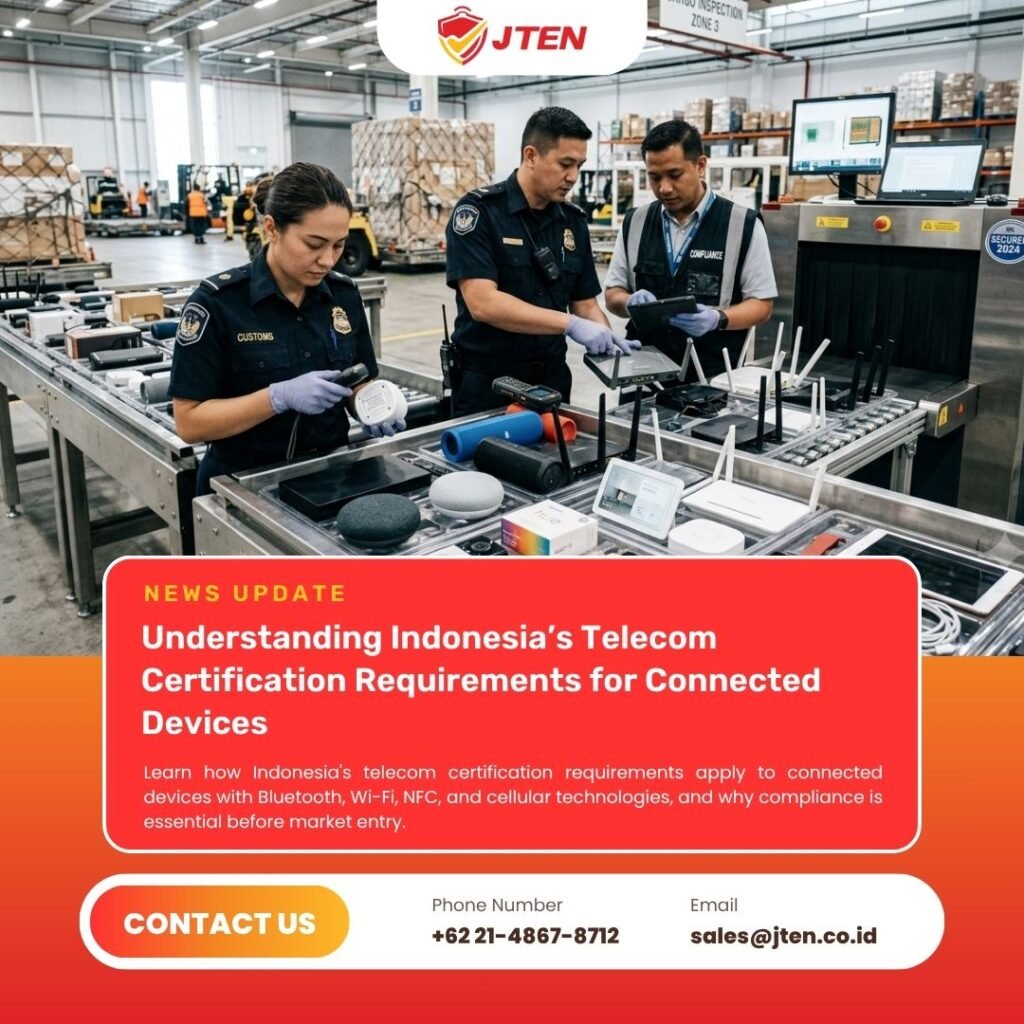
Understanding Indonesia’s Telecom Certification Requirements for Connected Devices

Connected devices have become an integral part of modern life. From wireless keyboards and Bluetooth speakers to smart home appliances and wearable technology, products are increasingly equipped with wireless communication features that allow them to connect with smartphones, cloud platforms, and the internet. While these technologies provide greater convenience and functionality, they also introduce regulatory obligations that manufacturers and importers cannot overlook. In Indonesia, products equipped with radio frequency (RF) communication technologies are generally required to comply with telecommunications regulations before they can be legally marketed. Understanding Indonesia’s telecom certification requirements is essential for businesses looking to introduce connected devices into one of Southeast Asia’s fastest-growing technology markets. What Is Telecom Certification? Telecom certification is a regulatory process that verifies whether a device using radio frequency or telecommunications technology complies with Indonesia’s technical requirements. The objective of certification is to ensure that connected devices: Without the required certification, products may face delays during importation or be prohibited from entering the Indonesian market. Which Products Typically Require Telecom Certification? Many businesses assume that telecom certification only applies to smartphones or mobile phones. In reality, a wide range of connected devices may require approval if they contain wireless communication features. Examples include: The determining factor is not the product category itself, but whether the product incorporates telecommunications or radio frequency technology. Wireless Technologies That May Trigger Certification A product may require telecom certification if it includes one or more wireless communication technologies such as: Bluetooth Used for short-range communication between devices including audio products, computer accessories, and wearable technology. Wi-Fi Enables internet connectivity and communication within local networks. NFC (Near Field Communication) Commonly used for quick pairing, authentication, and contactless data exchange. Cellular Connectivity Products supporting 4G, LTE, or 5G communication typically require telecommunications approval before being marketed. Other RF Technologies Depending on the product, technologies such as Zigbee, Thread, LoRa, or other radio modules may also be subject to regulatory evaluation. Why Certification Is Important Telecommunications certification is not simply an administrative requirement—it plays an important role in protecting both consumers and the national communications infrastructure. Certification helps ensure that connected devices: As more wireless devices enter the market, maintaining compliance becomes increasingly important. Telecom Certification Is Part of a Broader Compliance Strategy For many products, telecom certification represents only one part of the overall regulatory process. Depending on the product, businesses may also need to consider: SNI Certification Certain electrical and consumer products are subject to mandatory Indonesian National Standards (SNI). TKDN Requirements Some products, particularly those participating in government procurement or regulated industries, may also require compliance with Indonesia’s Domestic Component Level (TKDN) policy. K3L Compliance Products may also need to satisfy requirements related to safety, health, environmental protection, and product labelling. Laboratory Testing Technical evaluations such as RF testing, Electromagnetic Compatibility (EMC) testing, or other laboratory assessments may be required depending on the product’s features. Understanding these overlapping requirements early helps businesses avoid delays during market entry. Common Challenges Faced by Manufacturers and Importers Many businesses encounter difficulties because they underestimate the regulatory impact of adding wireless functionality to their products. Common challenges include: Early compliance planning helps minimise these risks. Why Early Planning Matters Telecom certification should be considered during product development rather than after production has been completed. Planning early allows businesses to: This proactive approach enables compliance activities to progress alongside product development. How JTen Can Help JTen (Jelajah Teknologi Nusa) assists manufacturers, importers, and brand owners in navigating Indonesia’s telecommunications certification process. Our services include: With extensive experience in connected consumer electronics and wireless devices, JTen helps businesses simplify complex regulatory requirements and accelerate market readiness. Conclusion As wireless connectivity becomes a standard feature in modern electronics, understanding Indonesia’s telecom certification requirements has never been more important. Whether a product uses Bluetooth, Wi-Fi, NFC, or cellular communication, manufacturers and importers should evaluate regulatory obligations early to avoid delays, reduce compliance risks, and ensure successful market entry. Telecom certification is more than a legal requirement, it is an essential part of bringing safe, reliable, and compliant connected devices to Indonesian consumers. Partner with JTen to navigate Indonesia’s telecommunications certification process with confidence and bring your connected products to market efficiently.

Uncategorized

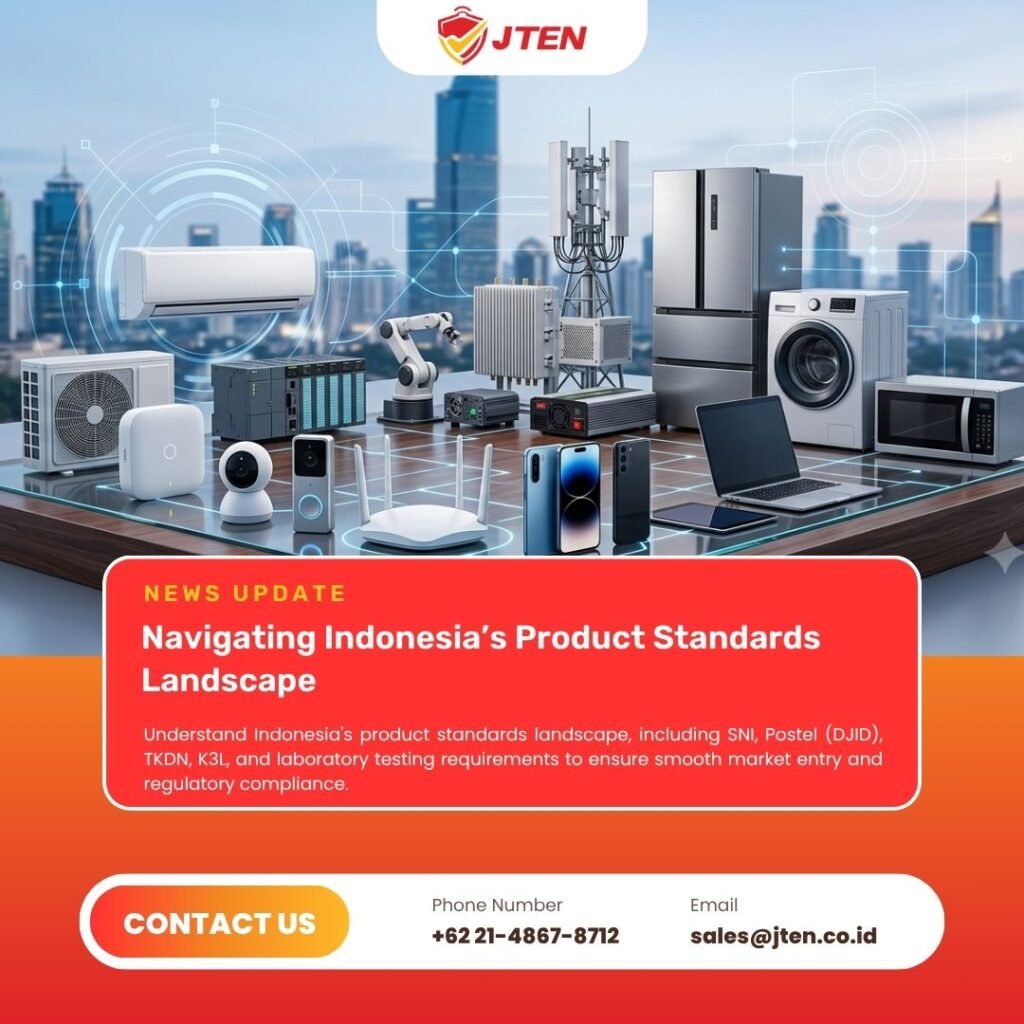
Navigating Indonesia’s Product Standards Landscape

Indonesia is one of Southeast Asia’s largest consumer markets, offering significant opportunities for manufacturers, importers, and global brands. As demand for electronics, household appliances, telecommunications equipment, industrial products, and smart technologies continues to grow, businesses are increasingly looking to introduce their products into the Indonesian market. However, entering the market requires more than competitive pricing and innovative product design. Companies must also understand Indonesia’s evolving product standards and regulatory requirements to ensure their products can be legally imported, distributed, and sold. Indonesia’s product standards landscape is built around consumer protection, product safety, telecommunications integrity, environmental responsibility, and the development of domestic industries. Understanding how these requirements work together is essential for achieving efficient market entry and avoiding costly delays. Why Product Standards Matter Product standards establish minimum requirements that help ensure products placed on the market are safe, reliable, and suitable for their intended use. For businesses, complying with these standards provides several important benefits: Rather than viewing compliance as an administrative burden, successful companies increasingly recognise product standards as part of their overall business strategy. Indonesia’s Multi Layered Regulatory Framework Unlike some countries where a single approval is sufficient, Indonesia often requires businesses to evaluate multiple regulatory requirements depending on the characteristics of their products. Factors that influence applicable requirements include: As products become more advanced, particularly those incorporating wireless technologies or smart functions, regulatory requirements may become increasingly interconnected. SNI: Indonesia’s National Standard The Standar Nasional Indonesia (SNI) is one of the most recognised components of Indonesia’s regulatory framework. SNI establishes technical requirements intended to ensure product quality, safety, and performance. For certain product categories, SNI certification is mandatory before products can be distributed in Indonesia. Examples of products that may fall under mandatory SNI requirements include: Determining whether SNI is mandatory depends on the specific product category and applicable regulations. Postel (DJID) Certification for Connected Products As wireless technologies become standard across consumer electronics, telecommunications compliance has become increasingly important. Products equipped with: may require Postel (DJID) certification before entering the Indonesian market. Common examples include: Adding wireless functionality can significantly change a product’s regulatory obligations. TKDN and Local Industry Development Indonesia also promotes domestic manufacturing through the Tingkat Komponen Dalam Negeri (TKDN) programme. TKDN measures the proportion of local content used in products and services. For certain industries and procurement activities, demonstrating compliance with TKDN requirements may be necessary. Businesses that understand TKDN obligations early can better prepare for projects involving government procurement or sectors that prioritise domestic industrial participation. K3L and Consumer Protection Another important component of Indonesia’s product standards framework is K3L (Keamanan, Keselamatan, Kesehatan, dan Lingkungan). K3L focuses on ensuring that products meet requirements related to: Depending on the product category, K3L may represent an additional compliance requirement before products can be legally marketed. Laboratory Testing: A Critical Step Many certification processes require laboratory testing to verify compliance with applicable technical standards. Depending on the product, testing may include: Selecting the appropriate testing pathway early can help avoid repeated evaluations and project delays. Common Compliance Challenges Manufacturers and importers frequently encounter several challenges when entering the Indonesian market. Understanding Applicable Regulations A single product may be subject to multiple regulatory requirements based on its features and intended use. Product Classification Accurate classification is essential because certification requirements often depend on how a product is categorised. Changing Regulatory Requirements As technology evolves, regulations continue to develop, particularly for connected products and emerging technologies. Documentation Preparation Incomplete technical documentation is one of the most common reasons for delays during certification. Coordinating Multiple Certifications Some products may require several approvals before they can be marketed, requiring careful planning and coordination. Why Early Compliance Planning Matters Waiting until production has finished to begin compliance activities can create unnecessary risks. Early planning enables businesses to: By integrating compliance into product development, companies can streamline market entry and improve overall project efficiency. Building a Smarter Compliance Strategy Businesses entering Indonesia should view compliance as a strategic investment rather than a final administrative task. An effective compliance strategy typically includes: This proactive approach supports smoother product launches and reduces uncertainty throughout the approval process. How JTen Can Help JTen (Jelajah Teknologi Nusa) provides comprehensive regulatory consulting and certification services to help manufacturers, importers, and brand owners navigate Indonesia’s product standards landscape. Our services include: Whether your product is a household appliance, wireless device, industrial product, or consumer electronic, JTen helps simplify complex regulatory requirements and supports a more efficient route to market. Conclusion Indonesia’s product standards landscape is designed to ensure that products entering the market meet requirements for safety, quality, performance, telecommunications, and environmental responsibility. As products become increasingly connected and regulations continue to evolve, manufacturers and importers must adopt a proactive approach to compliance. Understanding how SNI, Postel (DJID), TKDN, K3L, and laboratory testing work together can significantly reduce project risks and improve market readiness. By planning early and working with experienced compliance specialists such as JTen, businesses can navigate Indonesia’s regulatory framework more efficiently and bring compliant products to market with confidence.

Uncategorized

The Connection Between Product Safety, Sustainability, and Compliance

Today’s consumers expect more from the products they purchase than ever before. While performance, design, and affordability remain important, growing attention is also being given to product safety, environmental responsibility, and regulatory compliance. For manufacturers and importers, these expectations have reshaped the way products are developed and introduced to the market. Regulatory compliance is no longer simply about obtaining approval from government authorities, it has become an essential part of building safe, sustainable, and trustworthy products. In Indonesia, businesses that understand the relationship between product safety, sustainability, and compliance are better positioned to achieve successful market entry while strengthening their reputation and long-term competitiveness. Product Safety: The Foundation of Consumer Confidence Every product placed on the market should be designed and manufactured with user safety in mind. Product safety requirements help minimise risks associated with: Meeting recognised safety standards helps ensure that products perform as intended throughout their expected lifecycle. Beyond regulatory obligations, safe products contribute to stronger customer confidence, fewer product complaints, and reduced business risks. Sustainability Is Becoming a Business Priority Sustainability has evolved from a corporate initiative into an important business consideration. Governments, businesses, and consumers increasingly expect manufacturers to reduce the environmental impact of their products by considering: Although sustainability initiatives vary between industries, they all share a common objective: creating products that deliver value while reducing unnecessary environmental impact. Companies that incorporate sustainability into product development often improve both operational efficiency and brand perception. Compliance Brings Safety and Sustainability Together Compliance provides the framework that connects product safety and environmental responsibility with regulatory requirements. Rather than focusing on a single objective, compliance helps ensure that products satisfy applicable standards before entering the market. Depending on the product category, compliance may involve: Compliance therefore acts as a bridge between product design, legal requirements, and market readiness. Why These Three Elements Cannot Be Separated Some businesses still approach safety, sustainability, and compliance as independent activities managed by different departments. In practice, they are closely connected. Safe Products Support Sustainable Business Products that are reliable and durable typically require fewer repairs, replacements, and recalls, reducing waste and improving customer satisfaction. Sustainable Products Require Responsible Design Selecting appropriate materials, improving energy efficiency, and extending product life often contribute to both environmental objectives and product quality. Compliance Validates Product Readiness Regulatory assessments provide confidence that products have been evaluated against applicable technical and safety requirements before entering the market. Together, these three elements help businesses build products that are both commercially successful and socially responsible. The Indonesian Regulatory Perspective Indonesia has established various regulatory frameworks that support product safety, consumer protection, and sustainable market development. Depending on the product category, businesses may need to consider: SNI Certification The Indonesian National Standard (SNI) helps ensure that products meet applicable safety, quality, and performance requirements. Postel (DJID) Certification Consumer electronics equipped with wireless technologies such as Bluetooth, Wi-Fi, or cellular connectivity may require telecommunications certification before being marketed in Indonesia. TKDN Requirements Certain products are subject to Domestic Component Level (TKDN) requirements, supporting local industrial development and encouraging greater participation in Indonesia’s manufacturing sector. K3L Compliance K3L (Keamanan, Keselamatan, Kesehatan, dan Lingkungan) focuses on consumer safety, public health, and environmental protection, making it an important element of Indonesia’s broader product compliance framework. Together, these regulatory requirements contribute to a safer and more sustainable marketplace. The Business Value of Integrated Compliance Companies that integrate safety, sustainability, and compliance into their product strategy often gain significant advantages. These include: Rather than being viewed as administrative requirements, these activities become valuable investments that support long-term business growth. Why Compliance Should Start Early Many compliance challenges occur because regulatory requirements are reviewed only after product development has been completed. A proactive approach allows businesses to: Integrating compliance into product development helps create a smoother and more efficient path to market. How JTen Can Help JTen (Jelajah Teknologi Nusa) provides comprehensive compliance solutions for manufacturers, importers, and brand owners seeking to bring products to the Indonesian market. Our services include: By working closely with clients from the early stages of product development, JTen helps businesses identify regulatory requirements, minimise compliance risks, and prepare products for successful market entry. Conclusion Product safety, sustainability, and regulatory compliance are no longer separate business considerations, they are interconnected elements of successful product development and market access. Companies that prioritise these areas are better equipped to meet regulatory requirements, strengthen consumer trust, and respond to growing expectations for responsible products. As Indonesia’s regulatory landscape continues to evolve, integrating safety, sustainability, and compliance into your product strategy is not only a regulatory necessity but also a competitive advantage. Partner with JTen to simplify your compliance journey and ensure your products are safe, responsible, and ready for the Indonesian market.

Flag Counter
Scroll to Top