Understanding Industrial Radio Communication Systems
Reliable communication is an important part of many industrial operations. Factories, warehouses, mining sites, construction projects, transportation facilities, utilities, and other large-scale operations may rely on radio communication systems to coordinate employees, equipment, vehicles, and operational activities.
Unlike ordinary consumer wireless devices, industrial radio systems are often deployed across specific areas and may operate continuously as part of an organization’s communication infrastructure.
Because these systems use radio frequency spectrum, businesses need to consider not only the technical capabilities of their equipment but also the regulatory requirements governing frequency use.
One important consideration in Indonesia is the Radio Station License (Izin Stasiun Radio or ISR).
What Is ISR?
Izin Stasiun Radio (ISR) is a radio station license associated with the authorized use of radio frequency spectrum for a radio station or communication system under the applicable regulatory framework.
For industrial users, ISR can be relevant because radio communication systems may operate using specific frequencies and technical parameters within a defined location or operational area.
The exact requirement depends on factors such as the frequency being used, type of radio system, technical characteristics, and applicable regulations.
Therefore, businesses should evaluate ISR requirements during the planning stage rather than assuming that all industrial radio equipment can be operated without additional frequency authorization.
Why Do Industrial Radio Systems Need Frequency Planning?
Industrial environments can contain many communication and electronic systems operating simultaneously.
For example, a large facility may use:
- Two-way radios
- Wireless data systems
- Industrial control systems
- Wireless sensors
- Point-to-point radio links
- Security communication systems
- Vehicle communication systems
- Other wireless equipment
If radio systems are deployed without appropriate frequency planning, unwanted interference can affect communication performance.
Frequency planning helps businesses understand how a proposed radio system will operate within its environment and whether the selected frequency and technical parameters are appropriate.
ISR and Industrial Radio Equipment
It is important to distinguish the radio equipment from the authorization to use radio frequency spectrum.
Radio equipment may have technical or telecommunications certification requirements. However, certification of the equipment does not necessarily mean that the organization has obtained authorization to use a particular frequency for its radio station or system.
A simplified way to understand the difference is:
Radio Equipment
→ The physical device used to transmit or receive radio signals.
Equipment Certification
→ Addresses applicable technical requirements for the equipment.
Radio Frequency Authorization / ISR
→ Relates to authorized use of radio frequency spectrum under specified conditions.
These requirements may interact, but they address different aspects of compliance.
What Industrial Businesses Should Evaluate?
Before deploying an industrial radio communication system, businesses should review several key factors.
1. Frequency
The proposed operating frequency is one of the most important elements of the assessment.
Businesses should identify the frequency or frequency range specified by the equipment manufacturer and determine whether it is suitable for the intended application and regulatory framework.
2. Transmitting Power
Transmitting power can affect signal coverage and interference considerations.
Industrial systems may require sufficient coverage across factories, warehouses, construction areas, or other large operational environments.
However, higher transmitting power is not automatically the appropriate solution. Power should be considered together with frequency, antenna characteristics, location, and the applicable technical requirements.
3. Antenna Configuration
Antenna characteristics can influence the performance and coverage of an industrial radio system.
Relevant information may include:
- Antenna type
- Antenna gain
- Antenna height
- Antenna direction
- Installation location
- Connection to the transmitter
Accurate antenna information can therefore be important during technical and frequency planning.
4. Location
The location of a radio station can be an important consideration when evaluating frequency use.
Industrial facilities may be located close to other communication networks, infrastructure, or radio stations.
For this reason, businesses should provide accurate information about where the radio system will be installed and operated.
5. Coverage Area
Businesses should determine the area that needs radio communication coverage.
For example, a communication system may be designed for:
- A single building
- A factory complex
- A warehouse
- A construction site
- A mining operation
- A transportation facility
- Multiple operational locations
Understanding the required coverage can help determine the appropriate technical configuration.
Industrial Applications That May Use Radio Systems
Radio communication can support many different industrial activities.
Manufacturing
Factories may use radio systems for communication between production areas, maintenance teams, supervisors, and security personnel.
Warehousing and Logistics
Radio communication can help coordinate warehouse teams, loading areas, vehicles, and logistics operations.
Construction
Construction sites can use radio systems to coordinate workers and equipment across large or complex areas.
Mining
Large mining operations may require communication across extensive operational areas where reliable wireless communication is important.
Transportation
Radio systems can support communication between operational teams, vehicles, control centers, and field personnel.
Utilities and Infrastructure
Utility and infrastructure operators may deploy radio communication systems for field operations, maintenance, monitoring, and coordination.
The applicable regulatory requirements should be assessed according to the specific system and operating conditions.
ISR Requirements Should Be Considered Before Deployment
One common compliance challenge occurs when a company purchases and installs radio equipment before reviewing frequency authorization requirements.
This approach can create problems if:
- The selected frequency is not appropriate for the intended operation
- Technical specifications do not match the planned system
- Required documentation is incomplete
- The deployment location creates additional frequency considerations
- The radio system requires authorization that was not considered during planning
Evaluating ISR requirements before equipment procurement can help businesses identify these issues earlier.
What Documents and Information May Be Needed?
The exact documentation depends on the applicable licensing process, but businesses should generally prepare accurate information about the proposed radio system.
This may include:
- Product datasheets
- Radio equipment model information
- Frequency specifications
- Transmitting power
- Bandwidth or emission information
- Antenna specifications
- Antenna installation details
- Radio station location
- Intended communication purpose
- Existing equipment certifications or test reports
Keeping technical information consistent across documents is also important.
ISR and Postel/DJID Requirements
Industrial radio systems may involve more than one regulatory consideration.
Depending on the equipment and technology, businesses may need to evaluate telecommunications equipment certification requirements in addition to frequency authorization.
A simplified compliance framework can be viewed as:
Radio Equipment
↓
Technical & Equipment Requirements
↓
Postel/DJID-related Certification, Where Applicable
↓
Frequency Assessment
↓
ISR, Where Applicable
↓
System Deployment
The exact requirements should be determined based on the equipment, frequency, operating conditions, and applicable regulations.
What About K3L and SNI?
Frequency authorization is only one part of a broader product compliance assessment.
Industrial radio equipment may also need to be reviewed for other applicable requirements, depending on its product category and characteristics.
These can include:
- K3L considerations related to security, safety, health, and environmental aspects
- SNI requirements where a relevant mandatory standard applies
- TKDN considerations for products or sectors subject to applicable local-content requirements
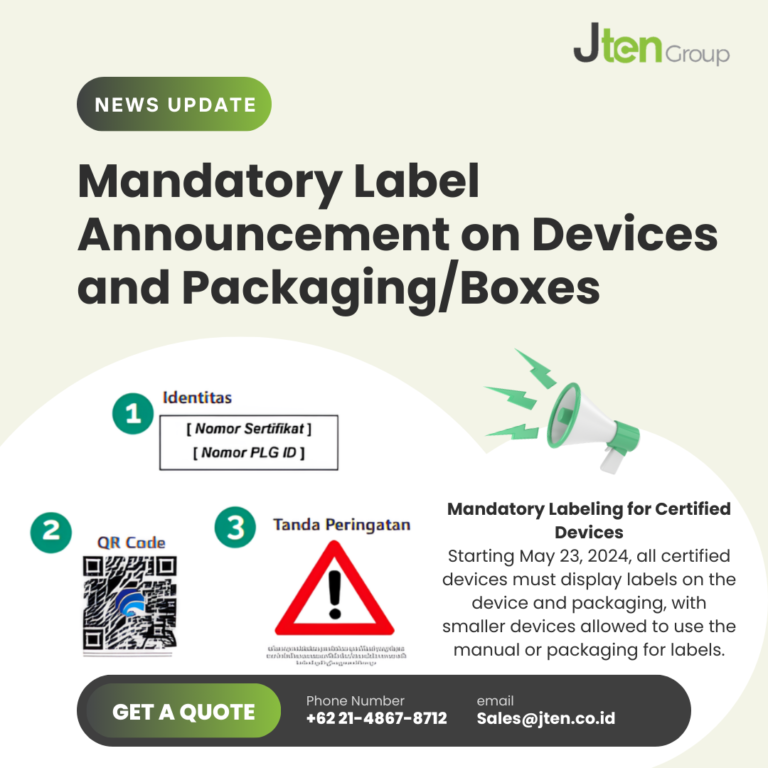
- Product labeling and documentation
- Import requirements
This means businesses should evaluate the complete compliance profile of the equipment rather than focusing exclusively on ISR.
Common Mistakes in Industrial Radio System Planning
Choosing Equipment Before Checking Frequency Requirements
Businesses may select equipment based primarily on price, range, or technical features without first reviewing frequency requirements.
Assuming Every Radio System Has the Same Requirements
Different radio technologies, frequencies, power levels, and applications can have different regulatory considerations.
Ignoring the Installation Location
The location of a radio station can be relevant to frequency planning and authorization.
Using Incomplete Technical Data
Missing information about frequency, power, antenna, or bandwidth can make compliance assessment more difficult.
Treating Equipment Certification as the Final Step
Equipment certification and frequency authorization should be evaluated as separate compliance considerations where applicable.
A Practical Compliance Checklist
Before deploying an industrial radio system, businesses can review the following:
1. Identify the equipment
Determine the radio models, functions, and communication technologies.
2. Review technical specifications
Check frequency, power, bandwidth, antenna, and other relevant parameters.
3. Define the operational area
Identify the location and required coverage.
4. Evaluate frequency requirements
Determine how the proposed system will use radio frequency spectrum.
5. Check equipment certification
Review whether applicable telecommunications or equipment certification requirements apply.
6. Evaluate ISR requirements
Determine whether the radio station or system requires an ISR.
7. Review other product requirements
Consider K3L, SNI, TKDN, labeling, importation, and other applicable requirements.
8. Prepare documentation
Ensure technical information and supporting documents are complete and consistent.
9. Plan deployment according to applicable authorization
The actual installation and operation should follow the applicable regulatory and technical conditions.
Why Early Assessment Matters
For industrial projects, compliance issues can become more complicated after equipment has already been purchased or installed.
Early assessment allows businesses to review regulatory requirements while they still have flexibility in:
- Equipment selection
- Frequency selection
- Antenna configuration
- Network design
- Installation location
- Documentation
- Project scheduling
This can make compliance planning more predictable and reduce the possibility of unexpected changes during deployment.
Conclusion
Industrial radio communication systems can provide reliable communication for factories, warehouses, construction sites, mining operations, transportation facilities, utilities, and other business environments.
However, deploying these systems involves more than selecting equipment with sufficient communication range.
Businesses should evaluate frequency, transmitting power, antenna configuration, location, coverage, equipment certification, and applicable frequency authorization requirements.
Where applicable, Radio Station License (ISR) should be considered as part of the overall compliance planning process. ISR should also be distinguished from equipment certification and other requirements such as K3L, SNI, or TKDN.
By assessing these requirements before procurement and deployment, businesses can better prepare their radio communication systems for compliant operation in Indonesia.
JTen can assist manufacturers, importers, and businesses in assessing radio equipment and broader product compliance requirements in Indonesia, including Postel/DJID, K3L, SNI, TKDN, and ISR-related considerations.