
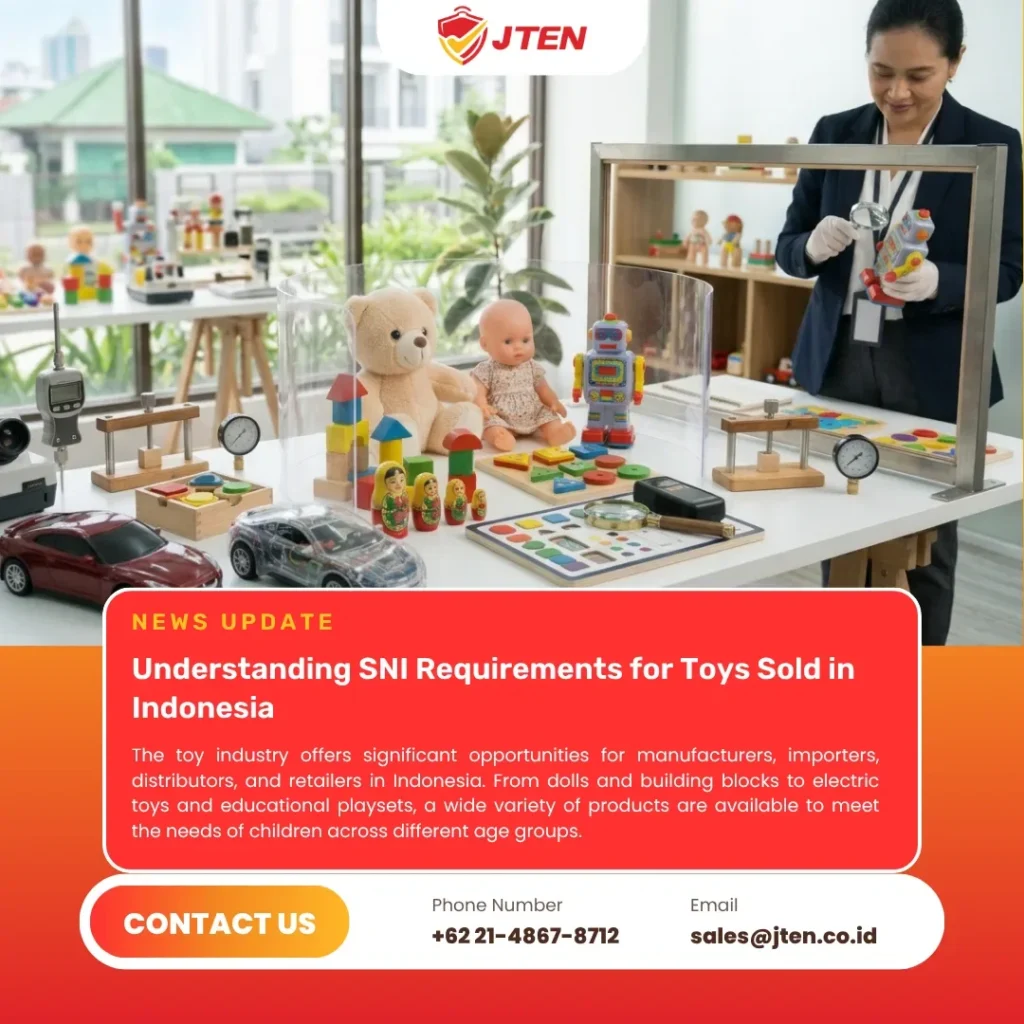
Understanding SNI Requirements for Toys in Indonesia
The SNI requirements for toys in Indonesia help protect children from unsafe products. They also help businesses understand local product safety rules. Toys can contain small parts, chemicals, or electrical components. Therefore, manufacturers and importers must check product safety before selling toys in Indonesia. However, not every toy follows the same requirements. The rules depend on the product type and the regulations that apply. Understanding these rules early can help businesses avoid delays and extra costs. What Is SNI? SNI stands for Standar Nasional Indonesia, or Indonesian National Standard. It sets requirements for product quality, safety, and performance. For toys, safety is especially important. Children may handle toys closely or use them every day. As a result, unsafe designs or materials can create risks. SNI helps businesses assess these risks. It also supports product quality and consumer protection. However, businesses should not assume that every toy must follow the same certification process. First, they need to check the product category and the latest applicable regulations. Which Toys May Require SNI? Different toys have different designs and functions. For this reason, their safety assessments may also differ. Examples include: Plastic toys: These may need checks for material safety and harmful substances. Electric toys: These may require electrical safety assessments. Activity toys: Swings and slides may need checks for strength and mechanical safety. Toys with small parts: These may need checks for choking hazards. Toys with moving parts: These may require mechanical safety assessments. In addition, some toys combine several features. An electronic toy, for example, may need more than one type of safety assessment. The examples above do not confirm that every product in each category requires mandatory SNI certification. Businesses should verify the product scope and current rules before importing or selling their toys. Key SNI Standards for Toy Safety Several Indonesian standards address different aspects of toy safety. Each standard focuses on specific risks. 1. SNI 8580-1:2018 — Physical and Mechanical Safety This standard covers physical and mechanical safety aspects of toys. The assessment may consider sharp edges, small parts, and other design-related risks. These checks help identify hazards during normal use. They can also help businesses review product design before market entry. 2. SNI 8580-2:2018 — Flammability Fire safety is another important consideration. This standard addresses the flammability of toys. For example, the materials used in a toy may affect how it reacts to fire. Therefore, businesses should confirm which requirements apply to their products. 3. SNI 8580-3:2018 — Migration of Certain Elements Toy materials may contain chemical elements that require assessment. This standard addresses the migration of certain elements from toys. The assessment helps evaluate whether these elements can move from a toy material under specified test conditions. Consequently, material selection is an important part of product safety. 4. SNI 8580-4:2018 — Swings, Slides, and Similar Activity Toys Some toys are designed for physical activity. Examples include swings, slides, and similar equipment. These products may involve risks related to movement, stability, or construction. For that reason, businesses should identify the relevant requirements before production or import. 5. SNI 8579:2018 — Electric Toy Safety Electric toys may contain batteries, wiring, or other electrical components. These features introduce safety concerns that ordinary toys may not have. This standard addresses the safety of electric toys. However, businesses should confirm the standard’s current status and scope before relying on it for certification planning. 6. SNI 8578:2018 — Phthalates in Children’s Plastic Toys Some plastic materials may contain phthalates. These substances are used in certain plastics to make them more flexible. This standard addresses phthalate content in children’s plastic toys. Therefore, businesses should review the materials used in their products and check the applicable testing requirements. Important: The standards listed above cover different safety topics. Their applicability depends on the product and the current regulatory framework. Always verify the latest requirements with the relevant authority or certification body. How to Prepare for Toy SNI Certification A clear preparation plan can make the certification process easier. Businesses can start with the following steps. Step 1: Identify the Product Category First, describe the toy’s function, materials, and main features. Include details such as batteries, moving parts, and intended age group. This information helps determine which requirements may apply. Step 2: Check the Applicable Regulations Next, review the current regulations for the product category. Do not rely only on a standard’s title or publication year. Some products may fall under mandatory certification rules, while others may not. Therefore, confirm the applicable scope before proceeding. Step 3: Prepare the Required Documents Businesses should prepare relevant product and company documents. These may include product specifications, manufacturer details, labels, and technical information. The exact documents depend on the certification scheme. A complete document set can also help reduce delays during review. Step 4: Arrange Product Testing Where testing is required, the product may need assessment by an authorized laboratory. The test plan should match the applicable standards and product features. For example, an electric toy may need a different assessment from a simple plastic toy. As a result, identifying the correct test requirements early is essential. Step 5: Complete the Certification Process After the required checks, the business must follow the applicable certification procedure. This may involve document evaluation, testing, and other assessments. The exact process depends on the product and the relevant rules. Businesses should confirm the required stages before setting a launch date. Step 6: Review Product Labels and Market Readiness Finally, check that product labels and supporting information meet the applicable requirements. Make sure the product details are consistent across the relevant documents. This final review can help businesses prepare for market entry with greater confidence. Common Challenges for Toy Manufacturers and Importers Toy certification can involve several challenges. However, early preparation can help businesses manage them. Unclear product requirements Some businesses are unsure which standards apply to their toys. To address this issue, they should review the product category and current regulations first. Incomplete documentation Missing or inconsistent documents can slow the process.