Introduction
Wearable technology has become an essential part of modern life. From smartwatches and fitness trackers to smart glasses and wireless health monitoring devices, wearables are transforming how people communicate, exercise, work, and manage daily activities.
As these devices become more sophisticated, many now incorporate wireless communication technologies such as Bluetooth, Wi-Fi, LTE, and cellular connectivity. While these features provide convenience and functionality, they also introduce regulatory requirements that manufacturers and importers must understand.
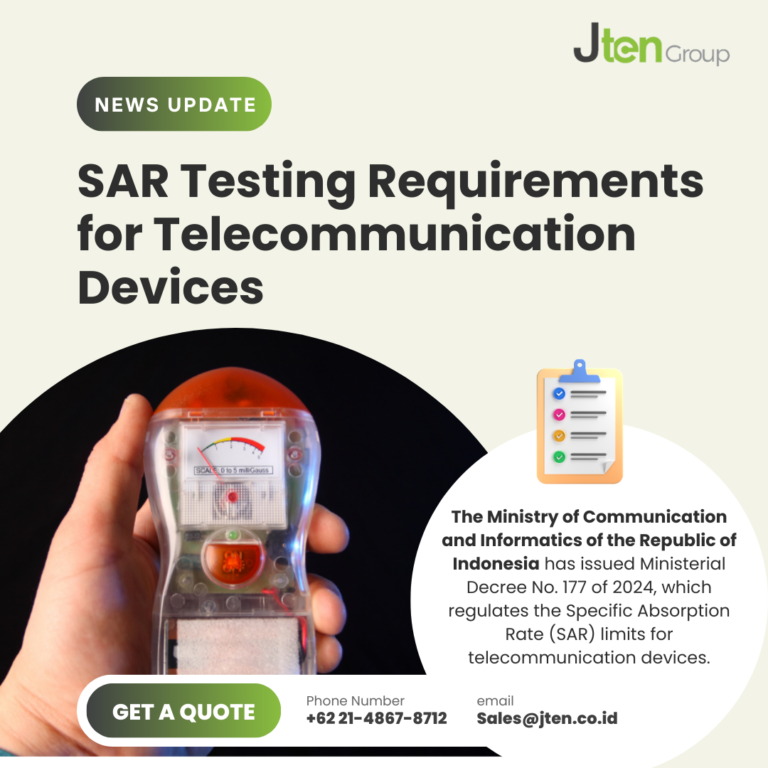
One important aspect of wireless device compliance is SAR (Specific Absorption Rate) evaluation, which may be required as part of Indonesia’s Postel (DJID) certification process.
What Is SAR?
SAR stands for Specific Absorption Rate, a measurement used to assess the amount of radio frequency (RF) energy absorbed by the human body when using a wireless device.
SAR evaluation helps determine whether a device operates within internationally recognized safety limits for RF exposure.
The purpose is to ensure that wireless products remain safe for consumers during normal usage.
Why SAR Matters for Wearable Devices
Unlike many electronic devices, wearables are often used in direct contact with the body for extended periods.
Examples include:
- Smartwatches
- Fitness bands
- Smart glasses
- Wireless health monitoring devices
- Wearable communication devices
Because these products are worn on the wrist, head, or other parts of the body, regulators pay particular attention to RF exposure considerations.
The Wireless Technologies Inside Wearables
Modern wearables rely heavily on wireless communication.
Common technologies include:
Bluetooth
Used for pairing with smartphones, tablets, and other connected devices.
Wi-Fi
Allows synchronization, cloud connectivity, and internet access.
Cellular Connectivity
Some smartwatches and wearable devices include LTE or other cellular technologies that allow independent communication without a smartphone.
NFC
Used for contactless payments and device pairing.
Each of these wireless functions may contribute to the overall RF exposure profile of the device.
Which Wearable Devices May Require SAR Evaluation?
Depending on the product design and wireless capabilities, SAR evaluation may be applicable to devices such as:
✅ Smartwatches
✅ Fitness trackers
✅ Smart glasses
✅ Wearable communication devices
✅ Health monitoring wearables
✅ Cellular-enabled wearable products
The evaluation requirements often depend on the device’s wireless transmission characteristics and how it is intended to be used.
Why SAR Evaluation Is Important for Postel Certification
Indonesia regulates wireless communication devices to ensure they meet technical and safety requirements.
SAR evaluation helps demonstrate that a wearable device:
- Meets RF exposure limits
- Operates safely near the human body
- Complies with applicable technical standards
- Supports regulatory approval requirements
For manufacturers and importers, SAR compliance can be an important component of the certification pathway.
Common Misconceptions About Wearables
Many businesses assume that small devices automatically present minimal regulatory concerns.
However, device size is not the primary factor regulators consider.
A compact smartwatch or smart glasses product may still contain multiple wireless transmitters operating close to the body.
As a result, wearable products often require careful compliance assessment before entering the market.
Risks of Ignoring SAR Requirements
Failing to address SAR evaluation requirements can create several challenges.
Certification Delays
Additional testing or documentation may be required later in the approval process.
Market Entry Delays
Products may face delays before receiving regulatory approval.
Increased Compliance Costs
Resolving compliance issues after product development or importation can be more expensive.
Regulatory Complications
Incomplete compliance preparation may affect certification timelines.
How Manufacturers Can Prepare
Businesses can reduce risks by preparing early.
Review Wireless Features
Identify all RF communication technologies used in the product.
Assess Device Usage Conditions
Understand how and where the device will be worn.
Prepare Technical Documentation
Ensure product specifications and RF information are complete.
Consult Compliance Specialists
Early guidance can help determine whether SAR evaluation may be required.
The Growing Importance of Wearable Compliance
The wearable technology market continues to expand rapidly.
As devices become more connected and feature rich, compliance requirements are becoming increasingly important.
Manufacturers that proactively address certification and safety considerations are often better positioned to achieve smoother market entry and faster regulatory approval.
How JTen Can Help
JTen (Jelajah Teknologi Nusa) provides comprehensive support for Postel certification and wireless device compliance.
Our services include:
- Product compliance assessment
- SAR requirement evaluation
- Technical documentation review
- Regulatory consultation
- End to end certification support
With JTen’s expertise, businesses can confidently navigate Indonesia’s regulatory landscape for wearable technology products.
Conclusion
Wearable devices may be small, but the wireless technologies inside them can create important compliance obligations.
Because these products are used close to the human body, SAR evaluation plays a key role in demonstrating RF safety and supporting regulatory approval.
Partner with JTen to understand your wearable device compliance requirements and ensure a smoother path toward Postel certification in Indonesia.