Uncategorized

image Kemkominfo Increases Frequency Awareness in Waterways through the MOTS program
Uncategorized

Kemkominfo Increases Frequency Awareness in Waterways through the MOTS program

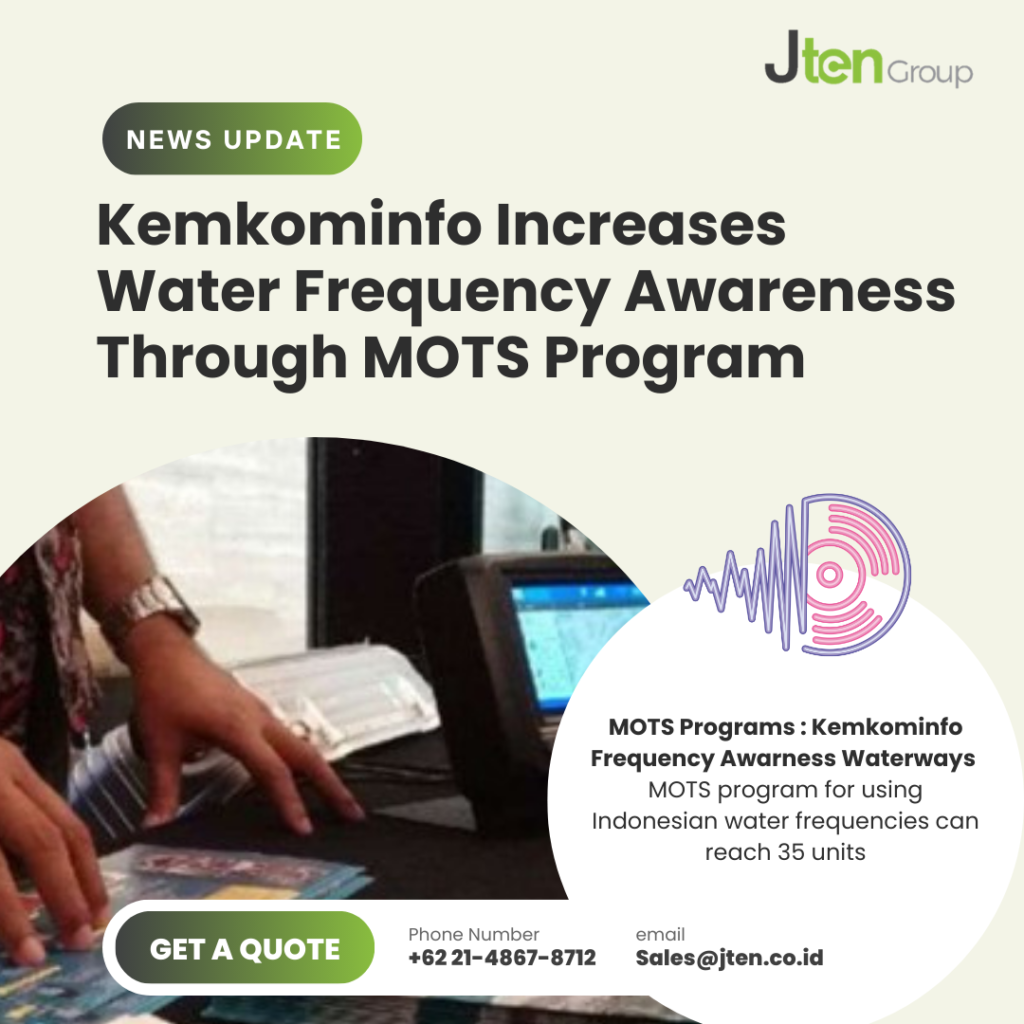
Jakarta – The Ministry of Communication and Informatics (Kemkominfo) through the Directorate General of Resources and Postal and Informatics Equipment (Ditjen SDPPI) continues to strive to increase awareness and understanding of the use of radio frequency frequencies in Indonesian waters. One of the strategic steps is through the Maritime On The Spot (MOTS) program which has been running since 2019. This program aims to educate frequency users, including fishermen, and prevent harmful interference (dangerous interference) due to inappropriate frequency use. To support the success of the program, the Ministry of Communication and Information collaborates with the Ministry of Transportation and the Ministry of Marine Affairs and Fisheries (KKP). MOTS 2024: Focus on 5 Aspects of Strengthening In 2024, the MOTS program will be strengthened through five main aspects: One of the leading activities in this program is the Training of Trainers (ToT), which is carried out routinely at least once a year to improve the competence of frequency users. Positive Impact of MOTS Program Since its launch, the MOTS program has reached 35 Technical Implementation Units (UPT) in various waters of Indonesia. Regular education and information updates to frequency users have helped reduce interference and improve communication efficiency in the maritime sector. With the strengthening carried out in 2024, this program is expected to be able to provide greater benefits, especially for communities that depend on the fisheries sector. “If you have an electronic device product with frequency technology intended for waters or fisheries that you want to sell in Indonesia, consult with Jten immediately.”

SDPPI Certificate Fees, Payment, and Validity Period
Uncategorized

SDPPI Certificate Fees, Payment, and Validity Period 

Applicants for technical standard certification are classified into two categories : business actors and non-business actors. Business actors include brand owners, representatives and/or distributors, manufacturers and/or assemblers holding a brand, manufacturers and/or assemblers, and those for personal use. Non-business actors include state organizers, international organizations, and individuals. The application fee for certification is regulated by Government Regulation No. 43 of 2023 concerning Types and Tariffs for Non-Tax State Revenues applicable at the Ministry of Communication and Information Technology. As of May 23, 2024, the validity period of the Payment Notification Letter (SP2) will be 14 calendar days, previously only 5 working days. The SP2 can be canceled once within a running year period, causing the application status to become void. If the SP2 is unpaid twice within a running year period, it will result in the suspension of certification application services for 6 months. According to the Ministry of Communication and Information Technology Regulation No. 3 of 2024, Article 18, the validity of the certificate is indefinite. The Certificate Holder may manufacture, assemble, or import Telecommunications Equipment and/or Devices for trading and/or use within the territory of the Republic of Indonesia for up to 3 (three) years from the issuance of the Certificate. If this time limit is exceeded, the device must comply with Technical Standards based on test results and be proven with a new certificate. Below is the form of the device and/or equipment certificate with OSS integration: With the experience and commitment of Jten International, we are ready to assist you in obtaining the necessary certifications to meet the standards set by the Indonesian Government. Contact us today for the best and most reliable certification services!

Postel SDPPI Certification Requirements for Low-Power Devices (Children's Toys)
Uncategorized

Postel SDPPI Certification Requirements for Low-Power Devices (Children’s Toys)

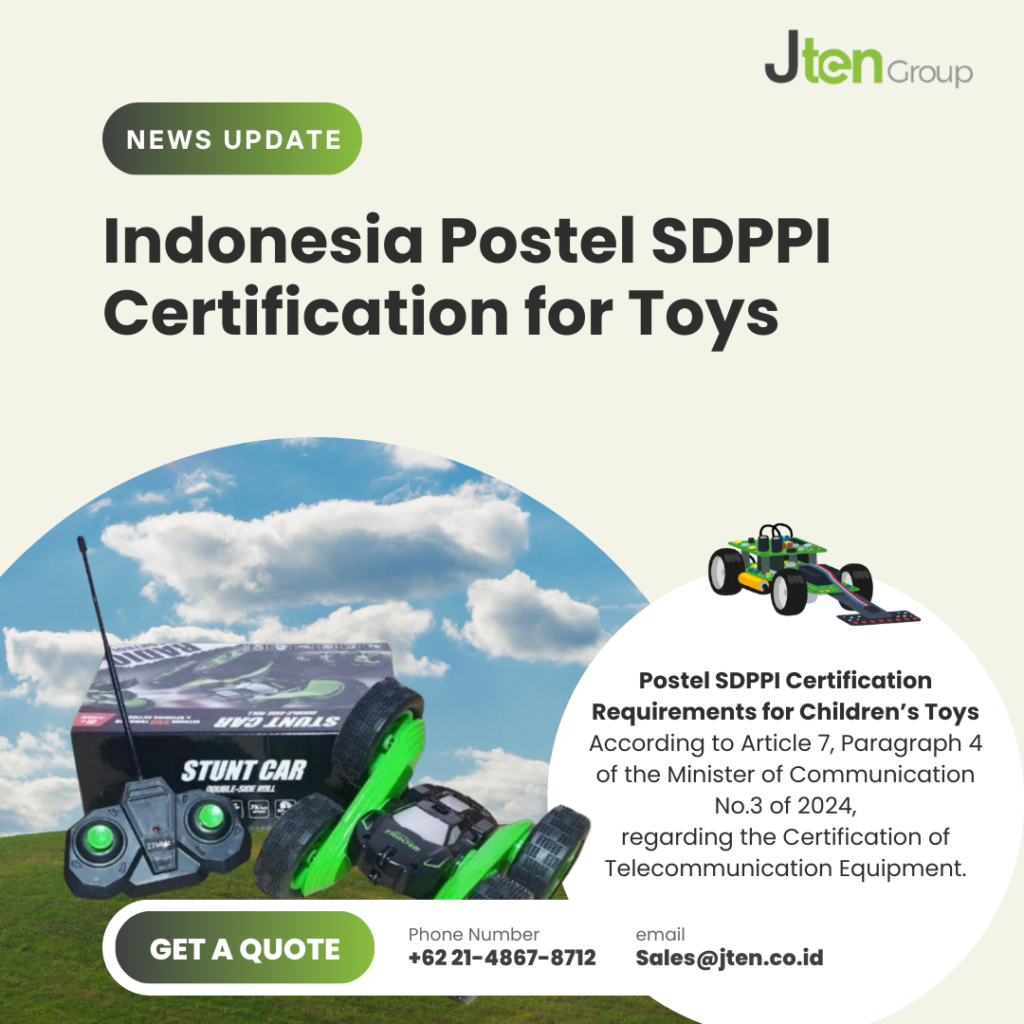
The children’s toy industry has increasingly adopted telecommunication features like remote control and Bluetooth. These toys not only need to be safe for children but must also comply with regulations set by the Indonesian government. One of the key regulations is the Postel SDPPI certification requirement for low-power devices. Postel SDPPI Certification Requirements for Children’s Toys According to Article 7, Paragraph 4 of the Minister of Communication and Informatics Regulation No. 3 of 2024, regarding the Certification of Telecommunication Equipment and/or Devices: Certificates for equipment and/or other devices with telecommunication features that use transmission power below 10 mW (milliWatt) and only have one (1) similar telecommunication feature can apply to more than one (1) variant as long as they have : The same brand and type of equipment and/or other devices; and The same brand and type of telecommunication equipment and/or telecommunication devices. How This Applies to Low-Power Telecommunication Toys Any telecommunication device with low power transmission can obtain a single SDPPI Postel certification for all series of devices, particularly for children’s toy products such as remote control cars, remote control helicopters, and other toys with low-power telecommunication features. Conditions for a Single SDPPI Postel Certificate to Apply to Multiple Series For a single SDPPI Postel certificate to cover all series, the following conditions must be met: Benefits for Toy Manufacturers This regulation simplifies the certification process for toy manufacturers. With just one SDPPI Postel certificate, manufacturers can use it for various product variants with similar specifications. Examples of children’s toys that can use a single certificate for all variants include: Why Postel SDPPI Certification Is Important If you are a manufacturer or importer of children’s toys with telecommunication features, it is crucial to obtain Postel SDPPI certification before launching your products in the Indonesian market. Products without this certification cannot be legally marketed in Indonesia, as they are regularly monitored by the Indonesian Ministry. Contact Jten for Postel SDPPI Certification Services Do you need reliable Postel SDPPI, SNI, and TKDN certification services with a 100% success guarantee? Contact Cerapproval now!    (Monday-Friday, 08.00 – 17.00 WIB)  +62 858-8123-0951 Cerapproval – Your Trusted Partner in Certification!

Check Postel Certification for Items with These Specifications!
Uncategorized

Check Postel Certification for Items with These Specifications!

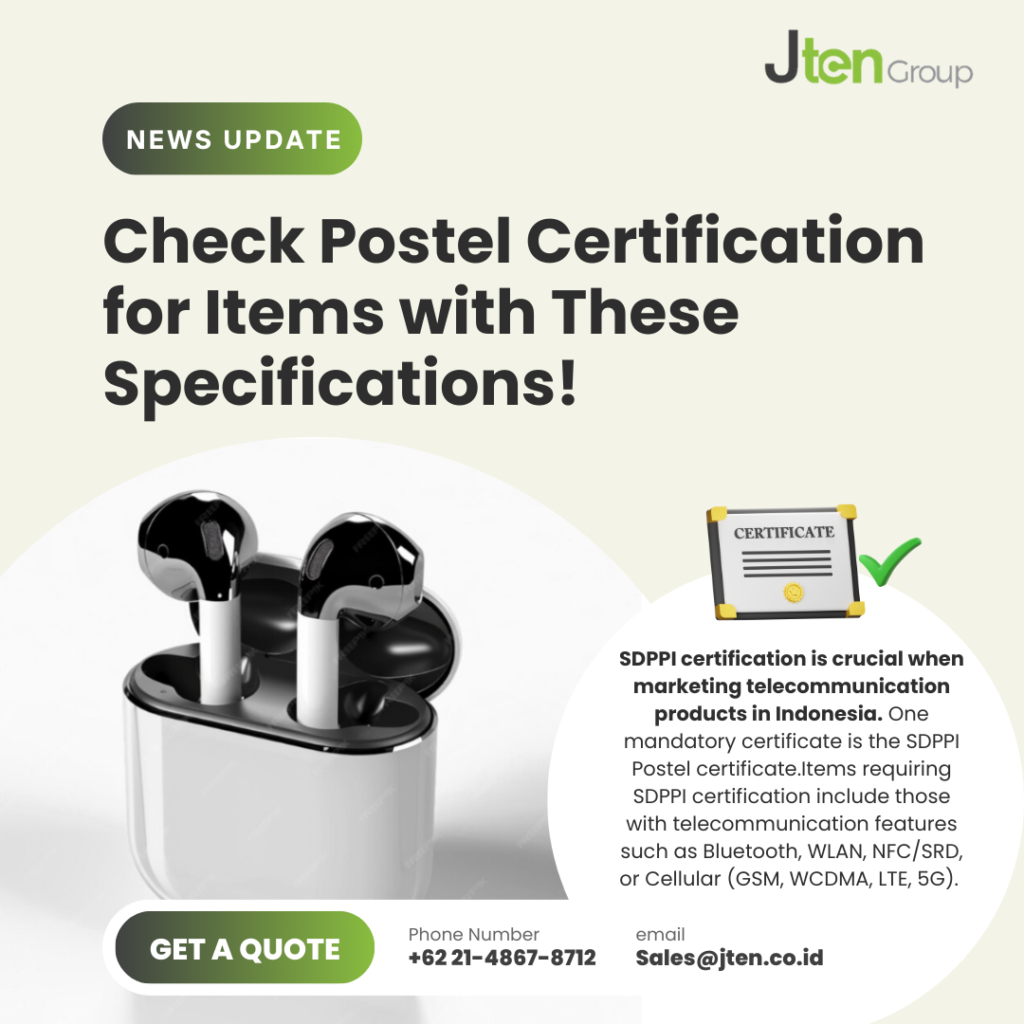
SDPPI certification is crucial when marketing telecommunication products in Indonesia. One mandatory certificate is the SDPPI Postel certificate. Items requiring SDPPI certification include those with telecommunication features such as Bluetooth, WLAN, NFC/SRD, or Cellular (GSM, WCDMA, LTE, 5G). So, does TWS (True Wireless Stereo) have to be certification? Yes, TWS must have an SDPPI certificate because it includes Bluetooth, one of the components that require testing. Items are not required to have certification if they do not have any of these features or only have a GPS receiver. Additionally, some items such as computers/PCs, network devices, switches, routers, and servers also need SDPPI certification. Currently, Indonesia is in the process of compiling a list of telecommunication equipment and/or devices based on the mandate of PM Kominfo No. 3 of 2024 Article 33, which regulates the supervision of telecommunication equipment and/or devices based on the harmonized system code. Furthermore, this compilation is also based on the updates of the Indonesian Customs Tariff Book (BTKI) 2022 by the Ministry of Finance. Some of the updates include references to the Harmonized System (HS Code), the number of HS Codes, the number of device groups, the method of item digit numbering, and HS Code groups.

SAR Testing Requirements for Telecommunication Devices
Uncategorized

SAR Testing Requirements for Telecommunication Devices

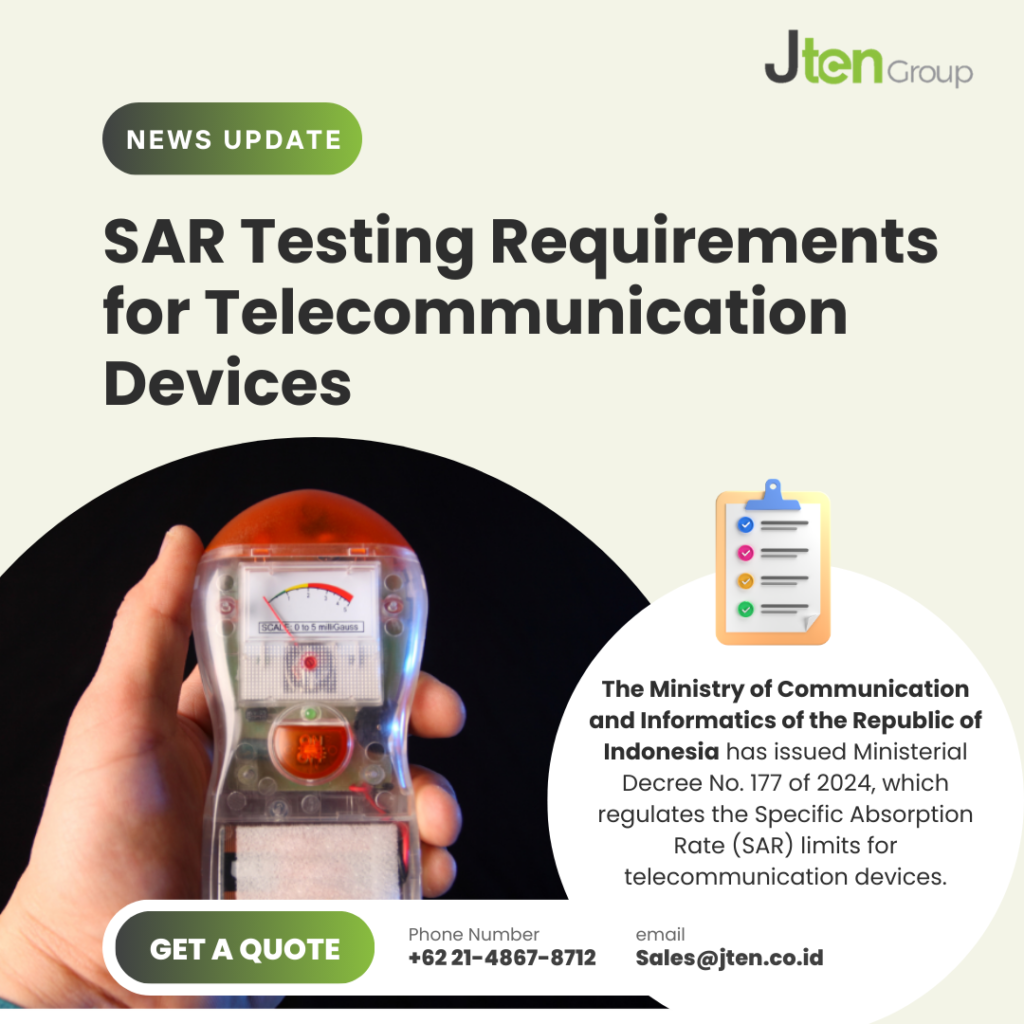
The Ministry of Communication and Informatics of the Republic of Indonesia has issued Ministerial Decree No. 177 of 2024, which regulates the Specific Absorption Rate (SAR) limits for telecommunication devices. This regulation applies to mobile phones and tablet computers used in Indonesia. What is the Specific Absorption Rate (SAR)? Specific Absorption Rate (SAR) measures the amount of electromagnetic radiation absorbed by the human body when using telecommunication devices. This testing aims to ensure that these devices are safe and do not negatively impact the health of users. Regulation Update Ministerial Decree No. 177 of 2024 establishes new standards for SAR, including: For more information on the full content of Ministerial Decree No. 177 of 2024, please download the official document on our website or contact the JTen team for further assistance. #UPLOAD DOKUMENNYA DI SINI# We are ready to help you understand and comply with this regulation to ensure the smooth operation and compliance of your telecommunication products in the Indonesian market.

Uncategorized

Details of SRD Technical Standards Update in Indonesia Referring to Kepmen Kominfo No. 260 of 2024

The Ministry of Communication and Informatics of the Republic of Indonesia has issued Ministerial Decree No. 260 of 2024, which regulates the technical standards for Short Range Devices (SRD), updating the Regulation of the Director General of Resources and Postal and Informatics Devices No. 161 of 2019. Here is a summary of some key points: Classification of SRD Technology in Indonesia SRD (Short Range Device) technology is classified into 10 groups divided into 2 categories: old groups and new groups. Old SRD technology groups include: New SRD technology groups include: The new SRD technologies will be implemented starting August 11, 2024. Details of the SRD Technical Standards Regulation Update Old SRD Technology Groups Antenna Requirements A declaration letter is required during the certification application! Antennas must be integrated or dedicated, provided they meet at least one of the following requirements: Testing Methods Daya Pancar (RF Output Power) = Output Power Conducted + Gain Antena Want your products certified according to Indonesian standards? Contact now for the best certification services!

Uncategorized

Update on Short Range Devices (SRD) Regulation

The Ministry of Communication and Information Technology of the Republic of Indonesia has issued Ministerial Decree No. 260 of 2024, which regulates the technical standards for Short Range Devices (SRD). This regulation replaces the previous Directorate General of Resources and Post and Informatics Equipment Regulation No. 161 of 2019, and introduces significant changes to the technical requirements for SRD devices in Indonesia. What are Short Range Devices (SRD)? Short Range Devices (SRD) refer to wireless telecommunication devices that operate within specific frequency ranges and have limited coverage. Common examples of SRD include Bluetooth devices, NFC, RFID, UWB, and others. Regulation Update Ministerial Decree No. 260 of 2024 establishes new standards for SRD aimed at enhancing device efficiency, security, and interoperability. Key changes in this regulation include: Importance of Regulatory Compliance Compliance with this regulation not only mitigates legal and administrative risks but also strengthens brand reputation and consumer trust. By ensuring that your SRD devices meet the established technical standards, you can increase the likelihood of better market penetration and reduce the risk of cessation or fines resulting from violations. Conclusion The update to the Short Range Devices regulation by the Ministry of Communication and Information Technology of Indonesia underscores their commitment to enhancing oversight of wireless telecommunication devices. For more information on the full contents of Ministerial Decree No. 260 of 2024, please download the official document from our website or contact our team for further assistance. JTEN is ready to help you understand and comply with this regulation to ensure the smooth operation and compliance of your SRD products in the Indonesian market.

Uncategorized

Mandatory Label Announcement on Devices and Packaging/Boxes

Starting from May 23, 2024, all devices that have been certified must affix labels on each device and packaging/box. If the device is small and it is not possible to attach a label, the label can be affixed or printed on the manual book and packaging/box. Certificate holders who intentionally do not attach labels on traded and/or used telecommunications devices and/or equipment will be subject to administrative sanctions in the form of: a. a written warning; and/or b. suspension of the telecommunications device and/or equipment certification services for 6 (six) months. Additionally, the label attachment must also be reported online by uploading a photo of the telecommunications device and/or equipment with the attached label to the E-Certification system no later than 30 working days after the certificate is issued.

Uncategorized

Penalty Sanctions for Radio Frequency Spectrum Violation

The Socialization of Administrative Penalty Sanctions on the Supervision of the Use of Radio Frequency Spectrum and/or Telecommunication Devices organized in Indonesia by the Administrative Penalty Management Team of the Radio Frequency Spectrum Monitoring Institute (Balmon Kominfo) on Friday, May 7, 2024. This socialization discusses administrative penalty sanctions for the improper use of radio frequencies in Indonesia. There are several regulations that can serve as references for operators of telecommunication devices in carrying out their operations, including: The imposition of administrative fines for violations of Radio Frequency Spectrum/Telecommunication Device misuse is classified into 3 types: The formula for calculating fines for SFR/APT misuse based on Presidential Regulation No. 43 of 2023 Articles 20-21 is as follows: FINE = VIOLATION POINTS x ADMINISTRATIVE FINE RATE Violation Points = Violation Index x Maximum Points x Weight Percentage Here is a simulation of administrative fine calculation amounting to Rp500,000.000 for APT violations by company X, which sells uncertified telecommunications devices from abroad in the territory of Indonesia.angkat telekomunikasi tidak bersertifikat dari luar negeri di wilayah NKRI. If administrative fines for SFR/APT misuse are not paid for 3 consecutive times, the licensing service will be suspended by the Director General. With the commitment of JTeN, we are ready to assist companies in obtaining the necessary certifications to meet the standards set by the Indonesian Government. Contact us today for the best and most reliable certification services!

Flag Counter
Scroll to Top