The electronics industry is evolving rapidly. Products are becoming smarter, more connected, and increasingly sophisticated, with features such as Bluetooth, Wi-Fi, NFC, cellular communication, rechargeable batteries, and IoT functionality becoming common.
For electronics manufacturers, innovation is naturally a priority. However, another factor should be considered just as early in the product development process: regulatory compliance.
Many manufacturers only start thinking about certification once a product has entered the final production stage. At that point, discovering an unexpected testing or certification requirement can lead to redesigns, additional costs, and significant launch delays.
This is why compliance should be considered from the beginning—not after the product is finished.
Compliance Is Part of Product Development
Compliance is often treated as a final administrative step before a product enters the market. In reality, regulatory requirements can influence product design, component selection, testing procedures, documentation, and even production timelines.
For electronics manufacturers, early compliance planning can help answer important questions such as:
- Does the product require SNI certification?
- Does it contain a wireless communication module?
- Is Postel (DJID) certification required?
- Are RF or EMC tests necessary?
- Does the product fall under K3L requirements?
- Is TKDN relevant to the target market or sector?
- What technical documents will be required?
Answering these questions early gives manufacturers more time to prepare an appropriate compliance strategy.
Wireless Features Can Change Compliance Requirements
One of the biggest reasons electronics manufacturers should evaluate compliance early is the growing use of wireless technology.
A product may have a primary function that appears unrelated to telecommunications but still contain wireless connectivity.
Examples include:
- Wireless keyboards
- Bluetooth speakers
- Smart watches
- Smart glasses
- Wi-Fi-enabled appliances
- Wireless cameras
- Gaming accessories
- Smart home devices
Adding Bluetooth, Wi-Fi, NFC, or cellular connectivity can introduce additional regulatory requirements.
In Indonesia, certain wireless products may require Postel (DJID) certification before they can be legally marketed.
Therefore, manufacturers should evaluate wireless functionality during the design stage rather than waiting until production is complete.
Late Compliance Can Lead to Costly Redesigns
Imagine a manufacturer has completed a product design and is preparing for mass production. During the certification process, laboratory testing identifies a technical issue.
The manufacturer may then need to:
- Modify the product design
- Replace certain components
- Update technical documentation
- Repeat laboratory testing
- Adjust the production schedule
Each additional step can increase costs and delay the product launch.
By evaluating compliance requirements during the prototype stage, manufacturers have a better opportunity to address potential issues before mass production begins.
Certification Requirements Can Affect Component Selection
Electronic products often contain components sourced from multiple suppliers.
These can include:
- Wireless modules
- Power supplies
- Batteries
- Antennas
- Radio modules
- Processors
- Sensors
Choosing components without considering compliance can create complications later.
For example, a wireless module may have technical characteristics that affect the certification pathway of the final product.
Early compliance assessment allows manufacturers to evaluate components not only based on cost and performance but also on their regulatory suitability.
Testing Should Be Planned in Advance
Laboratory testing is an important part of many certification processes.
Depending on the product, testing may involve:
- RF testing
- EMC testing
- Electrical safety testing
- Performance testing
- SAR evaluation for applicable devices
- Other product-specific assessments
Laboratory schedules can become an important factor in the overall certification timeline.
Manufacturers that plan testing early can better coordinate laboratory activities with prototype development and production schedules.
Documentation Is Also Part of Compliance
Certification is not based solely on the physical product.
Manufacturers may also need to provide technical documentation, such as:
- Product specifications
- User manuals
- Product photographs
- Circuit diagrams
- Technical datasheets
- Test reports
- Component information
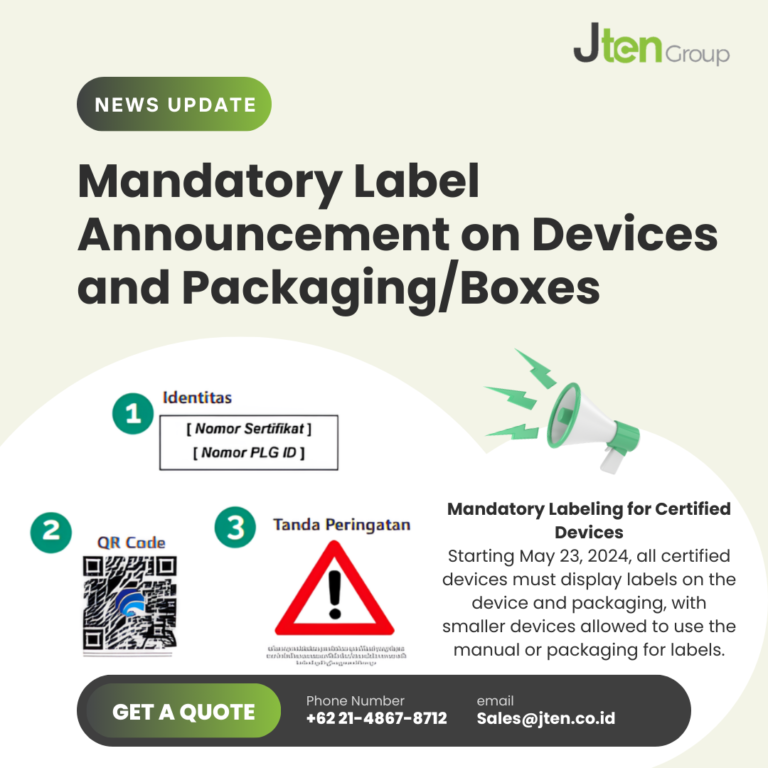
- Product labels
If these documents are incomplete or inconsistent, the certification process may take longer.
Maintaining accurate documentation throughout product development makes the final certification process much more efficient.
Compliance Can Influence Product Launch Timing
A product launch involves many coordinated activities, including:
- Manufacturing
- Shipping
- Marketing
- Distribution
- Retail preparation
- Sales campaigns
If certification is delayed, these activities may also be affected.
For this reason, regulatory approval should be incorporated into the overall product launch timeline.
Instead of asking “When can we start certification?”, manufacturers should ask:
“What compliance requirements should we consider before finalising the product design?”
This change in perspective can make a significant difference.
SNI, Postel, K3L, and TKDN Should Be Evaluated Early
Indonesia has a multi-layered product compliance environment. Depending on the product, manufacturers may need to evaluate several regulatory frameworks.
SNI
Certain electronic and electrical products may be subject to mandatory SNI requirements covering safety, quality, or performance.
Postel / DJID
Wireless and telecommunications devices may require certification before being marketed in Indonesia.
K3L
Certain products may need to meet requirements related to safety, health, and environmental considerations.
TKDN
Depending on the product, industry, and intended market or procurement activity, TKDN requirements may also need to be considered.
Not every product requires all of these certifications. The key is determining which requirements actually apply to the specific product.
The Benefits of Early Compliance Planning
Thinking about compliance earlier provides several advantages.
1. Reduced Certification Risk
Manufacturers can identify potential regulatory issues before mass production.
2. Lower Costs
Early changes are generally easier and less expensive than redesigning an existing production-ready product.
3. Faster Market Entry
A well-planned certification process can reduce unnecessary delays.
4. Better Product Development
Engineering and compliance teams can work together to create products that are both innovative and regulatory-ready.
5. More Predictable Launches
Compliance milestones can be incorporated into the overall project schedule.
Compliance Should Be a Cross-Functional Responsibility
Regulatory compliance should not be the responsibility of only one department.
Successful product development often requires collaboration between:
- Engineering teams
- Product managers
- Quality assurance
- Procurement
- Manufacturing
- Regulatory specialists
- Certification consultants
When compliance is considered collectively, potential issues can be identified much earlier.
How JTen Can Support Electronics Manufacturers
JTen (Jelajah Teknologi Nusa) helps manufacturers, importers, and brand owners navigate Indonesia’s product compliance requirements.
Our services include:
- Product compliance assessments
- SNI certification assistance
- Postel (DJID) certification support
- TKDN consultation
- K3L compliance guidance
- Laboratory testing coordination
- RF and EMC testing support
- SAR testing coordination for applicable products
- Technical documentation review
- End-to-end certification management
By involving compliance experts early, manufacturers can better understand their regulatory obligations before production begins.
Conclusion
For electronics manufacturers, compliance should never be an afterthought.
As products become more connected and technologically advanced, regulatory requirements can have a direct impact on product design, testing, documentation, production schedules, and market launch plans.
Thinking about compliance early allows manufacturers to identify applicable certifications, address technical issues sooner, plan laboratory testing, and reduce unnecessary costs and delays.
Ultimately, early compliance planning is not about slowing innovation—it is about making innovation ready for the market.
Planning your next electronic product for the Indonesian market? JTen can help you identify the applicable compliance requirements before production begins and support your journey toward a smoother, more efficient product launch.