Before a product reaches consumers, it must often satisfy more than commercial expectations. In many countries, including Indonesia, products are expected to meet regulatory requirements designed to protect users, support environmental sustainability, and ensure fair market practices.
For manufacturers and importers, compliance with safety and environmental regulations is no longer viewed as a final administrative step. Instead, it has become an essential part of product development, market entry, and long-term business strategy.
Understanding how these requirements influence product approval can help businesses reduce compliance risks, accelerate market access, and build greater confidence among customers and business partners.
Why Product Safety Matters
Every product placed on the market carries a responsibility to be safe for its intended use.
Safety regulations are designed to minimize potential risks such as:
- Electrical hazards
- Mechanical failures
- Overheating
- Fire risks
- Chemical exposure
- Physical injuries caused by improper product design
By requiring manufacturers to demonstrate compliance with applicable standards, regulators help ensure that products perform safely under normal operating conditions.
Beyond meeting legal obligations, safe products also strengthen consumer trust and reduce the likelihood of product recalls or liability issues.
Environmental Compliance Is Becoming Increasingly Important
As sustainability becomes a global priority, environmental considerations are playing a larger role in product regulation.
Many governments have introduced policies aimed at reducing the environmental impact of products throughout their lifecycle, including manufacturing, packaging, usage, and disposal.
Environmental compliance may involve areas such as:
- Responsible product labeling
- Material restrictions
- Energy efficiency requirements
- Recycling and waste management considerations
- Environmentally responsible product design
For businesses, integrating environmental considerations early in product development is becoming a competitive advantage rather than simply a regulatory requirement.
The Role of K3L in Indonesia
In Indonesia, one important regulatory framework related to product safety and environmental responsibility is K3L (Keamanan, Keselamatan, Kesehatan, dan Lingkungan).
K3L aims to ensure that certain products placed on the market meet requirements related to:
- Consumer safety
- Public health
- Environmental protection
- Product information and labeling
Depending on the product category, businesses may be required to demonstrate compliance with K3L requirements before products can be distributed legally.
For manufacturers and importers, understanding whether a product falls within the scope of K3L is an important step in the compliance planning process.
Product Approval Is Rarely Based on One Requirement
A common misconception is that obtaining a single certification is enough to enter the Indonesian market.
In reality, product approval often involves multiple regulatory considerations.
For example:
Consumer Electronics
A connected electronic device may require:
- Product safety compliance
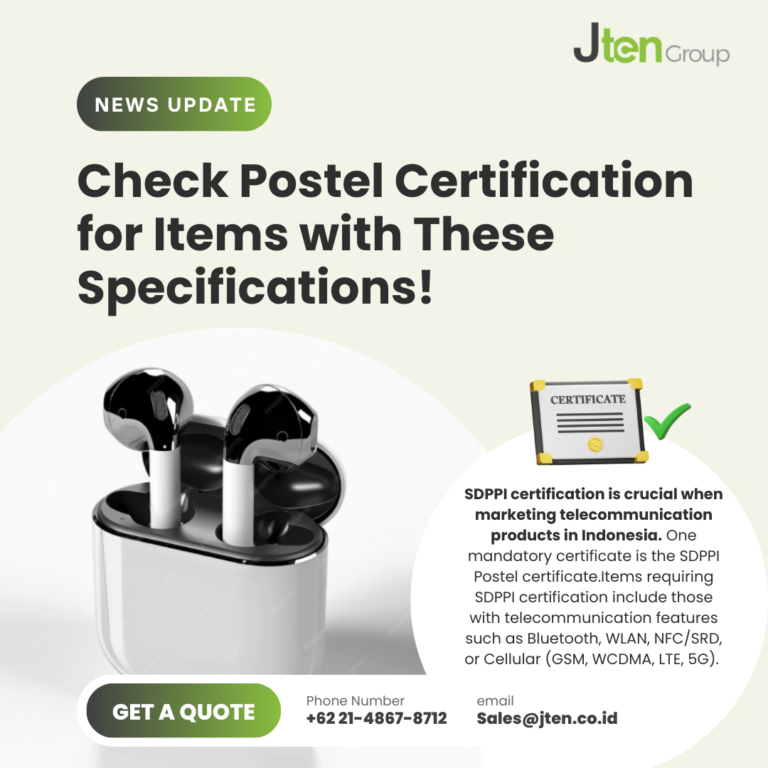
- Telecommunications certification (for wireless features)
- Electromagnetic Compatibility (EMC) testing
- K3L compliance, depending on the product category
Household Appliances
Electrical appliances may need to satisfy:
- Safety standards
- Mandatory SNI certification (where applicable)
- K3L-related obligations
- Product labeling requirements
Each requirement addresses a different aspect of product quality, safety, or environmental responsibility.
Why Early Compliance Planning Matters
Many compliance challenges arise because regulatory requirements are evaluated too late in the product development process.
By conducting a compliance assessment early, businesses can:
- Identify applicable regulations
- Plan certification timelines more effectively
- Prepare technical documentation
- Coordinate laboratory testing
- Reduce redesign costs
- Minimize unexpected project delays
Early planning allows companies to integrate compliance into product development instead of treating it as a last-minute hurdle.
The Business Benefits of Compliance
Safety and environmental compliance provide benefits that extend beyond regulatory approval.
Companies that prioritize compliance often experience:
Faster Market Entry
Well-prepared documentation and testing can help streamline approval processes.
Stronger Brand Reputation
Consumers are increasingly aware of product safety and sustainability issues.
Lower Business Risk
Compliance reduces the likelihood of product recalls, penalties, and supply chain disruptions.
Greater Customer Confidence
Products that comply with recognized standards are generally viewed as more reliable and trustworthy.
Better Long Term Competitiveness
As regulations continue to evolve, businesses with established compliance processes are often better positioned to adapt.
Common Compliance Challenges
Manufacturers and importers frequently encounter challenges such as:
- Uncertainty regarding applicable regulations
- Overlapping certification requirements
- Changing regulatory policies
- Incomplete technical documentation
- Delays in laboratory testing
- Misunderstanding product classification
These challenges can often be reduced through early planning and expert guidance.
How JTen Can Support Your Compliance Journey
JTen (Jelajah Teknologi Nusa) provides comprehensive regulatory consulting and certification support for businesses entering the Indonesian market.
Our services include:
- Product compliance assessments
- K3L consultation
- SNI certification assistance
- Postel (DJID) certification support
- TKDN consultation
- Laboratory testing coordination
- Technical documentation review
- End-to-end certification management
Our team helps businesses understand regulatory obligations, identify applicable certifications, and navigate Indonesia’s compliance framework with greater confidence.
Conclusion
Safety and environmental compliance have become essential components of product approval in Indonesia. As regulatory expectations continue to evolve, manufacturers and importers must consider compliance not only as a legal obligation but also as a strategic investment in product quality, market readiness, and long-term business success.
By understanding applicable requirements, planning early, and working with experienced compliance professionals, businesses can reduce regulatory risks while improving the efficiency of their product launch process.
Partner with JTen to ensure your products meet Indonesia’s safety, environmental, and regulatory requirements helping you bring compliant products to market with confidence.