Indonesia is one of the largest markets for smartphones, tablets, and handheld smart devices in Southeast Asia. However, before these products can be legally sold in the country, manufacturers and importers must comply with several regulatory requirements.
For products categorized as HKT (Handphone, Komputer Genggam, dan Tablet), compliance often extends beyond a single certification. Depending on the product, businesses may need to fulfill requirements related to SAR testing, TKDN, and Postel (DJID) certification.
Understanding how these requirements work together is essential for avoiding delays, ensuring compliance, and achieving successful market entry.
What Are HKT Devices?
HKT refers to:
- Handphones (smartphones and mobile phones)
- Handheld computers
- Tablets
These products typically incorporate wireless communication technologies such as:
- Cellular networks (4G/5G)
- Wi-Fi
- Bluetooth
- NFC
- GPS
Because they communicate through radio frequency (RF) signals and are often used close to the human body, they are subject to additional regulatory requirements.
Postel Certification: The Foundation of Wireless Device Compliance
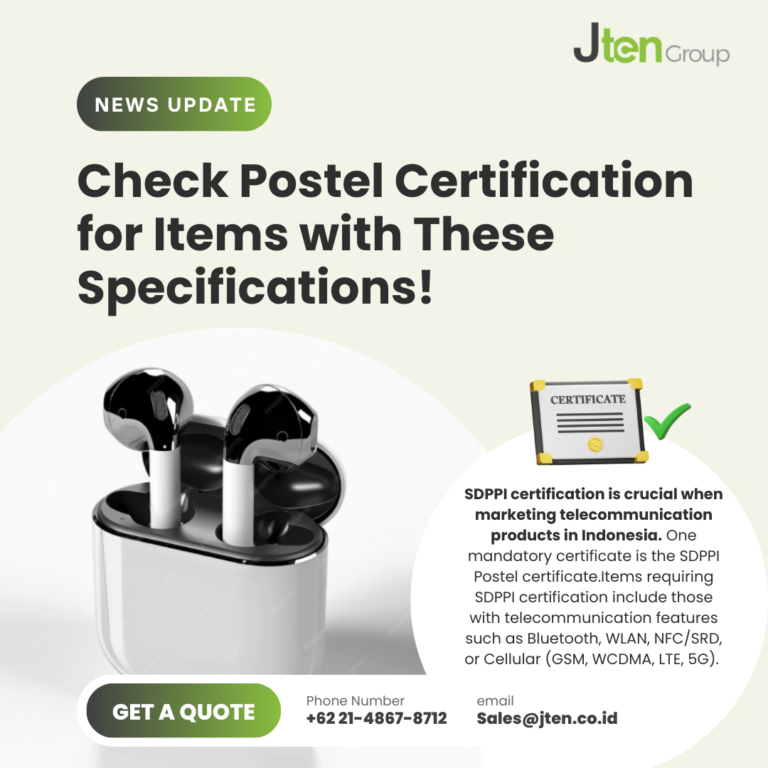
One of the primary requirements for HKT devices is Postel (DJID) certification.
The certification process evaluates whether a device complies with Indonesia’s telecommunications regulations and technical standards.
Postel certification helps ensure that devices:
- Operate within approved frequency bands
- Meet technical requirements
- Do not cause harmful interference
- Comply with national telecommunications regulations
Without Postel approval, HKT devices generally cannot be legally marketed in Indonesia.
Why SAR Testing Is Required for HKT Devices
Most HKT devices are used very close to the human body.
For example:
- Smartphones are held near the head during calls.
- Tablets are frequently used on the lap or in hand.
- Handheld computers may be operated for extended periods.
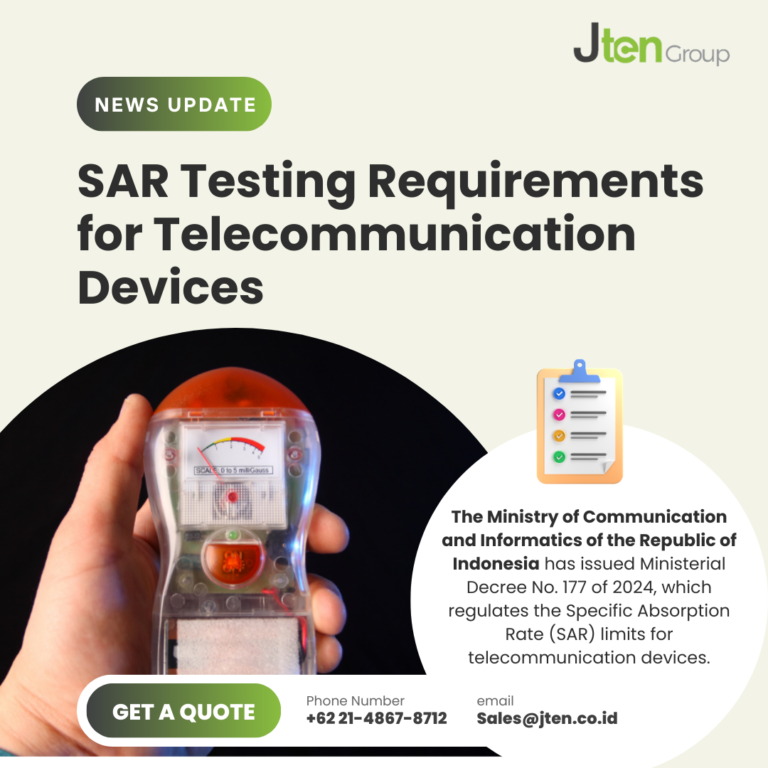
Because these devices emit radio frequency energy, regulators require evaluation of RF exposure through SAR (Specific Absorption Rate) testing.
What Is SAR?
SAR measures the amount of radio frequency energy absorbed by the human body when using a wireless device.
The purpose of SAR evaluation is to verify that the device operates within internationally accepted RF exposure limits.
Products that exceed applicable limits may not qualify for regulatory approval.
Which HKT Devices Commonly Require SAR Evaluation?
Examples include:
✅ Smartphones
✅ Cellular-enabled tablets
✅ Handheld communication devices
✅ Devices with cellular transmission capabilities
The specific requirements depend on the product’s wireless technologies and intended use.
TKDN Requirements for HKT Products
In addition to Postel certification and SAR compliance, many HKT products must also comply with TKDN (Tingkat Komponen Dalam Negeri) requirements.
TKDN is a government policy designed to encourage the use of local components and support domestic industry development.
Why TKDN Is Important
TKDN helps:
- Strengthen local manufacturing
- Encourage investment in Indonesia
- Increase domestic industrial participation
- Support national economic growth
For certain HKT products, meeting minimum TKDN requirements may be necessary before products can be marketed legally.
Products Commonly Affected
Depending on current regulations, TKDN requirements may apply to:
- Smartphones
- Tablets
- Certain handheld communication devices
Manufacturers planning to enter the Indonesian market should assess TKDN obligations early in the product development and market entry process.
How SAR, TKDN, and Postel Work Together
Many businesses mistakenly assume that obtaining one approval is sufficient.
In reality, HKT devices may require multiple compliance pathways.
Postel Certification
Verifies telecommunications compliance and wireless performance.
SAR Evaluation
Demonstrates compliance with RF exposure requirements.
TKDN Compliance
Verifies local content fulfillment according to applicable regulations.
These requirements often complement one another and may all be necessary before a product can be commercialized.
Common Challenges for Manufacturers and Importers
Businesses frequently encounter challenges such as:
Identifying Applicable Requirements
Not every HKT product follows exactly the same certification pathway.
Coordinating Multiple Approvals
Managing SAR, TKDN, and Postel requirements simultaneously can be complex.
Technical Documentation Preparation
Accurate documentation is essential for a smooth certification process.
Regulatory Updates
Requirements may evolve as regulations are updated.
Early compliance planning helps minimize these challenges.
Benefits of Early Compliance Preparation
Preparing certification requirements early can help businesses:
- Avoid product launch delays
- Reduce compliance risks
- Improve project timelines
- Simplify approval processes
- Accelerate market access
Companies that begin compliance planning during product development often experience smoother certification outcomes.
How JTen Can Help
JTen (Jelajah Teknologi Nusa) provides comprehensive support for HKT compliance requirements in Indonesia.
Our services include:
- Postel (DJID) certification assistance
- SAR requirement assessment
- TKDN consultation and support
- Product compliance evaluation
- Technical documentation review
- End to end certification management
Our team helps manufacturers and importers navigate complex regulatory requirements efficiently and confidently.
Conclusion
For HKT devices such as smartphones, handheld computers, and tablets, regulatory compliance in Indonesia often involves more than a single approval.
Depending on the product, businesses may need to address Postel certification, SAR testing, and TKDN requirements before entering the market. Understanding these obligations early can help prevent delays, reduce compliance risks, and support a successful product launch.
Partner with JTen to simplify your HKT certification journey and ensure your products meet Indonesia’s regulatory requirements with confidence.