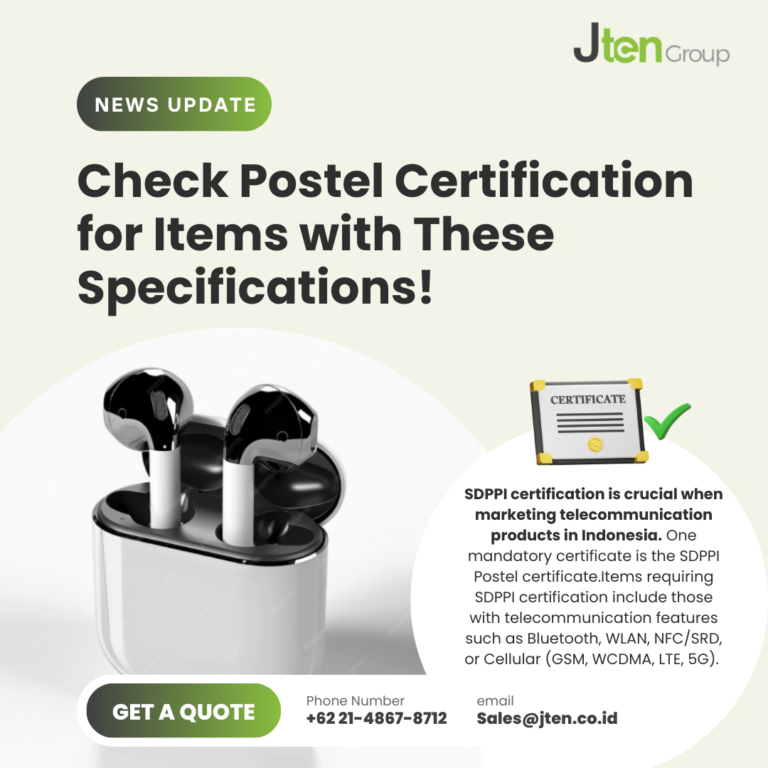
In today’s smart device era, Bluetooth has become one of the most widely used connectivity features in electronic products such as earphones, speakers, smartwatches, and IoT devices. However, before Bluetooth-enabled devices can be legally marketed in Indonesia, they must comply with applicable regulations, including telecommunication device certification.
Why Bluetooth Devices Require Certification in Indonesia
In Indonesia, devices that use radio frequency technology, including Bluetooth, are categorized as telecommunication devices. As a result, these products must go through a certification process before they can be distributed or sold in the Indonesian market.
The purpose of this certification is to:
- Ensure the device does not interfere with other radio frequency services
- Guarantee user safety and device reliability
- Confirm compliance with national technical standards
Without proper certification, Bluetooth devices cannot be legally marketed in Indonesia.
Bluetooth Regulations in Indonesia
Bluetooth devices are regulated by the Ministry of Communication and Digital Affairs (KOMDIGI). Since Bluetooth operates using radio frequency, it must comply with Indonesia’s technical standards for telecommunication equipment.
Most Bluetooth devices operate in the 2.4 GHz ISM band, which is also used by technologies such as WiFi and other wireless communication devices. Therefore, Bluetooth devices must meet specific technical requirements to prevent interference with other devices operating in the same frequency band.
Some of the technical aspects evaluated during certification include:
- Operating frequency
- Transmit power
- Spurious emission
- Frequency stability
- Compliance with Indonesian technical standards
Testing is conducted in accredited laboratories before certification can be issued.
Bluetooth Device Certification Process
The certification process for Bluetooth devices in Indonesia generally includes the following steps:
1. Document Preparation
Manufacturers or importers must prepare several technical documents, such as:
- Product specifications
- User manual
- Product label and marking
- Bluetooth module datasheet
2. Product Testing
The device must undergo testing in an accredited laboratory to verify compliance with Indonesia’s technical standards.
3. Certification Submission
Once the test report is available, the certification application is submitted through the government certification system for evaluation.
4. Certificate Issuance
If all requirements are fulfilled, the telecommunication equipment certificate will be issued, allowing the product to be legally marketed in Indonesia.
Devices That Require Bluetooth Certification
Many types of products with Bluetooth functionality require certification, including:
- Wireless earphones and headphones
- Bluetooth speakers
- Smartwatches and wearable devices
- Smartphones and tablets
- IoT devices and smart home products
- Wireless keyboards and mice
Any device that transmits radio frequency signals using Bluetooth technology generally requires certification.
Challenges in Bluetooth Certification
For many international manufacturers, the certification process in Indonesia can be challenging. Some common issues include:
- Complex documentation requirements
- Local testing requirements
- Administrative procedures within the certification system
- Frequently updated regulations
Working with an experienced certification consultant can help simplify the process and avoid delays.
JTen: Your Partner for Bluetooth Certification in Indonesia
JTen provides professional certification consulting services to help manufacturers and importers obtain telecommunication equipment certification in Indonesia, including devices with Bluetooth functionality.
Our services include:
- Regulatory consultation
- Technical document preparation
- Coordination with accredited laboratories
- Certification submission and follow-up
With an experienced team, JTen helps ensure a smoother and more efficient certification process for your products entering the Indonesian market.