Indonesia represents one of the largest and most attractive consumer markets in Southeast Asia. As demand for electronics, household appliances, telecommunications equipment, and smart technologies continues to grow, manufacturers and importers are increasingly looking to expand their presence in the country.
However, entering the Indonesian market involves more than simply importing products and establishing distribution channels. Businesses must also navigate a multi-layered regulatory framework designed to ensure product safety, technical compliance, consumer protection, and support for national industrial development.
For many companies, understanding which certifications and approvals apply to their products can be one of the most challenging aspects of market entry.
Why Product Compliance Matters
Product compliance is not merely a regulatory requirement. It is a critical component of market access.
Regulatory approvals help ensure that products:
- Meet applicable technical standards
- Operate safely for consumers
- Comply with telecommunications regulations
- Support environmental and safety objectives
- Fulfill local industry development policies
Failure to address compliance requirements early can result in delays, increased costs, shipment disruptions, and postponed product launches.
Understanding Indonesia’s Multi Layered Compliance Structure
Unlike some markets where a single approval may be sufficient, Indonesia often requires businesses to assess multiple regulatory pathways simultaneously.
A product may need one, several, or even all of the following compliance requirements depending on its category, functionality, and intended use.
Postel (DJID) Certification
Products that incorporate wireless communication technologies are commonly subject to telecommunications regulations.
Examples include:
- Smartphones
- Tablets
- Smartwatches
- Routers
- Bluetooth devices
- Wireless peripherals
- IoT products
- Smart home devices
Postel certification verifies that these products comply with Indonesia’s telecommunications standards and operate within approved radio frequency parameters.
As connectivity becomes increasingly common across product categories, Postel requirements continue to affect a growing number of devices.
SNI Certification
The Indonesian National Standard (SNI) framework plays a vital role in ensuring product quality and safety.
Depending on the product category, SNI certification may be mandatory before products can be distributed legally.
Products commonly affected include:
- Household appliances
- Electrical equipment
- Audio products
- Consumer electronics
- Industrial products
- Construction materials
SNI certification helps protect consumers while promoting consistent product standards across the marketplace.
TKDN Compliance
Indonesia has implemented policies that encourage domestic industrial participation through the Tingkat Komponen Dalam Negeri (TKDN) program.
TKDN measures the local content contribution of products and services.
For certain sectors and product categories, TKDN compliance may be required to:
- Enter specific markets
- Participate in government procurement
- Meet regulatory obligations
- Support local manufacturing initiatives
As Indonesia continues to strengthen domestic industry development, TKDN is becoming an increasingly important consideration for manufacturers and technology companies.
K3L Compliance
K3L (Keamanan, Keselamatan, Kesehatan, dan Lingkungan) requirements focus on product safety, health, and environmental protection.
The objective is to ensure that products entering the market do not pose unacceptable risks to consumers or the environment.
Depending on the product category, K3L requirements may involve:
- Safety evaluations
- Environmental assessments
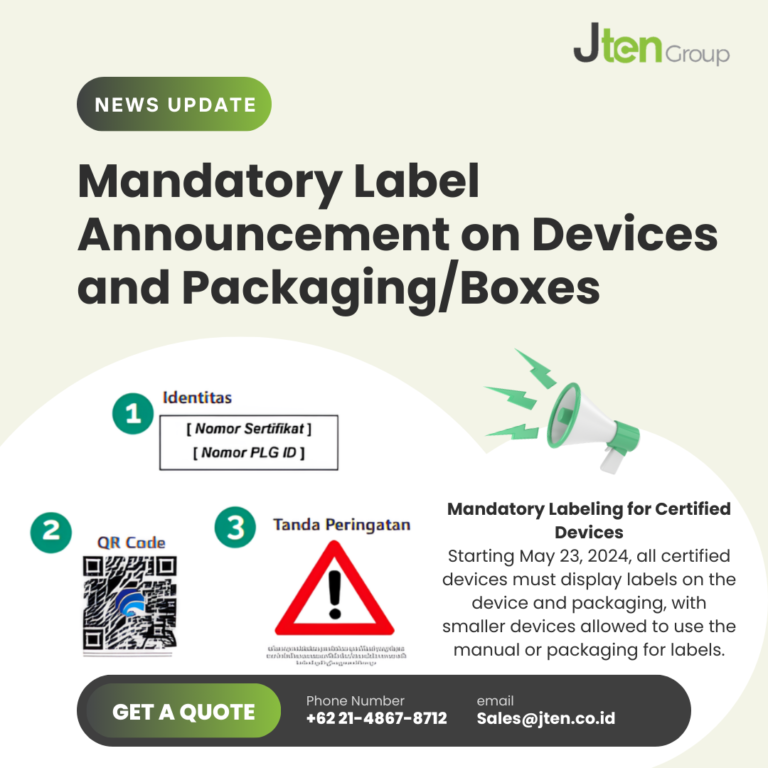
- Product labeling obligations
- Technical compliance verification
Businesses often overlook K3L until late in the approval process, which can create unnecessary delays.
Why Compliance Requirements Often Overlap
One of the most common misconceptions among manufacturers and importers is that a product only requires a single certification.
In reality, many products trigger multiple compliance requirements simultaneously.
Example 1: Smartphone
A smartphone may require:
- Postel certification
- SAR evaluation
- TKDN compliance
- Import-related approvals
Example 2: Smart Home Device
A smart home device may require:
- Postel certification
- EMC testing
- K3L related compliance assessment
Example 3: Wireless Household Appliance
A connected household appliance may require:
- SNI certification
- Postel certification
- Additional product safety evaluations
Understanding these overlaps early is essential for effective compliance planning.
Common Challenges Businesses Face
Product Classification Uncertainty
Determining which regulations apply can be difficult, especially for innovative products.
Regulatory Changes
Requirements continue to evolve as technology advances and policies develop.
Multiple Stakeholders
Different certifications may involve different authorities, laboratories, and assessment bodies.
Documentation Complexity
Incomplete or inconsistent documentation frequently causes delays.
Testing Coordination
Products often require multiple forms of technical evaluation before certification can proceed.
The Importance of Early Compliance Planning
Businesses that treat compliance as a late-stage activity often encounter avoidable challenges.
By incorporating compliance planning earlier in the product lifecycle, companies can:
- Improve launch timelines
- Reduce certification risks
- Avoid duplicate testing
- Improve project budgeting
- Accelerate market access
Regulatory readiness is increasingly becoming a strategic business advantage rather than simply an administrative requirement.
Compliance as a Competitive Advantage
In today’s market, speed and certainty matter.
Companies that understand compliance requirements early can often:
- Launch products faster
- Reduce operational disruptions
- Improve supply chain planning
- Strengthen market credibility
- Enhance customer confidence
Rather than viewing certification as an obstacle, leading organizations increasingly treat compliance as an integral part of their market entry strategy.
How JTen Can Help
JTen (Jelajah Teknologi Nusa) helps manufacturers, importers, and brand owners navigate Indonesia’s complex regulatory landscape through comprehensive compliance support.
Our services include:
- Postel (DJID) certification assistance
- SNI certification support
- TKDN consultation
- K3L compliance guidance
- Laboratory testing coordination
- Product compliance assessment
- Technical documentation review
- End to end certification management
By providing a centralized compliance solution, JTen helps businesses reduce uncertainty and focus on growth.
Conclusion
Indonesia’s regulatory framework is designed to support product safety, consumer protection, telecommunications integrity, environmental responsibility, and domestic industrial development.
As products become more connected and technologically advanced, compliance requirements are becoming increasingly interconnected. Understanding how Postel, SNI, TKDN, K3L, and related regulations work together is essential for successful market entry.
Partner with JTen to navigate Indonesia’s multi layered product compliance framework and ensure your products reach the market efficiently, confidently, and compliantly.