Expanding telecommunications and wireless products into Indonesia requires compliance with local regulations. One of the most critical approvals is POSTEL Certification in Indonesia, issued under the authority of the Direktorat Jenderal Sumber Daya dan Perangkat Pos dan Informatika (SDPPI), part of the Kementerian Komunikasi dan Informatika.
Without POSTEL certification, telecom and wireless devices cannot be legally marketed, distributed, or sold in Indonesia. This article explains the requirements and step by step process to help manufacturers and importers ensure smooth market entry.
What is POSTEL Certification?
POSTEL certification is mandatory approval for telecommunication and wireless devices to ensure compliance with Indonesian technical standards, radio frequency regulations, and safety requirements.
Products typically requiring POSTEL certification include:
- WiFi routers and modems
- Mobile phones and tablets
- Bluetooth devices
- IoT devices
- Radio communication equipment
- Wireless access points
If your product transmits radio frequency or connects to public networks, POSTEL approval is required before commercialization.
Read Too : Why SNI Certification Is Essential for Market Access in Indonesia
Requirements for POSTEL Certification in Indonesia
To obtain POSTEL certification, applicants must prepare several administrative and technical documents.
1. Administrative Requirements
- Company legal documents (local representative required)
- Business Identification Number (NIB)
- Power of Attorney (if using a consultant)
- Importer identification number (if applicable)
Foreign manufacturers must appoint a local Indonesian company as their official representative.
2. Technical Requirements
- Product specification sheet
- User manual (in Bahasa Indonesia)
- Test reports from accredited laboratories
- RF test reports (for wireless devices)
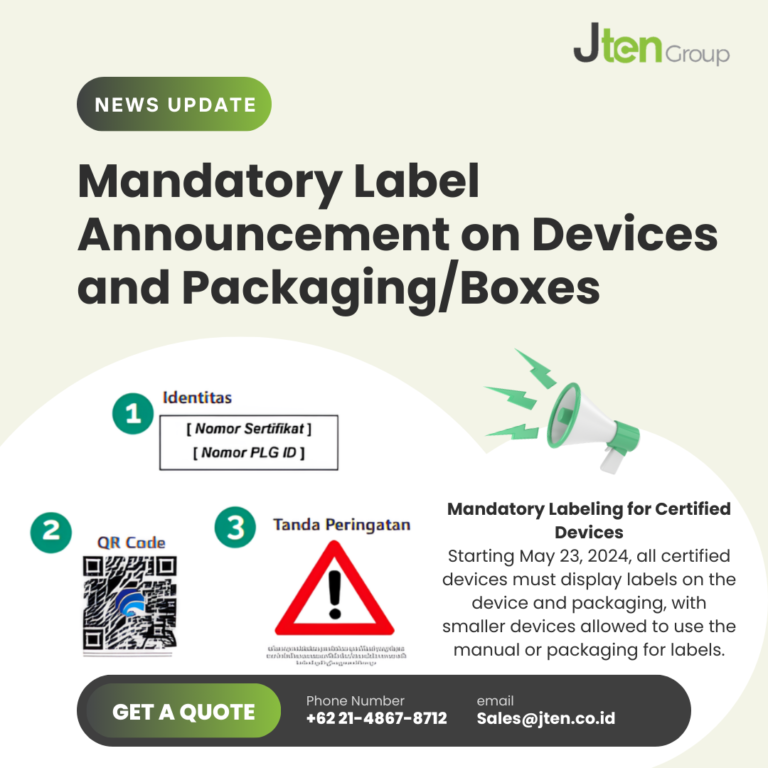
- Labeling compliance (including SDPPI ID placement)
Testing may need to be conducted in accredited Indonesian laboratories depending on the product category.
POSTEL Certification Process in Indonesia
Understanding the certification workflow helps avoid delays. Below is the general process:
Step 1: Document Preparation
All required administrative and technical documents are collected and verified.
Step 2: Laboratory Testing
If necessary, the product undergoes RF and technical testing in accredited labs.
Step 3: Online Application Submission
The application is submitted through the official SDPPI system.
Step 4: Evaluation by Authority
Authorities review the documentation and test results.
Step 5: Certificate Issuance
Once approved, the POSTEL certificate and SDPPI ID are issued.
The process generally takes 3–8 weeks, depending on product type and testing requirements.
Common Challenges in POSTEL Certification
Many companies face obstacles such as:
- Incomplete documentation
- Incorrect RF test standards
- Delays in lab testing
- Labeling non-compliance
Working with an experienced certification consultant can significantly reduce risks and processing time.
Why POSTEL Certification is Important
POSTEL certification ensures:
- Legal market access in Indonesia
- Product compliance with national regulations
- Consumer safety and network protection
- Avoidance of penalties and import rejection
Non-compliant products may be blocked at customs or prohibited from distribution.
How JTEN Can Help
Navigating POSTEL certification can be complex, especially for foreign manufacturers. JTEN provides end-to-end assistance, including:
- Regulatory consultation
- Document preparation
- Laboratory coordination
- Application submission
- Certification monitoring
With professional guidance, your product can enter the Indonesian market efficiently and compliantly.
👉 Contact JTEN today to simplify your POSTEL Certification in Indonesia and accelerate your market access.
Read Too : Why SNI Certification Is Essential for Market Access in Indonesia