The rapid expansion of 5G technology in Indonesia has significantly increased the need for regulatory compliance to ensure safe and legal market entry. Any device equipped with 5G, cellular modules, or radio communication capabilities must undergo SDPPI DJID certification before being imported, distributed, or sold in the country.
This guide explains the essentials of the certification process and how manufacturers can streamline it with the help of experienced compliance partners.
Why 5G Devices Need SDPPI DJID Certification
SDPPI DJID (Directorate General of Resources and Equipment of Post and Information Technology) is the regulatory body under the Ministry of Communication and Information Technology responsible for managing telecommunication device standards in Indonesia.
5G devices must be certified because:
- They use radio frequency spectrum governed by Indonesian regulations
- They must meet safety and electromagnetic compatibility (EMC) requirements
- They must comply with local technical standards for 5G network interoperability
- Certification is mandatory for customs clearance, distribution, and nationwide sales
Failure to certify can result in shipment detainment, product bans, or legal penalties.
Types of 5G Devices Requiring Certification
Common 5G-enabled products that must obtain SDPPI DJID approval include:
- 5G smartphones
- 5G routers, CPEs, and home gateways
- 5G modules for IoT and industrial applications
- 5G-enabled tablets and laptops
- Network equipment with 5G radios
Regardless of the product category, all radio-enabled devices must undergo testing and obtain approval before commercialization.
SDPPI DJID Certification Requirements for 5G Devices
To begin the certification process, manufacturers or local representatives must prepare:
- Technical Documents
- Product specifications
- RF test reports
- User manuals
- Frequency and power details
- Sample Units
- Typically 1–2 units required for testing
- Applicant Documentation
- Local Indonesian company (importer or distributor)
- Identity documents, company legal files, and NPWP
- Testing Compliance
- RF tests
- SAR (Specific Absorption Rate) if applicable
- EMC tests
- Safety tests
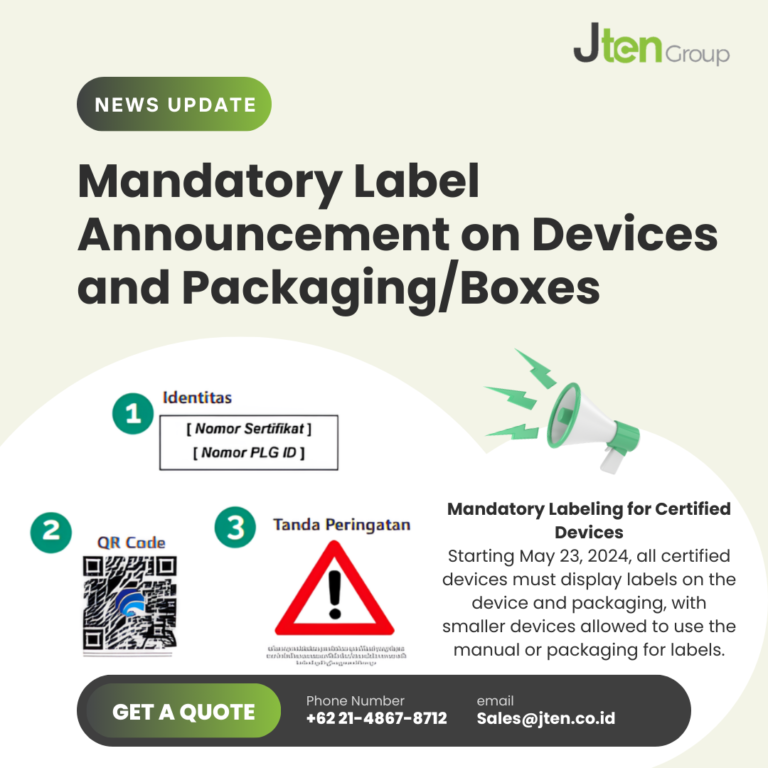
- Product Labeling
- SDPPI DJID certification number
- QR code and required markings
SDPPI DJID Certification Process for 5G Devices
The process usually includes:
1. Pre-Assessment
Document review, technical validation, and sample preparation.
2. Laboratory Testing
Testing must be conducted in an SDPPI-recognized laboratory, either in Indonesia or abroad (if accredited).
3. Submission to SDPPI DJID
Documents, test reports, and results are uploaded to the official SDPPI portal.
4. Review & Approval
SDPPI conducts verification, requests revisions if needed, and finalizes approval.
5. Certificate Issuance
Once approved, the official SDPPI DJID Certificate of Approval is released.
Typical processing time ranges from 2 to 6 weeks, depending on product complexity and document readiness.
Common Challenges in Certifying 5G Devices
Manufacturers often face:
- Incomplete technical documents
- Mismatched test reports
- Changes in regulatory standards
- Test failures requiring retesting
- Difficulty navigating the SDPPI system
Working with an experienced consultant can significantly reduce delays and costs.
Get Your 5G Device Certified Seamlessly — With JTEN Group
Navigating Indonesia’s 5G certification requirements can be complex, but it doesn’t have to be.
JTEN Group provides end-to-end assistance for SDPPI DJID certification, including:
- Document preparation
- Lab testing coordination
- Regulatory consultation
- Submission handling
- Fast-track certificate issuance
Whether you’re a global manufacturer or a local distributor, JTEN Group helps ensure a smooth and compliant market entry for all 5G devices.
CTA
Need to certify a 5G device for the Indonesian market?
Contact JTEN Group today for fast, reliable, and professional SDPPI DJID certification assistance.